Quantcast

An innovative outdoor sculpture at Washington University School of Architecture: This is a class project with mixed media (plywood and plastic), under the direction of Joe MacDonald of Urban A&O. It is an organic shape of concave shapes that play with light and shadows.

Designed, fabricated and assembled by Zephyr Anthony, Andrew Davis, Kyle Fant, Xiaoshuang Hu, Allyson Justmann, Andrew McCready, Kelly Peoples, Xiaofei Ren, Bo Sheng, Jordan Smith, Benjamin Stephenson, Duo Yu, Thomas Watkins.

This research and design studio focused on parametric explorations or reticulation: division, marking, and assembly with the intention of forming programmatic and structural networks. They were seeking creative architectural solutions based on material properties, formal geometry and the spatial implications of a full scale installation. Students worked as a team when they approached the fabrication component of the studio. Read the rest of this entry »
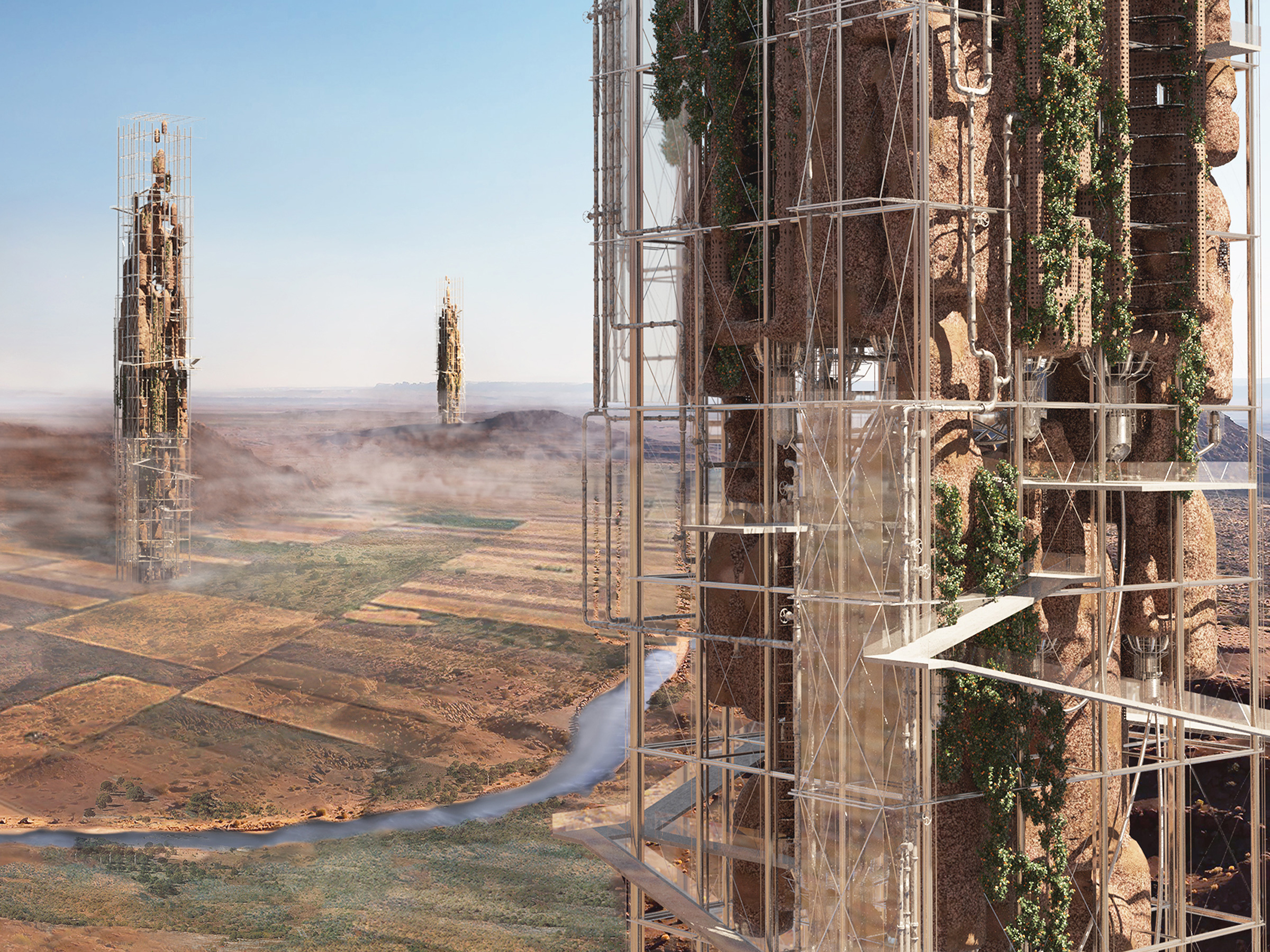
Best in Category - Professional Digital/Mixed: Robert Gilson, RG_CC

The 2012 KRob competition has announced six winners, three jury citations, and twenty finalists. Now in its 38th year, the annual Ken Roberts Memorial Delineation Competition is the longest running architectural drawing competition anywhere in the world. The 2012 jury was comprised of Jeff Mottle, Founder of CGarchitect Digital Media Corporation; Carlo Aiello, Editor-in-Chief & Creative Director at eVolo Magazine; and Michael Malone, AIA, Founder of Michael Malone Architects.

Best in Category - Physical Submission: Chris Cornelius, STUDIO:INDIGENOUS

Best in Category - Professional Hand: Gary Schuberth, AIA, ASAI, NCARB, LEED AP

Best in Category - Travel Sketch: Stephanie Bower, STEPHANIE BOWER, ARCHITECTURAL ILLUSTRATION

Best in Category - Student Hand: Andres Jaime, SYRACUSE UNIVERSITY

Best in Category - Student Digital/Mixed: Ross Jordan, MEng, UNIVERSITY OF SHEFFIELD

Juror Citation: Anna Boldina, DIP Arch, MArch UD

Juror Citation: Maj PLEMENITAS, MAJ PLEMENITAS - LINKSCALE

Juror Citation: Michael Cincala, VIRGINIA TECH

Ambient Exchange: Helsinki Library

By: admin | December - 3 - 2012

Libraries are increasingly the places in which culture is produced, collected and disseminated. The Ambient Exchange designed by Synthetiques & minus Architecture studio {MAS} promotes a culture of collaboration, creative inquiry and community engagement through provision of functional and exuberant spaces that engage the strong social and craft-oriented traditions of the Finnish built environment.

The Ambient Exchange engages a vital site, including the broader city, by placing its cultural and shared amenities at the level of the park and the street. The building is treated as an extension of the site topography, pulling people up into the spaces that encourage interaction and collaboration among the various users. Views of the Parliament and cultural amenities of the city drive the library’s formal, programmatic and functional organization. Read the rest of this entry »
Organic Pavilion in Milan

By: admin | December - 2 - 2012

The project of the new Sofia pavilion designed by Riccardo Giovanetti for Sofia Interior Doors arises from the idea of exploiting a range of industrial products, completely altering their original intended use and turning them into structural elements of a vast architectural space. In the specific instance, this concerns a series of tiles made from recycled plastic; these eco-slabs, originally meant for gardens and green areas, has been used as tesserae to cover a big volume of sharp and rigorous shapes.

The final result is a neo organic architecture characterized from a peculiar transparency, in which the relation between the internal and the external surfaces is very close. At the same time the pavilion presents itself as a space with a very rich and articulated image in which depth, textures and the casual pattern of the structural elements are highlighted. The pavilion has been developed through a sequence of three distinct areas: a wide exhibition room at the entrance, intended to the exposition of the company’s doors, then a lounge area delimited by a big white wall and at last, a technical area, at the back. Read the rest of this entry »
Time Tension Wood is a construction system design by Taylor Gilbert based on a technique used by the Native American Indians for making bows. By applying consistent tension to freshly cut wood, the wood will slowly and gradually bend as it dries. Once the wood is dry after 3-5 months, the structure is permanent, and the ropes can be removed.

The system consists of brass brackets and ropes with a simple tension mechanism that are used to easily connect and manipulate freshly cut wooden poles. These components can be used to make a variety of objects and structures from a coat rack and tabletop supports to space dividers and small-scale architecture. Since this method relies on the natural properties of the wood in a slow process, there is no need for steam, heat, or any special equipment. Almost any kind of wood can be used, so the majority of the material can be sourced locally. Read the rest of this entry »
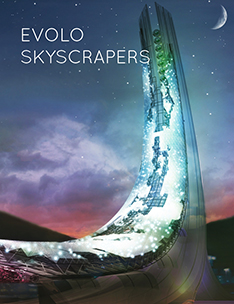
eVolo Skyscrapers Collector's Edition - Two Volumes + Presentation Box


Contents: Two Hardcover Volumes with Presentation Box.
Edition: Only 150 Copies Available.
ISBN: 978-1-938740-00-8
First Hardcover Volume: Technological Advances, Ecological Urbanism, and New Frontiers. 624 pages.
Second Hardcover Volume: Social Solutions, Morphotectonic Aesthetics, and Urban Theories and Strategies. 608 pages.
Price: $150

This publication is the Collector’s Edition of the highly praised book EVOLO SKYSCRAPERS – currently sold out and out of print. This final edition consists of two hardcover volumes and presentation box. Only 150 copies available for the discerning collector.

EVOLO SKYSCRAPERS includes the best 300 skyscrapers submitted to the eVolo Skyscraper Competition since 2006.

- “the next generation of big buildings…the new book compiles 300 of these plans, divided into categories like technological advances, ecological urbanism and social solutions. Some of the designs tackle familiar problems, like the need for parking space, but others are more forward-looking, like buildings that incorporate robotics or are capable of flying”. — Wall Street Journal

- “EVOLO SKYSCRAPERS provides futuristic concepts and architectural eye candy for hours on end and allows a fascinating glimpse into the (possible) future of high-rise architecture, urbanism, and the city as we know it.” — Archinect

- “. . . a great stroll through the ideas and imagery that are occupying students and young architects today.” — A Daily Dose of Architecture

-> ORDER A COPY

INTRODUCTION

Established in 2006, the eVolo Skyscraper Competition has become the world’s most prestigious award for high-rise architecture. The contest recognizes outstanding ideas that redefine skyscraper design through the implementation of new technologies, materials, programs, aesthetics, and spatial organizations. Studies on globalization, flexibility, adaptability, and the digital revolution are some of the multi-layered elements of the competition. It is an investigation on the public and private space and the role of the individual and the collective in the creation of dynamic and adaptive vertical communities.

Over the last six years, an international panel of renowned architects, engineers, and city planners have reviewed more than 4,000 projects submitted from 168 countries around the world. Participants include professional architects and designers, as well as students and artists. This book is the compilation of 300 outstanding projects selected for their innovative concepts that challenge the way we understand architecture and their relationship with the natural and built environments.

The projects have been organized in six chapters that describe the current position and the future of vertical architecture and urbanism. The first chapter,Technological Advances, is an investigation on the use of digital tools and computing fabrication. Ecological Urbanism explores sustainable systems, including new materials and clean energy generation processes to achieve zero-net-energy buildings. Projects that analyze the reconfiguration of existing cities and the colonization of new environments, such as underwater cities and floating habitats, are part of New Frontiers.  The improvement of our way of living is the topic of the fourth chapter, Social Solutions, which is a collection of ideas that respond to social, cultural, and economic problems. A more experimental approach to architectural design is exposed in Morphotectonic Aesthetics, with proposals that use fields of data and self-regulating systems to respond to internal and external stimuli -the results are fascinating explorations of function and form. Finally, Urban Theories and Strategies is a group of projects that establish new methods to alleviate the major problems of the contemporary city, including the scarcity of natural resources and infrastructure, and the exponential increase of inhabitants.

The eVolo Skyscraper Competition is a forum for the discussion, debate, and development of avant-garde architectural design in the 21st century. eVolo is committed to stimulating the imagination of designers around the world – thinkers that envision the future of our cities and a new way of life.

eVolo Skyscrapers Collector's Edition - Two Volumes + Presentation Box

eVolo Skyscrapers Collector's Edition - Two Hardcase Volumes / Front

eVolo Skyscrapers Collector's Edition - Two Hardcase Volumes / Back


eVolo Skyscrapers Collector's Edition - Volume 1 - 624 pages

eVolo Skyscrapers Collector's Edition - Volume 1 - 624 pages

eVolo Skyscrapers Collector's Edition - Volume 1 - 624 pages

eVolo Skyscrapers Collector's Edition - Volume 1 - 624 pages

eVolo Skyscrapers Collector's Edition - Volume 1 - 624 pages

eVolo Skyscrapers Collector's Edition - Volume 1 - 624 pages

eVolo Skyscrapers Collector's Edition - Volume 1 - 624 pages

eVolo Skyscrapers Collector's Edition - Volume 1 - 624 pages

eVolo Skyscrapers Collector's Edition - Volume 1 - 624 pages

eVolo Skyscrapers Collector's Edition - Volume 1 - 624 pages

eVolo Skyscrapers Collector's Edition - Volume 2 - 604 pages

eVolo Skyscrapers Collector's Edition - Volume 2 - 604 pages

eVolo Skyscrapers Collector's Edition - Volume 2 - 604 pages

eVolo Skyscrapers Collector's Edition - Volume 2 - 604 pages

eVolo Skyscrapers Collector's Edition - Volume 2 - 604 pages

eVolo Skyscrapers Collector's Edition - Volume 2 - 604 pages

eVolo Skyscrapers Collector's Edition - Volume 2 - 604 pages

eVolo Skyscrapers Collector's Edition - Volume 2 - 604 pages

eVolo Skyscrapers Collector's Edition - Volume 2 - 604 pages

eVolo Skyscrapers Collector's Edition - Presentation Box / Front

eVolo Skyscrapers Collector's Edition - Presentation Box / Back

—————————————————–

The Helsinki library designed by MenoMenoPiu Architects will be situated in the new green heart of Helsinki. The project will occupy 4500m² of the site. The intention is to replace the existing green that we subtract to the park in a indoor environment perfectly controlled.

We decided to conceive the building as a tree forest enclosed in a climatic box, in which the structure represents the causality of the wood .

The natural organization of the pillars is then reproduced on the glazed envelope that creates the link between nature and architecture, between the light and the shadows.

The transparent facade gives to the building a high visual permeability, allowing the exterior user to follow the internal events and the client to have a strong link with the nature and the sourrounding. The envelope lifts, allowing the life in and through it and reducing the urban limit between Takatoolo park and Alvar Aallon Katu street.

The program develops in a spiral which reaches the green winter gardens just under the roof structure. The slabs system is an open space,that leaves an extreme flexibility to the program organization. Extensible partitions are hidden through all the building in the pillars, giving the opportunity to privatize different elements of the program (client’s office, work room etc.), when needed. Read the rest of this entry »

The design of this temporary installation reinterprets the traditional Chinese garden to activate the roof terrace of the MoCA Shanghai as an undulating and responsive multi-layered landscape. The upper (canopy) layer simultaneously produces gradient spatial conditions and framed viewing portals which curate views of the surrounding hi-rise towers, while the lower (landscape) layer articulates a series of back-lit sculptural ground forms which subdivide the terrace and provide atmospheric effect through responsive color-changing LED lighting effects. Inspired by the work of Frei Otto, the entire project extends his body of design research into physical and digital form-finding processes for minimal surface structures through dynamic mesh relaxation techniques. Read the rest of this entry »

This proposal for the New Contemporary Art Museum (NCAM) in Buenos Aires by Frisly Colop Morales, Jason Easter, and Łukasz Wawrzeńczyk embodies the city’s dynamic cultural vibrancy. The building sits along the Rio de la Plata, plugging into the internationally influenced urban context as an architectural artifact representing the city itself.

The design provides various exhibition and gathering spaces for both programmed and passive interaction between local visitors, tourist and the various exhibits of architecture, painting, sculpture, fashion and textiles. Two such external spaces activate the site and enhance the Puerto Madero waterfront promenade experience. By recessing the corners of the East façade a plaza is created to the South and an amphitheater to the North. A large framed opening in the North elevation holds a dual-direction stage linking the interior auditorium with the exterior amphitheater. Large retractable panel doors enable performances for visitors located inside, outside or both simultaneously.

A second exterior gallery and entry portal is created by lifting the central portion of the building mass. This covered multipurpose space connects the East and West areas of the site, activating circulation around the building and framing the view to the canal. A linear lighting design integrated with the underside of the building to signal the entry and illuminate this area for evening events. The light beneath the form allows the building to stand as a beacon along the promenade. Read the rest of this entry »

The site of the museum is on the banks of the Rio de la Plata in Buenos Aires’ Puerto Madre, the area is a juxstaposition of industrial warehouses, shipping docks, commercial distirct and nearby nature reserves.

The museum’s design by Margot Krasojević attempts to choreograph images and views into the city to highlight the ever expanding definition of what is considered real, diluting the edges between the viewer, exhibits, city fabric and it’s immediate context. The form has no spatial hierarchy creating an ethereal precense, the antithesis of monumentality and the specificity of material place. The architectural gesture is that of a glimpse, a collage of superimposed spaces with no beginning or end, no defined boundary as they are experienced like an edited animation.

The structure consists of a single, laser cut aluminium, semi-monocoque shell, prefabricated off site.The aluminium shell is made up of 3 Meter wide sections welded together, sanded and spray painted white, it appears to float above the circulation giving the impression of weightlessness, the observatory museum’s sole support is the circulatory ramp shaft off which the structure is cantilevered and tied to the dock.

Window wall openings slide back into the shell giving boundless views into and through the museum, like an observatory. The city is brought into the museum. The windows walls are made from toughened laminated glass inclined by 25 degrees so as not to reflect sunlight and glare from the river.

The structure uses the same technology as boat manufacturers, the interior is free of columns providing unobstructed views. The ground floor plane restructures the embankment and dock by bringing the river partly into the design, using a series of locks which flood sunken platforms within the museum when needed. Ramps rise out of the water connecting the main gallery space with the rest of the site intervention. Read the rest of this entry »