Editors’ Choice
2026 Skyscraper Competition
Harriet Wise, Jia Yi Lai, Shaurya
Australia
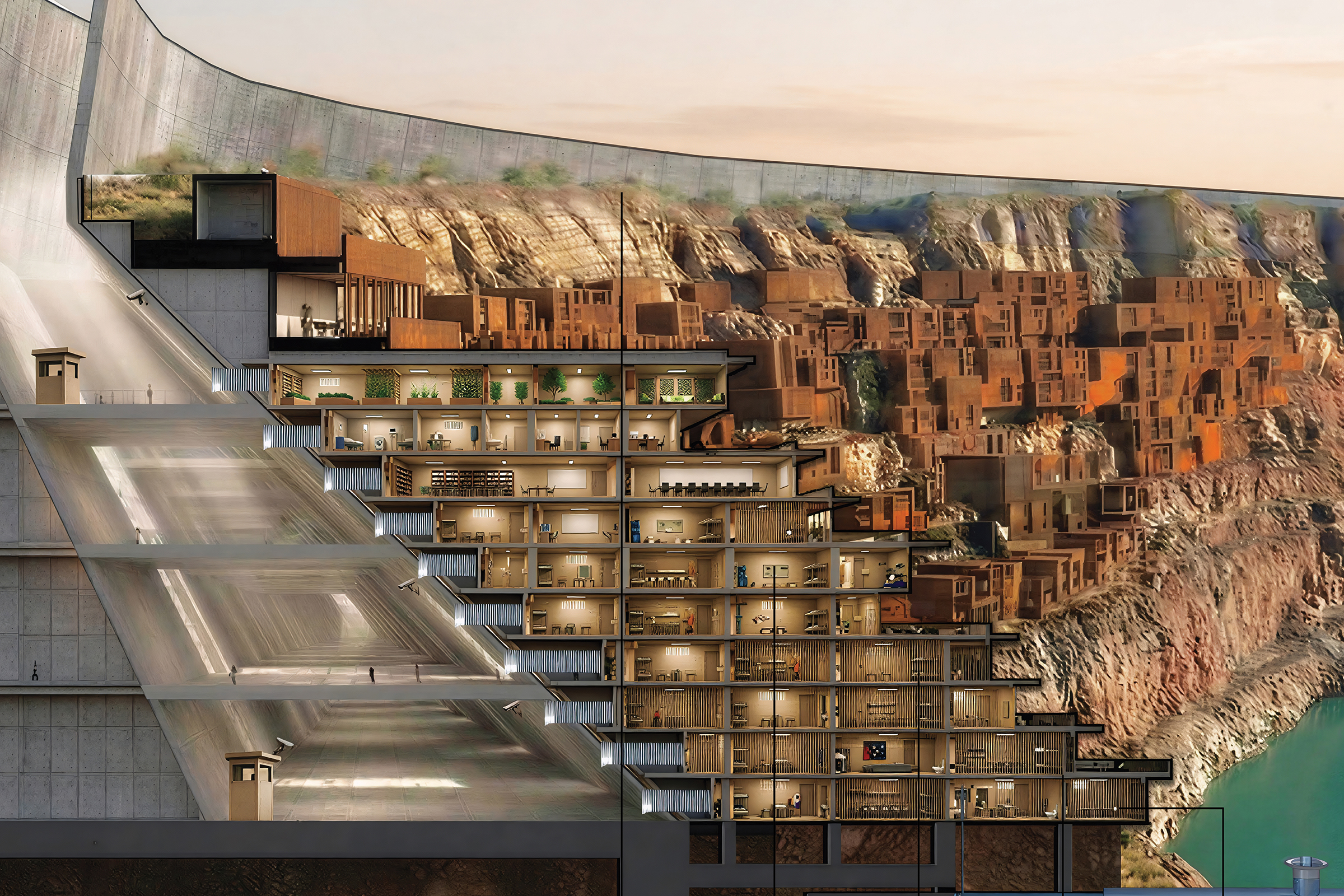
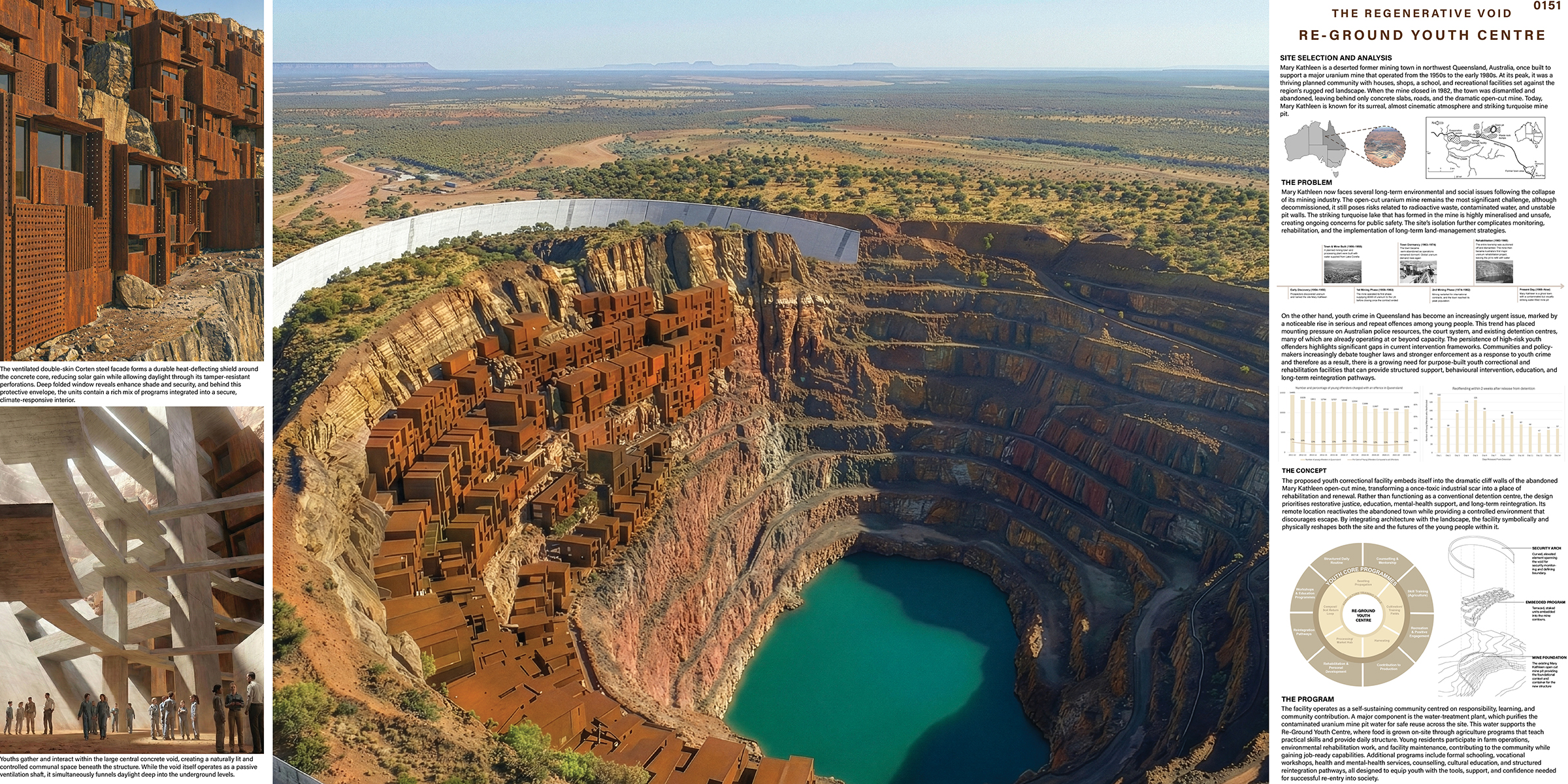
The Mary Kathleen ReGround Youth Centre reimagines the role of architecture in remote Australia by transforming the abandoned Mary Kathleen uranium mine into a landscape of rehabilitation, renewal, and social repair. Situated innorthwest Queensland, Mary Kathleen was once a thriving planned township built to service a major uranium mine operating from the 1950s to 1982. When the mine closed, the town was dismantled, leaving behind only concrete slabs, empty roads, and the vast open-cut pit, a 100-metre-deep void filled with contaminated turquoise water, radioactive tailings, and unstable cliff walls. Today, the site stands as a stark monument to environmental degradation and regional collapse.
At the same time, Queensland faces an escalating youth-crime crisis. Rising rates of serious and repeat offences have placed extraordinary pressure on police, courts, and overcrowded detention facilities, highlighting failures in currentintervention systems. The current response to youth crime in Australia has struggled to break cycles of harm, disconnection, and reoffending. These parallel challenges reveal the need for a new model, one that rehabilitates rather than isolates, empowers rather than punishes, and addresses systemic issues at their roots.
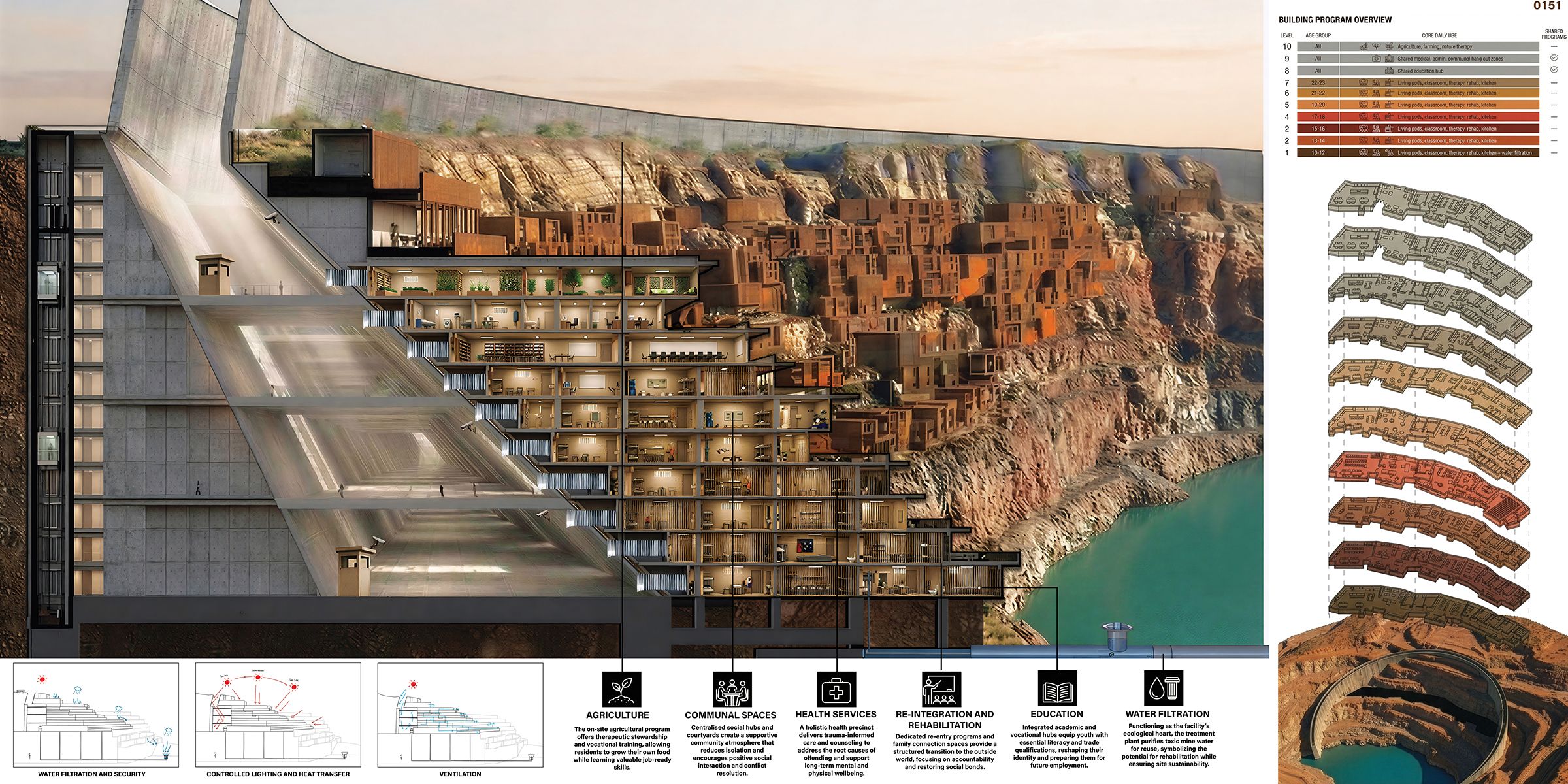
The Mary Kathleen ReGround Youth Centre proposes a skyscraper as a tool for environmental and social healing. Embedded into the monumental cliff walls of the abandoned uranium mine, the tower transforms a once-toxic industrial scar into a vertical community centred on responsibility, learning, and long-term reintegration. Its remote location provides both a controlled environment and an opportunity to reactivate a deserted landscape, turning a site of extraction into a place of regeneration. Rather than replicating the disciplinary logic of conventional detention centres,the tower is designed as a restorative environment. It integrates mental-health support, education, cultural learning, vocational training, and structured community programs within a vertical ecosystem. Its architecture becomes a mediator between damaged land and disconnected youth, symbolically and physically reshaping both. By situating thefacility within the layered geology of the pit, the project acknowledges the site’s history while proposing a new future grounded in repair.
Central to the tower’s operation is a water-treatment plant that purifies the contaminated mine pit water for safe reuse across the facility. This restored water sustains on-site agricultural terraces, forming the heart of the ReGround Youth Centre. Here, the youth engage in daily farming, food production,environmental rehabilitation, and site maintenance. These programs provide structure, foster responsibility, and equip residents with practical skills and job readiness. In this way, the tower functions as a self-sustaining micro-communitywhere young residents contribute to the place they inhabit, learning to rebuild their lives while actively participating in the healing of the land.
The Mary Kathleen ReGround Youth Centre is not a symbol of authority or confinement, but an instrument of restoration,regeneration, and collective renewal. It confronts overlapping crises of fractured youth pathways, regional decline, and environmental contamination through a single integrated architectural response, transforming a site of abandonment into a catalyst for connection, growth, and hope.