Editors’ Choice
2025 Skyscraper Competition
XiuMing Cui
China
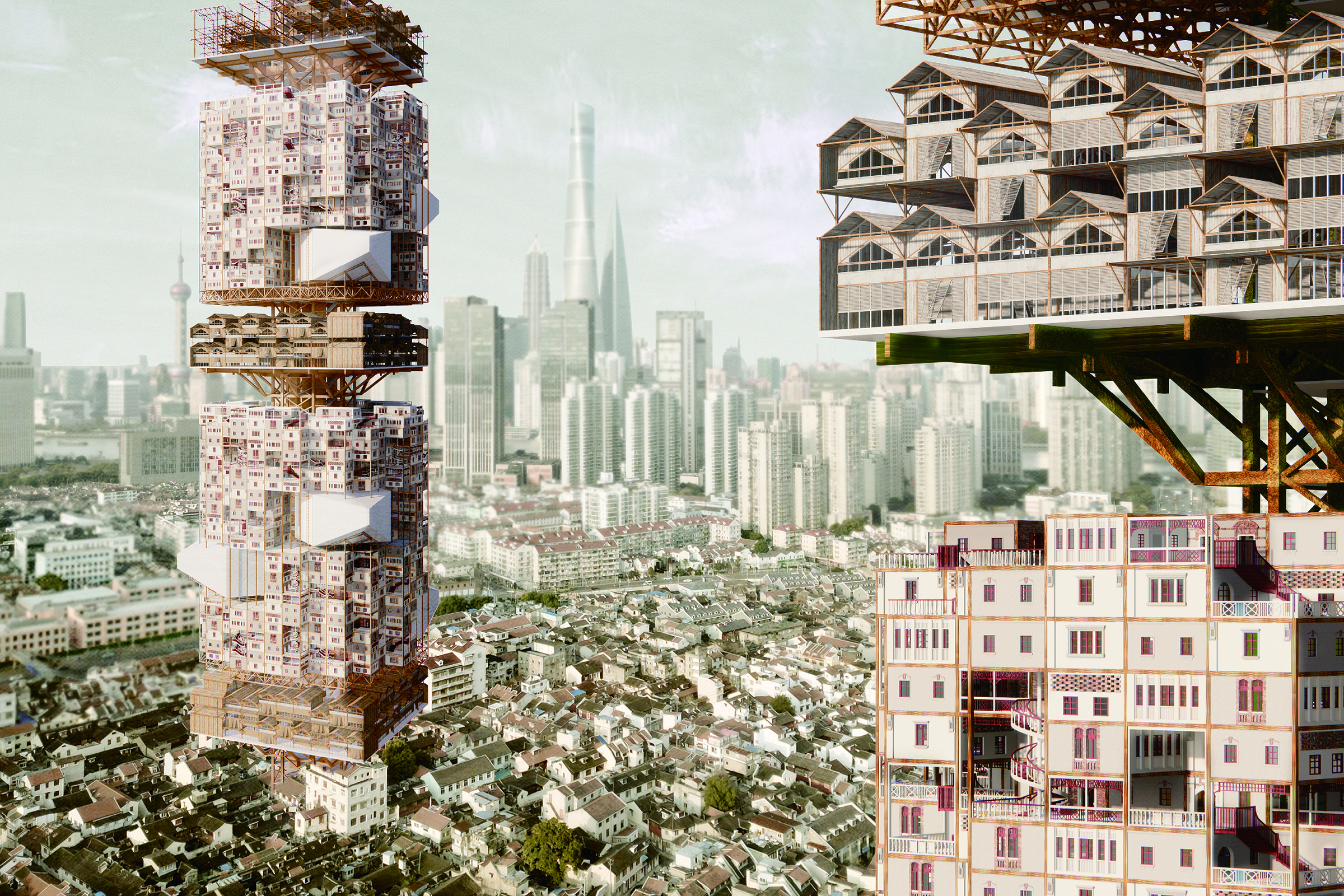
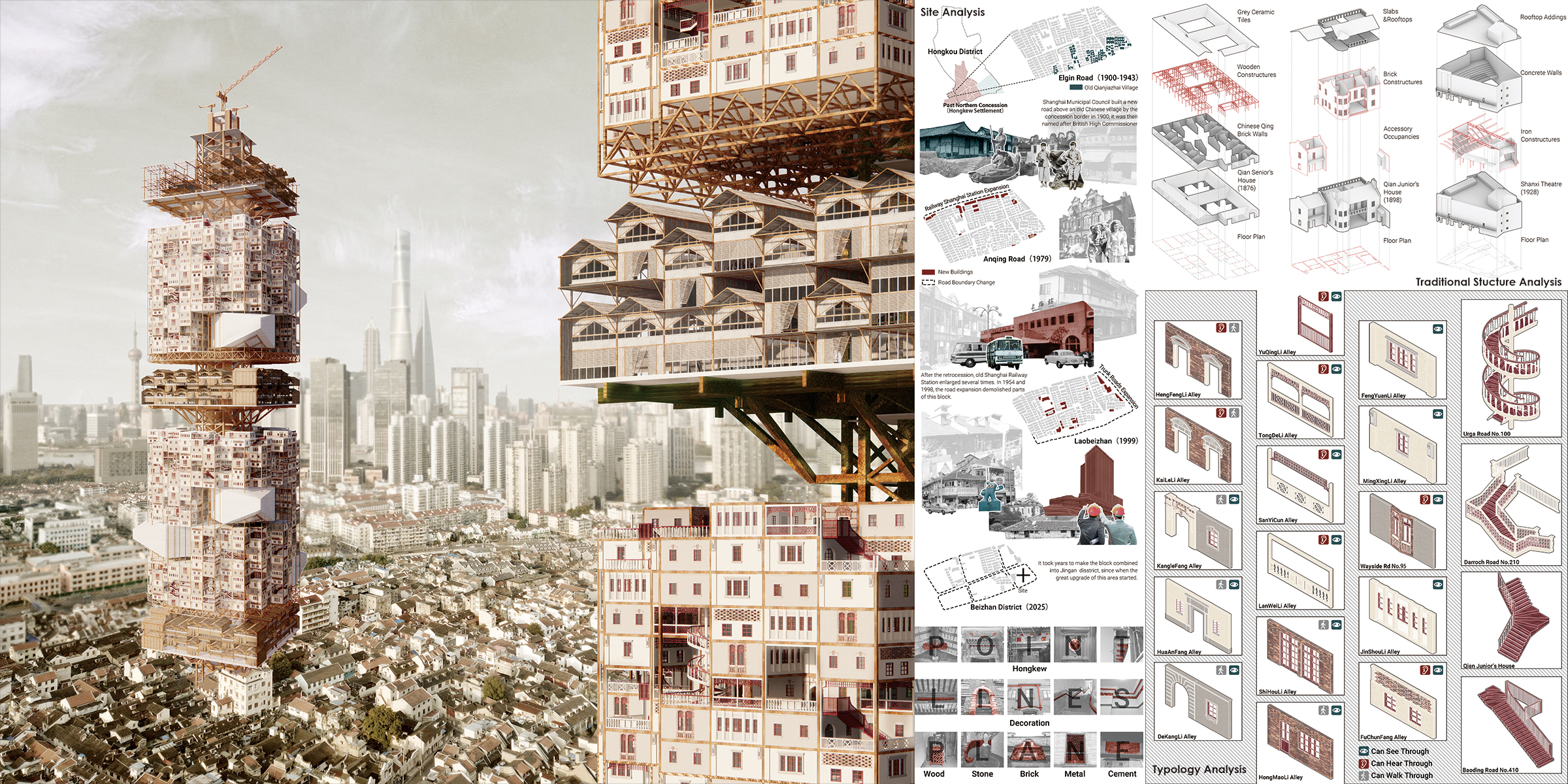
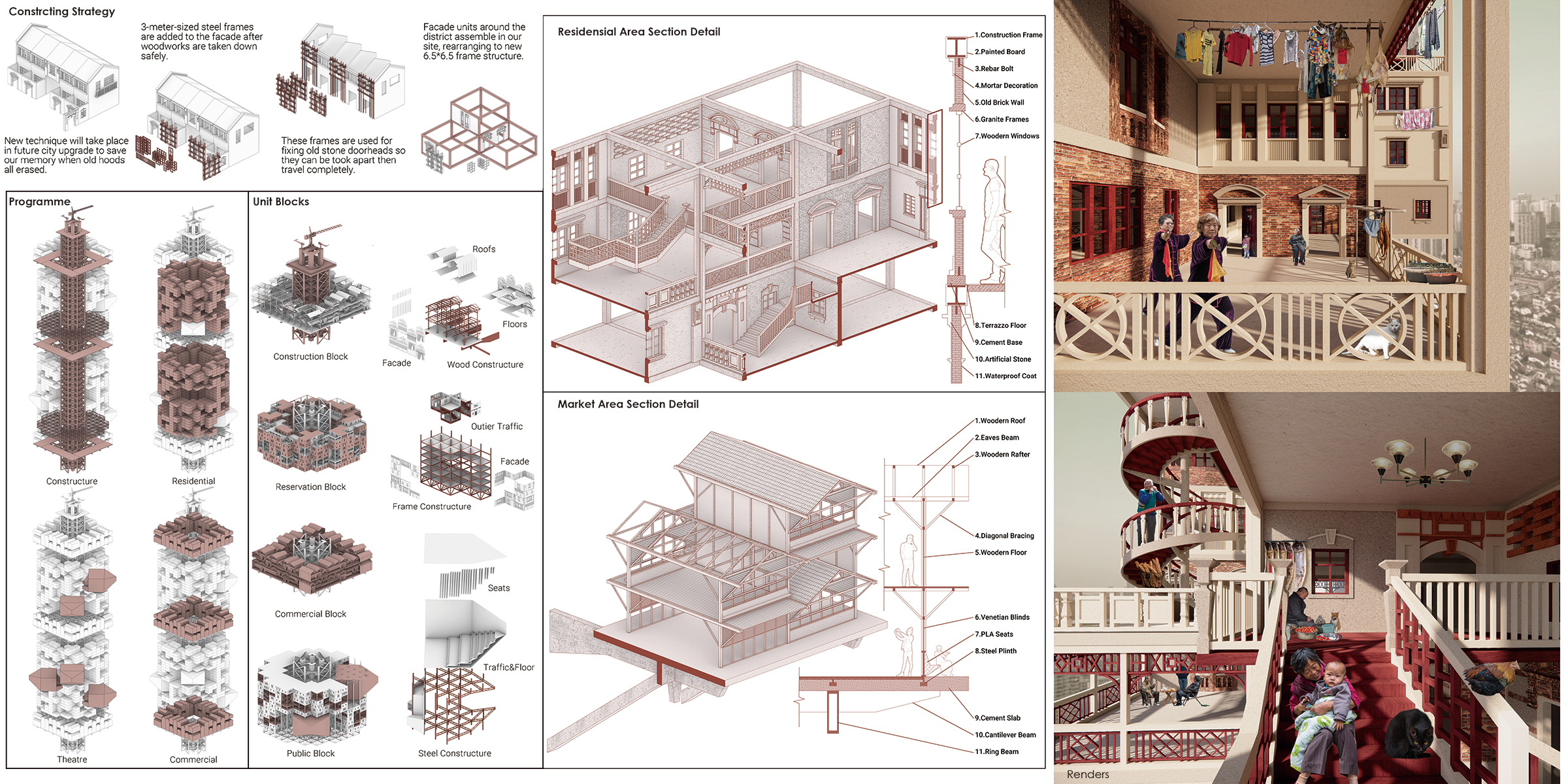
As Shanghai Longtang, a symbol of the middle-class life in the 20th century, gradually faded away amid the roar of bulldozers, this high-rise complex attempted to preserve a fading memory for the city with a vertical narrative. The design systematically hoisted, migrated and recombined the demolished Shikumen door heads, bricks and components, so that they can break away from the original horizontal texture and re-collage, superimpose and grow in the vertical dimension. As time goes by, this building will continue to “grow up”, like a constantly writing city archive, analyzing and translating typical building types such as traditional Chinese houses, Colonial Style houses by western adventurers, and Grand Theatre of early 20th century , and completing a “folding” of space and time in the vertical field.
The project attempts to reconstruct the internal logic of Longtang life in the high-level form-through the public courtyards, vertical streets and alleys and semi-private transitional spaces between the platform floors, not only to achieve the recurrence of past life, but also to reproduce the traditional social form of neighborhood communication in the post-modern context and reconstruct the Jane Jacobs-style street-eye.
In the realistic context of intensive development, this design, with structural integration and material reuse as technical support, explores the possibility of high-rise buildings as cultural carriers and memory containers, thereby responding to how a city faces its disappearing landscape and continuing the spiritual thickness of the place in the contemporary context.
Ultimately, this high-rise complex is far more than just a building. It is a dialectical apparatus: it acknowledges and accepts “disappearance” as an inevitable cost of urban development, yet it refuses to let this vanishing be meaningless. Through the spectacle of vertical folding, it transforms the vanishing landscape into an existence that can be experienced, read, and continually grown.
This would finally answers the question that how should a city striving for the future house its past? The answer proposed by this design is: neither enshrine it in a reliquary nor bury it in ruins, but weave it into the very fabric of our daily lives, allowing it to become the most solid and richest soil underfoot as we move toward the future. This is perhaps the most profound and powerful contemporary interpretation and practice of the “spirit of place” within a postmodern context.