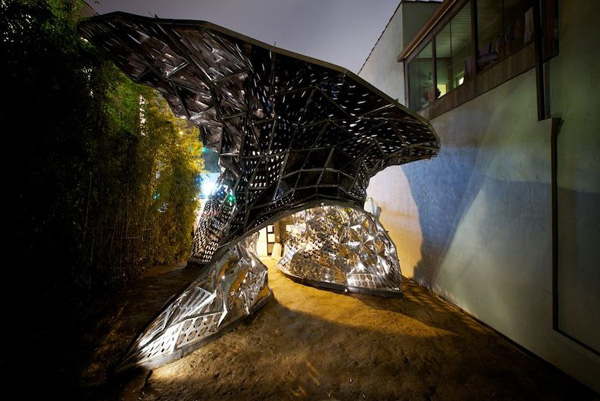
A sun-tracking instrument indexing time and temperature, “Bloom”, designed by Los Angeles-based DOSU studio architecture, stitches together material experimentation, structural innovation, and computational form/pattern-making into an environmentally responsive installation. Architecture has long been valued for its static nature and sense of permanence but lately that has changed and the focus is on making buildings more responsive to their uses and the climate. Although this has often accomplished through mechanical means, Doris Kim Sung, the principal of DOSU architectural practice, is researching how the building materials themselves can be responsive and integrate changeability into the structure itself.
The dramatic shell form of the Bloom pavilion can suggest that its simply one cutting-edge piece of digitally computed design, but the real and slow innovation is happening in the layer of metal panels, which are bending according to heat levels generated by the sun. The form’s responsive surface is made primarily out of 14,000 smart thermo bi-metal tiles, where no two pieces are alike. Each individual piece automatically curls a specified amount when the outdoor ambient temperature rises above 70F or when the sun penetrates the surface. Bloom is, according to Sung, the first architectural application of the laminated metal material, which includes nickel and manganese with a bit of iron –the material is typically used in industrial applications. Read the rest of this entry »