Editors’ Choice
2025 Skyscraper Competition
YiYing Zhou, Yang Pei, Shuwei Li, Jieliang Zhu, Bingxu Huo
China
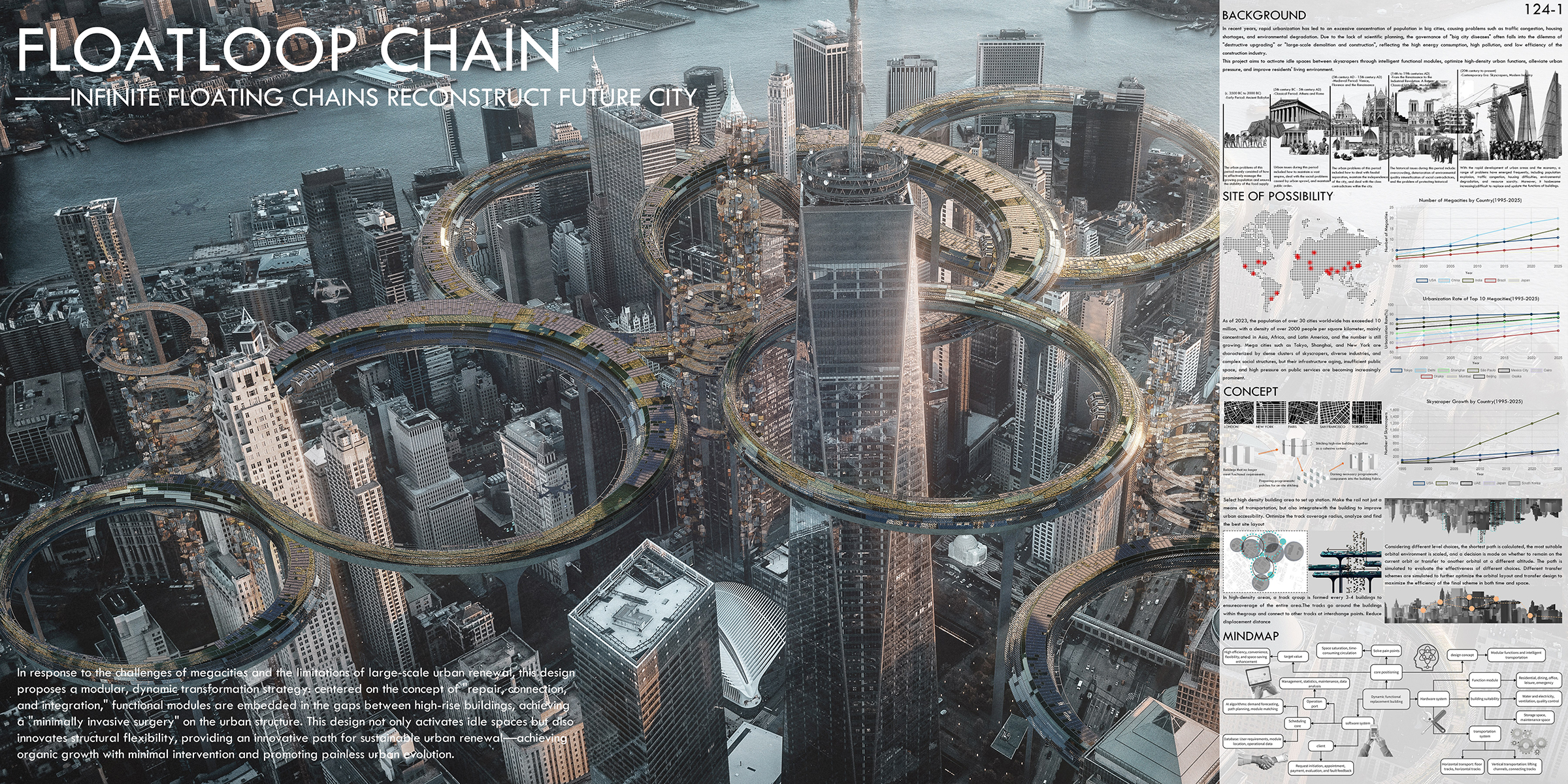
In recent years, rapid urban and economic development, coupled with the swift concentration of populations in cities, has placed increasing pressure on urban areas—particularly major cities. Symptoms such as population expansion, traffic congestion, housing shortages, environmental degradation, and resource constraints have become frequent occurrences. At the same time, a lack of scientific planning has led to phenomena such as disruptive upgrades or the demolition-reconstruction cycle in attempts to address “big city problems.” This reflects the current state of the construction industry, which is characterized by high speed, high consumption, high pollution, and low efficiency.
As of 2023, there are approximately 30 cities worldwide with populations exceeding 10 million and population densities over 2,000 people per square kilometer, mainly concentrated in Asia, Africa, and Latin America. With accelerating urbanization, this number is likely to continue rising. Megacities such as Tokyo, Shanghai, and New York have become primary targets for development. These cities feature dense clusters of skyscrapers, high-rise residential and commercial buildings, large and socially complex populations, and diverse industries including finance, technology, manufacturing, and services. Their functional structures are intricate and varied, with distinctive skylines and advanced infrastructure that nonetheless faces aging and overcapacity issues. Public green spaces and open areas are scarce, while education, healthcare, and transportation systems are under significant strain.
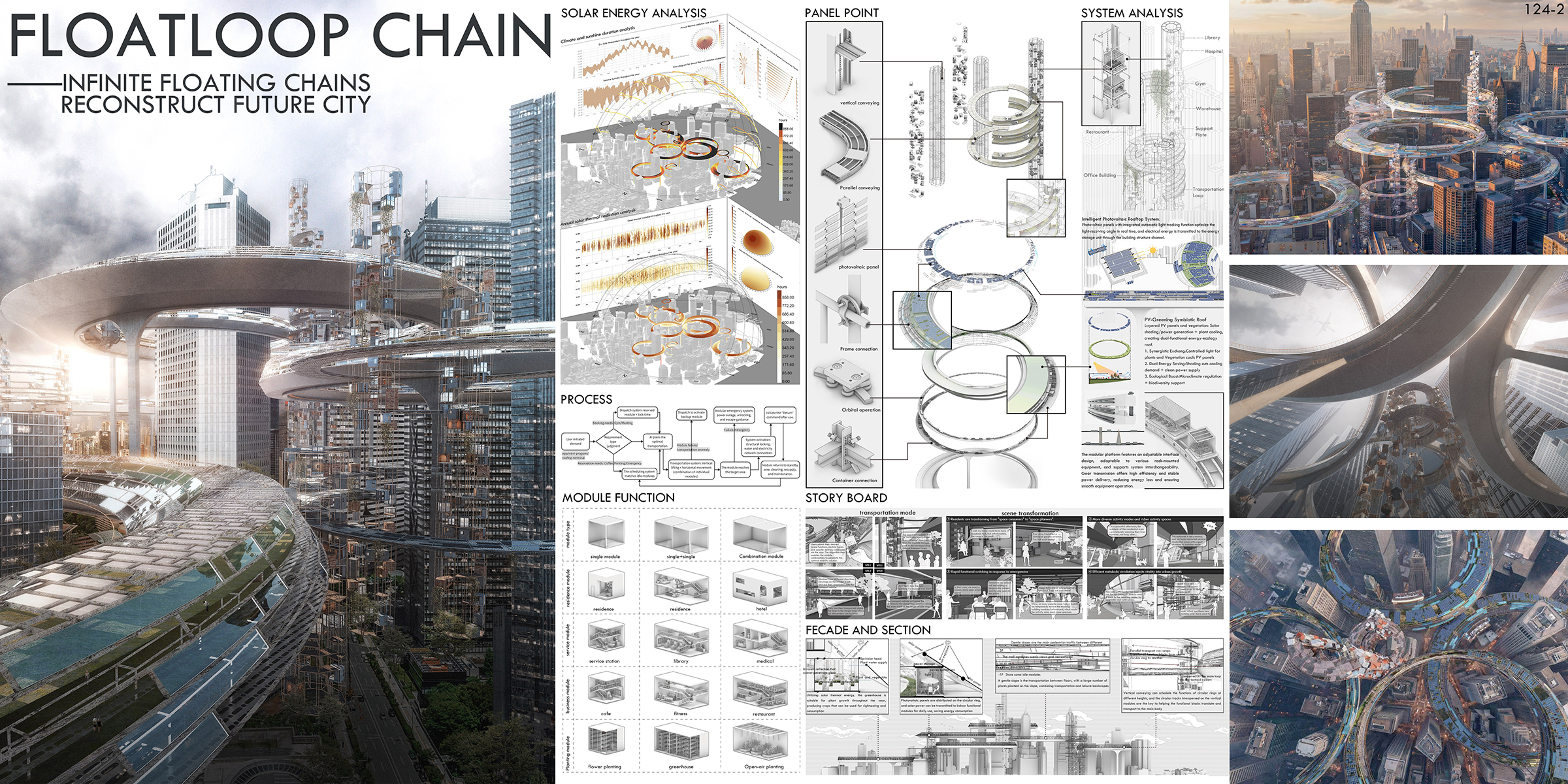
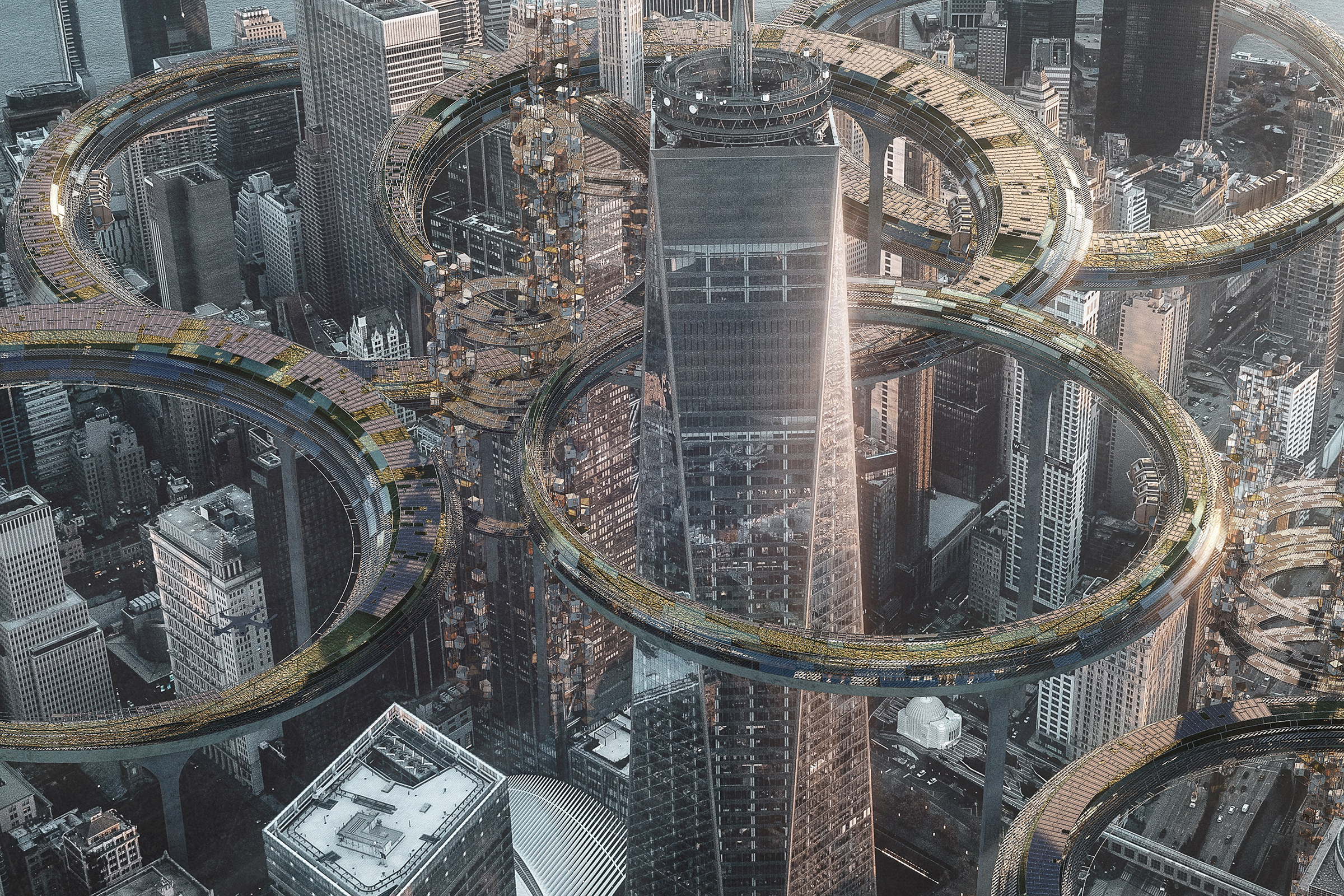
Given these challenges and the constraints of conventional urban renewal, this project adopts the highly resilient concept of “weaving” and proposes a movable modular urban design. By interconnecting high-rise structures, every three to four coverage points form a track cluster that operates around buildings. The function of modules can be adjusted according to urban needs, taking into account different levels of architectural options. The system calculates the shortest path and selects the most suitable transport module track. This approach not only creates a unique and sustainable future for urban renewal but also reserves flexible space for cities, enhancing the resilience of urban spatial structures.