Editors’ Choice
2026 Skyscraper Competition
Daniel Lasso
United States
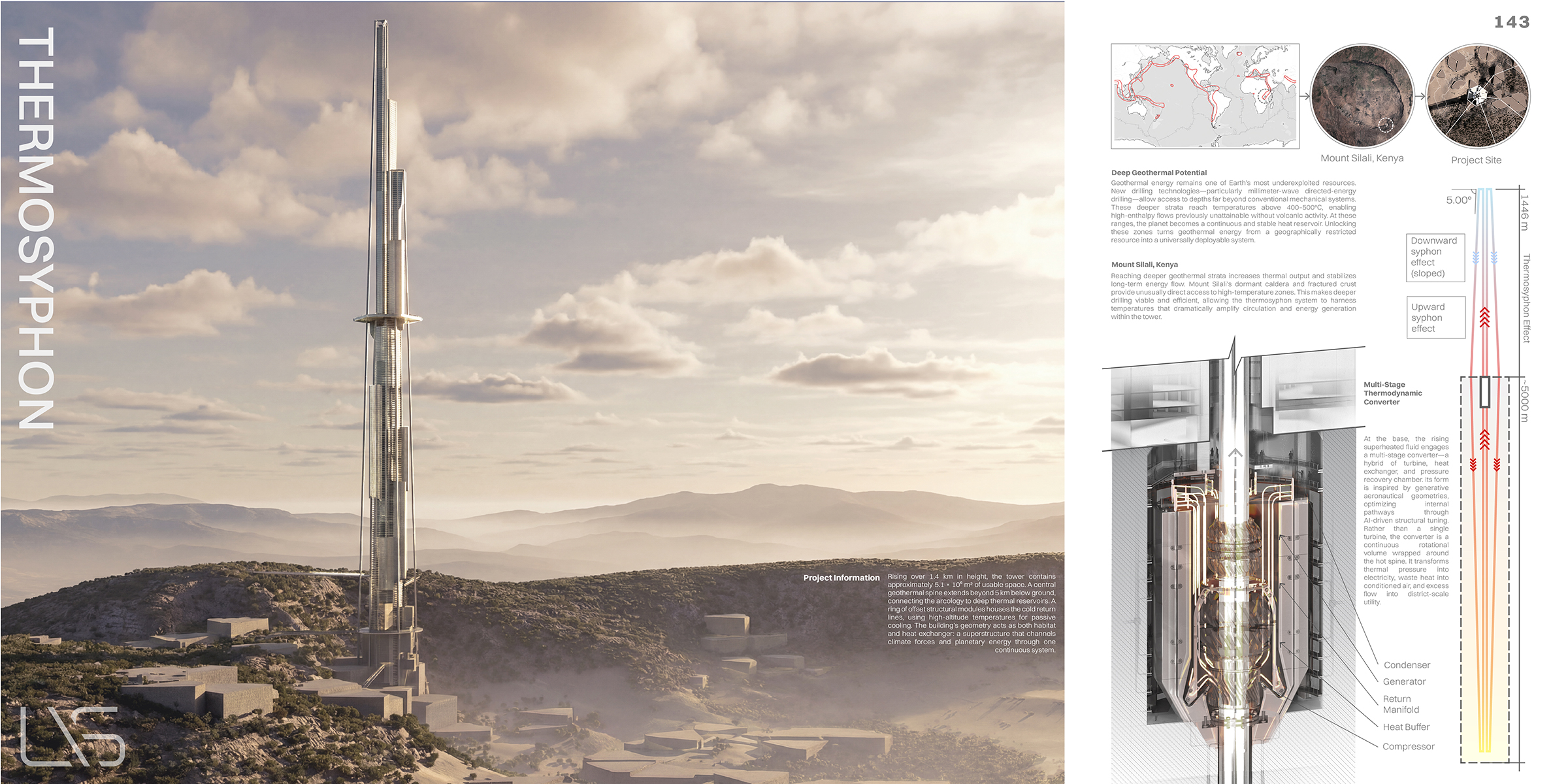
Geothermal energy remains one of Earth’s most underutilized resources. Emerging millimeter-wave drilling technologies now allow access to ultra-deep geothermal strata—4 to 7 kilometers below the surface—where temperatures exceed 400°C and energy densities increase exponentially. These depths unlock a new frontier: architecture directly anchored to planetary thermodynamics.
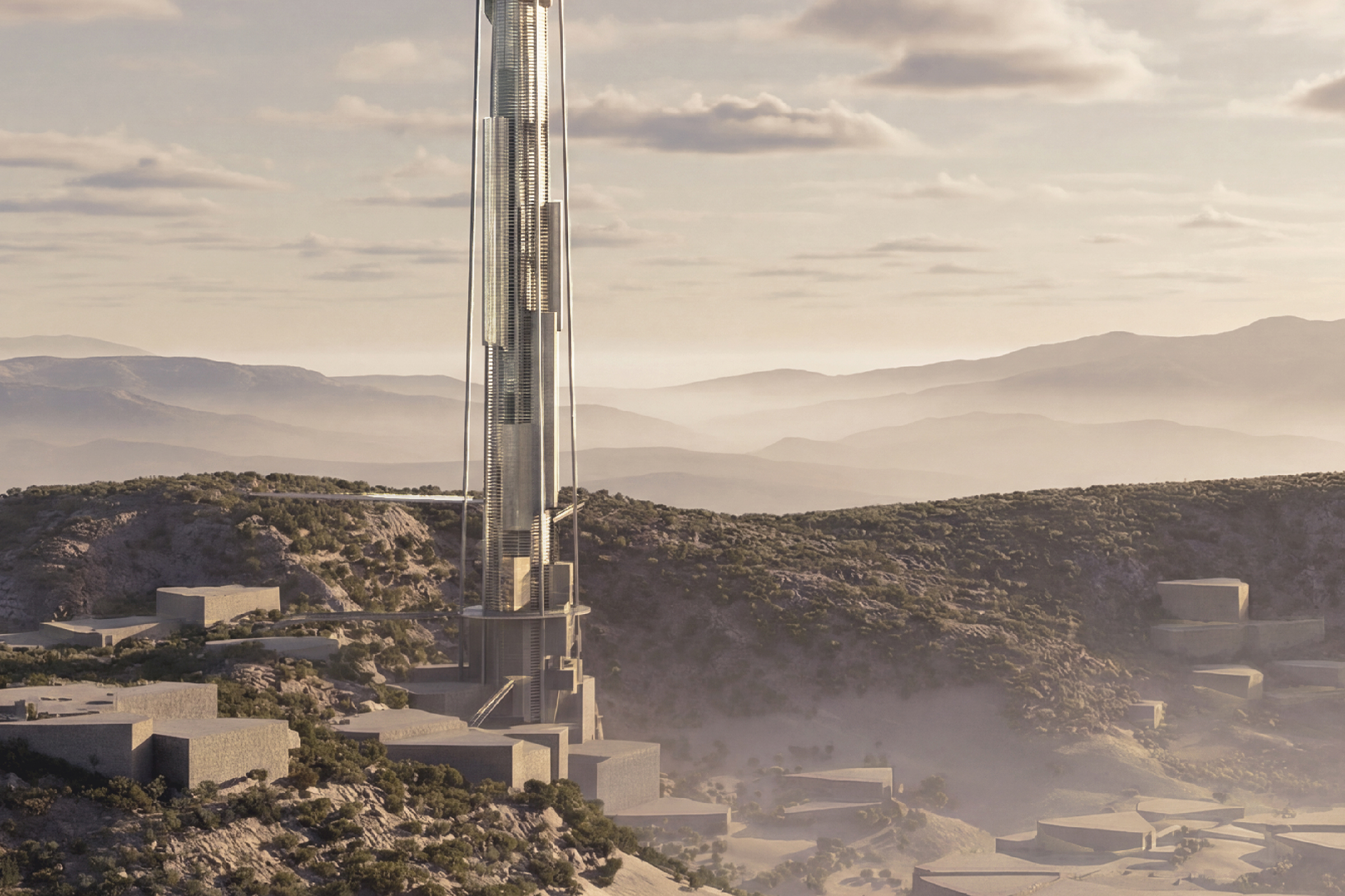
The Geo-Siphon Arcology proposes a 1.4-kilometer supertall settlement powered entirely by a closed-loop thermosyphon system. Superheated fluid rises through a central geothermal spine, transfers energy into a multi-stage converter at the base, cools along high-altitude exterior modules, and descends again by gravity. The tower’s height becomes an active mechanical instrument, amplifying hydrostatic pressure and accelerating circulation without pumps. In this configuration, architecture becomes a vertical geothermal engine.
Mount Silali, a dormant caldera in northern Kenya, provides the geological conditions to make this system viable at scale. Its fractured volcanic crust, high-enthalpy gradients, and permeable deep rock formations allow direct access to extreme temperatures with minimal thermal loss. The site acts as a natural amplifier, enabling the arcology to tap directly into one of Africa’s most concentrated subsurface energy reservoirs.
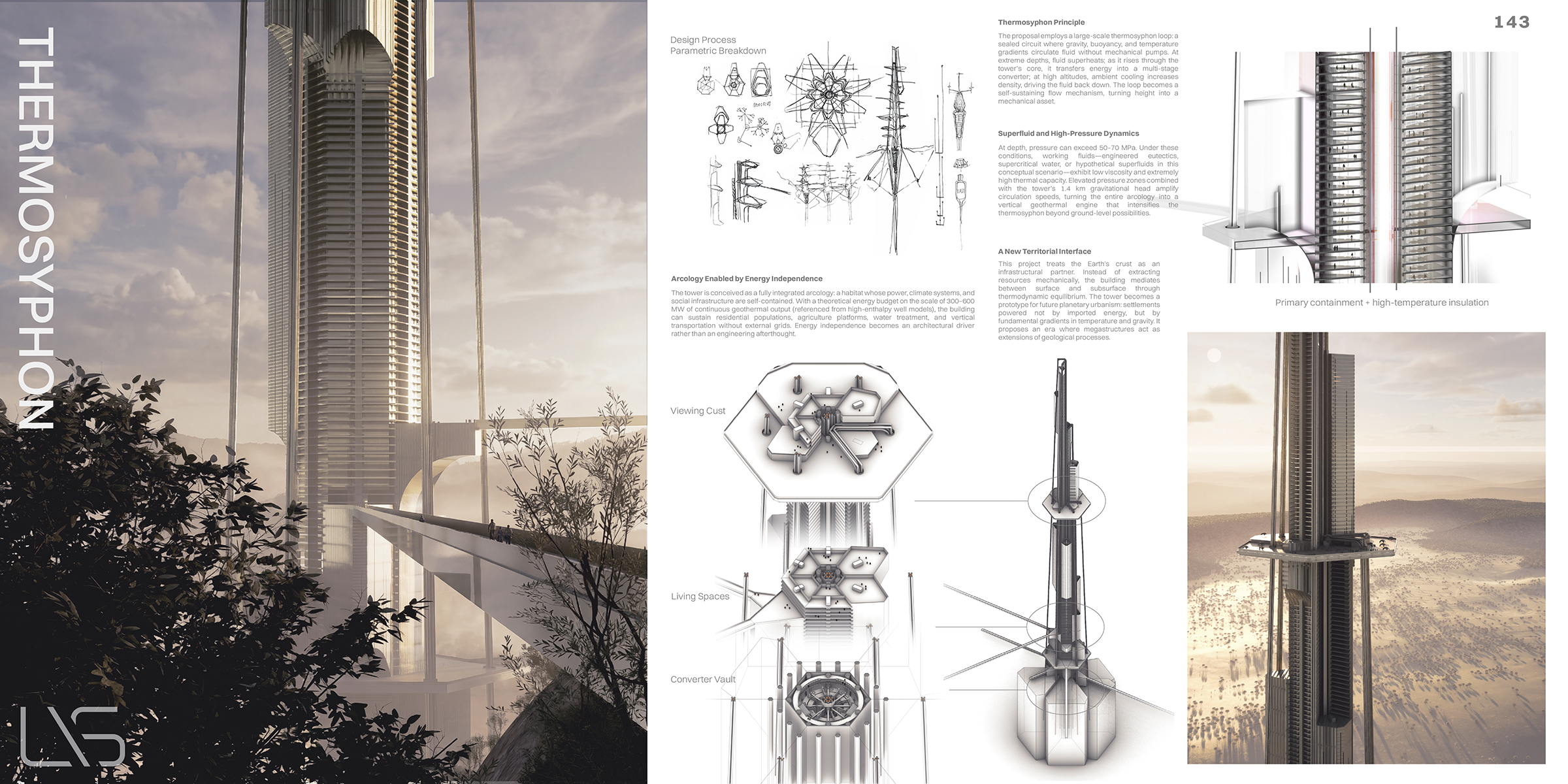
The tower offers approximately 5.1 × 10⁶ m² of habitable area—housing communities, agriculture platforms, public terraces, environmental systems, and vertical mobility networks. Six offset modules peel from the hexagonal core, acting as both living environments and distributed cooling surfaces for the thermosyphon’s return line. A geopolymer stone-composite superstructure provides mass, fire resistance, and a geologic material expression—suggesting a structure not merely placed on the Earth but grown from its energy.
Between the geothermal spine and resident spaces, a multilayer “thermal ring” modulates heat: high-temperature insulation protects the mechanical core, a massive structural buffer stabilizes thermal gradients, and environmental build-ups maintain comfortable interior climates.
The Geo-Siphon Arcology reimagines the skyscraper as more than a vertical city. It becomes a mediator between atmosphere and crust—an architecture that partners with geological processes rather than extracting from them. Through height, gravity, and deep-earth energy, the tower proposes a new planetary urbanism powered not by external grids, but by the planet’s own continuous heat.