Editors’ Choice
2025 Skyscraper Competition
Mohamed Noeman, AbdelRahman Badawy, Toka Hassan, Pierre Atef Ghattas Saweri
Egypt
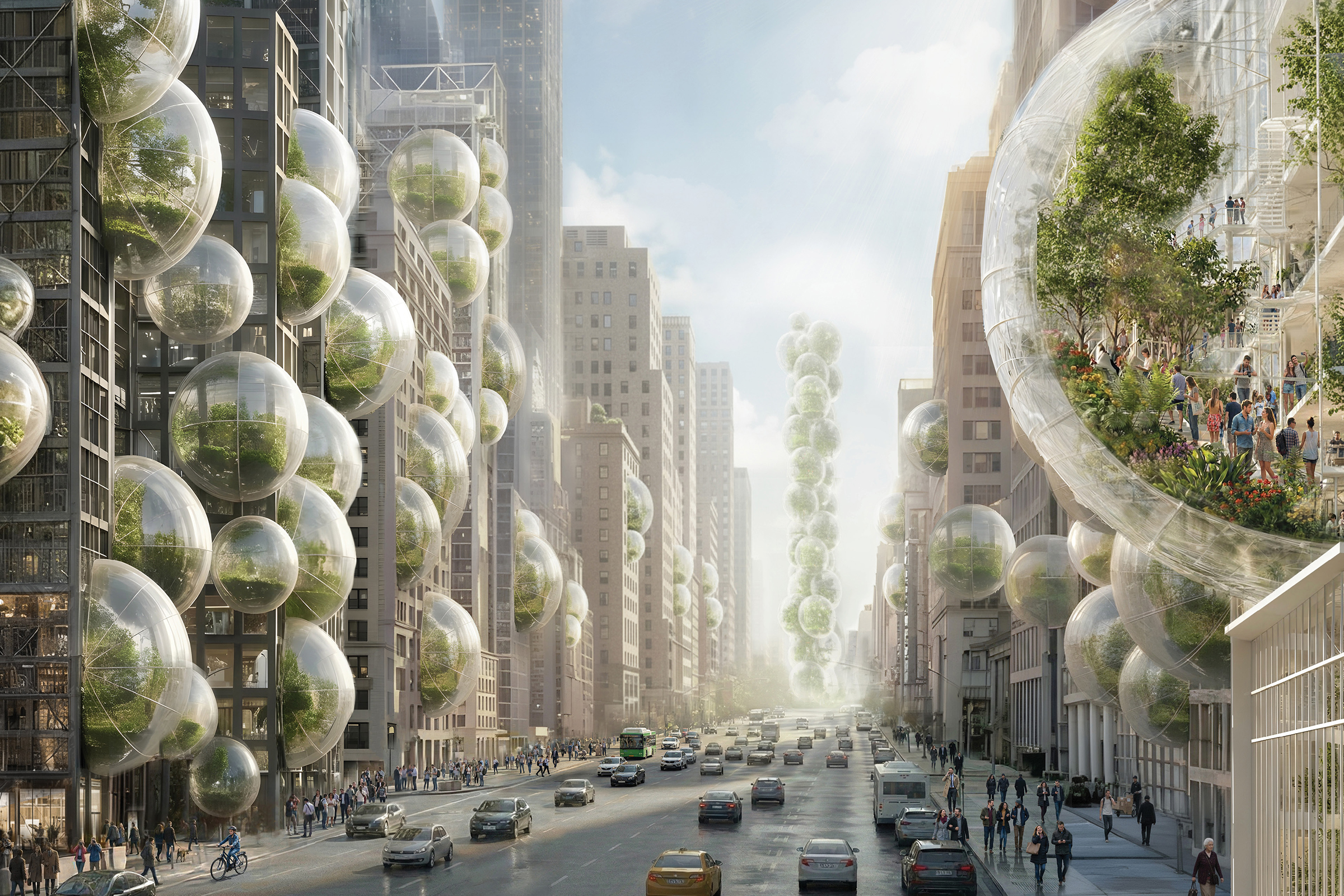
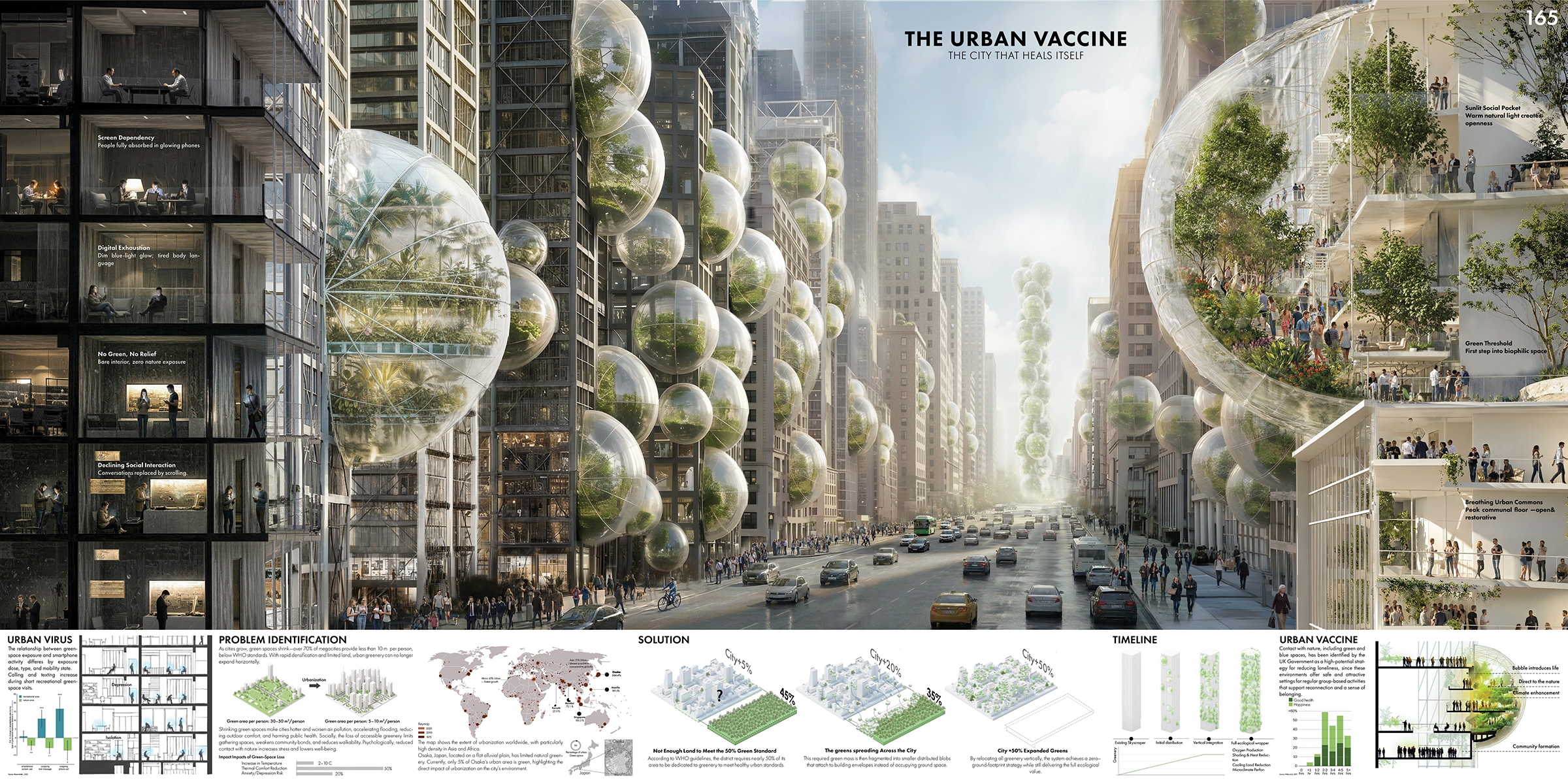
The contemporary city is the result of an urban momentum set in motion decades ago—a momentum that pushed nature to the margins and replaced open landscapes with a dense, profit-driven terrain of concrete. With 68 percent of the global population projected to live in cities by 2050, natural ground is vanishing under the assumption that this is what development must look like. Rentable floor area, luxury towers, and the price of each square meter now define progress, while human well-being and the innate need for nature are overlooked. The World Health Organization recommends 50 m² of open space per person, yet in many megacities the average is less than 3 m². The consequences are severe: temperatures rising by 5–7°C, polluted air trapped between towers, uncomfortable outdoor spaces, and a documented 20% increase in anxiety disorders. The city begins to behave like a biological contagion—an organism consuming its host. We cannot erase entire cities. But we can cure them.
If the city behaves like a virus, architecture must become its vaccine. The solution is not to abandon vertical growth but to transform it. Osaka—one of the densest vertical fields in the world, with over 11,000 people per square kilometer—illustrates a global condition: nature erased by height, streets overwhelmed, and residents left without ecological relief. This pattern repeats across global megacities. The ground has disappeared beneath layers of development, leaving only the vertical realm as a site for intervention.
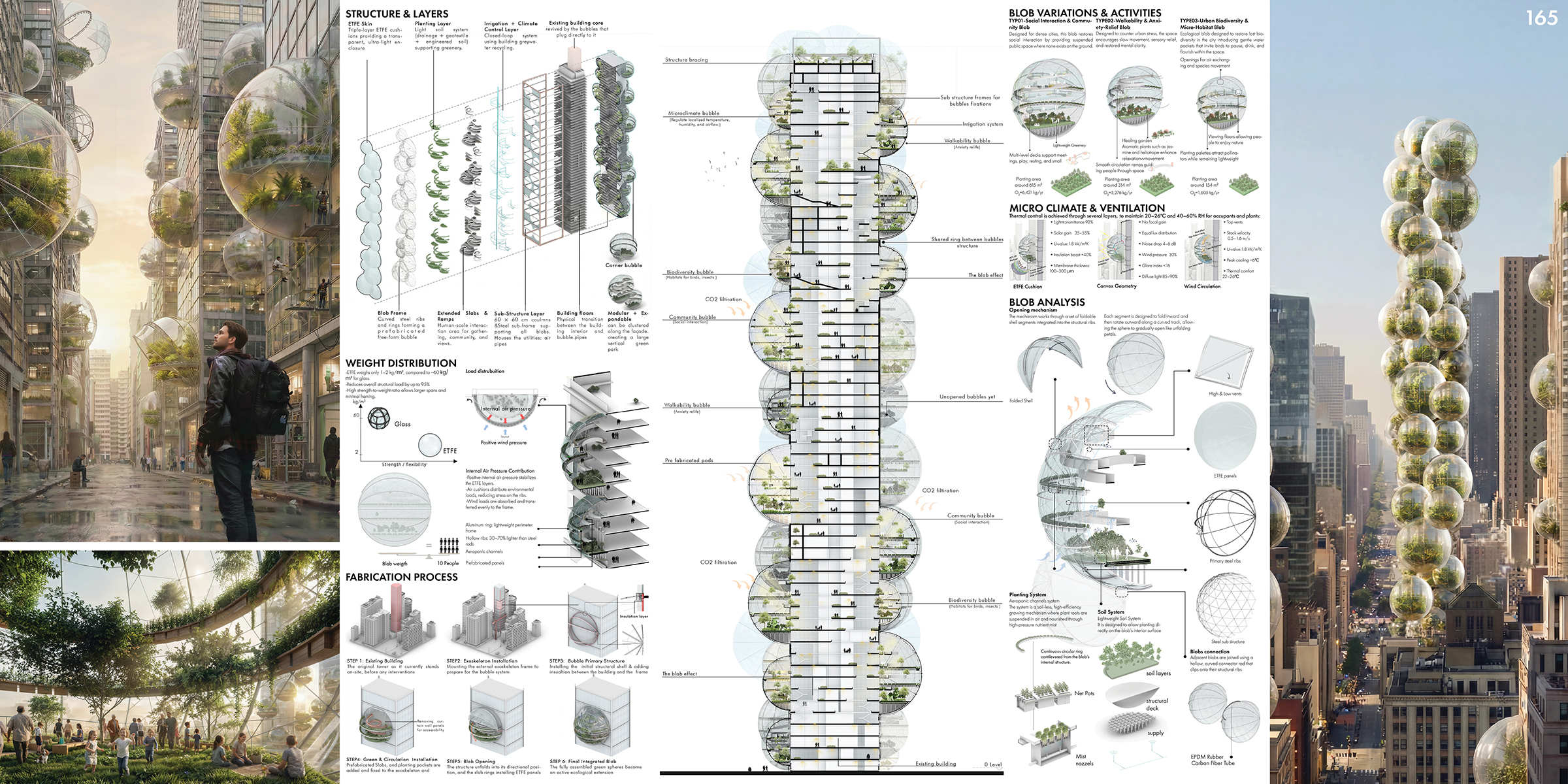
The project proposes a new typology for the 21st-century skyscraper: an urban vaccine that heals the city by attaching living architectural organisms—Blobs—onto existing towers. These Blobs function as ecological prosthetics rather than decorative additions, restoring the severed relationship between humans and nature. They form elevated promenades, collective terraces, and biodiversity habitats suspended in the air. A tower fully enveloped in Blobs becomes a new organism, increasing its green surface area by up to 200 percent and transforming a once hard, vertical machine into a restorative landscape.
Each Blob is a modular, prefabricated unit anchored to an auxiliary structural frame wrapping the host building. Fixed rails are installed first, followed by operable Blob modules that lock into place like a second skin. Manufactured off-site, they arrive as prefabricated segments that reduce construction waste by roughly 40 percent and minimize disruption. Each unit carries planting substrate, microhabitats, and an irrigation network supplied by harvested rainwater or treated greywater, turning façades into continuous three-dimensional parks that can be walked, inhabited, and cultivated.
This strategy reverses the destructive logic of conventional development. Instead of nature shrinking as the city grows, every square meter of built surface becomes an opportunity to create more nature. A network of Blob-adapted towers forms a new urban ecology: elevated parks, hanging forests, migratory pathways for birds and insects, and walkable sky corridors offering daily access to greenery. For humans—whose attention, sensory balance, and psychological well-being have been eroded by the digital age—these sky-level landscapes provide essential reconnection.
Environmentally, the system cools overheated districts, filters polluted air, absorbs carbon dioxide, and reinvigorates oxygen production across entire neighborhoods. Socially, it restores nature to places where it has been structurally removed. The skyscraper becomes a vaccine: a living system that heals the city, restores ecological balance, and makes vertical density compatible with human life. It allows the metropolis to breathe again.