The Regenerative Tower

By:  | February - 26 - 2026

2025 Skyscraper Competition
Honorable Mention

Pardis Taji, Movahede Amirmijani, Milad Shahin, Niloufar Rezaei, Shahin Etminan, Mohsen Shabani Ravari, Amir Tahmoures
Italy

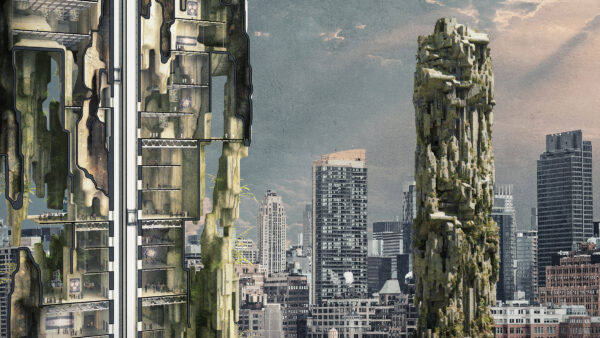
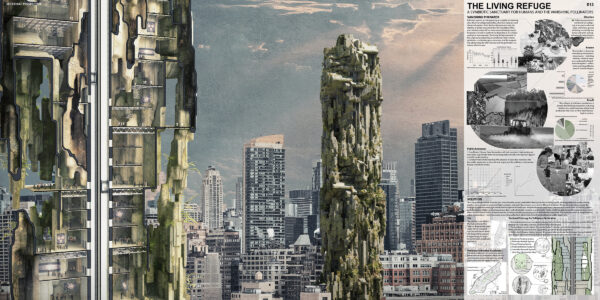
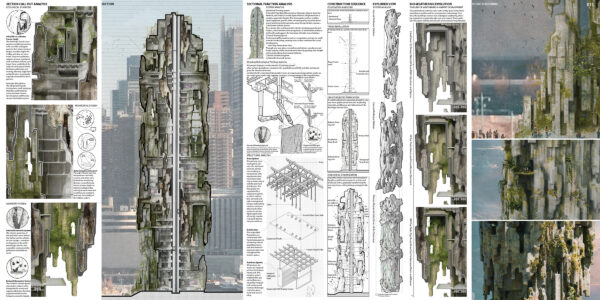
Amid the sun-bleached horizons of Iran’s Makran coast, Rudik-e Molladad rises as a beacon of renewal. The Regenerative Tower turns wind, air, and light into life—producing 15,000 litres of water daily, recycling 95–98 per cent in a closed loop, and harnessing 2 MW of wind energy through twin vertical shafts. It’s a 200-meter vertical farm that nurtures saffron and greens with AI precision, while residential rings offer shaded sanctuaries echoing Baluchi homes and the ancient houtag cisterns that once harvested desert moisture. Forged from recycled concrete and GFRP, the tower breathes like a living organism—transforming scarcity into serenity, and resilience into hope.

Site Analysis

Historical and Social Context

Rudik-e Molladad is a small Baluchi village shaped by centuries of tribal settlement along the Makran coast. Strong family networks, collective traditions, and a livelihood based on agriculture and trade give the community a resilient identity, despite limited infrastructure and economic isolation.

Geographic Context

The village is located on the flat Makran coastal plain, sitting on sandy–silty soils with seasonal drainage channels and minimal vegetation. Its proximity to the Gulf of Oman affects wind and humidity patterns, which create both construction challenges and opportunities for wind-responsive design.

Climate Characteristics

Rudik-e Molladad experiences a hot desert climate, with summer temperatures exceeding 40°C, mild winters, and very low annual rainfall. Humidity levels fluctuate sharply, and strong coastal and inland winds carry dust, while high solar radiation increases heat stress throughout the year.

Environmental Challenges

The village faces severe water scarcity, saline groundwater, dust-laden winds, and intense solar exposure. Seasonal storms pose flooding risks, while soil salinity and desertification reduce agricultural potential. Weak infrastructure heightens the community’s vulnerability to these climatic stresses.

Demographics and Infrastructure 

The village has a population of around 556 people who live in low-density rural housing with limited access to water, electricity, and waste management systems. Economic activity is modest and primarily tied to agriculture and regional trade, emphasising the need for resilient, self-sufficient architectural solutions.

Concept Statement 

This concept responds to the daily challenges of Rudik-e Molladad—unsafe housing, water scarcity, infertile soil, and severe 120-day winds. Instead of treating these conditions as limitations, the project turns them into opportunities. At its centre stands a regional prototype tower functioning as a life-support system: harvesting atmospheric water, generating wind energy, and producing food through elevated agricultural platforms. Its energy core reinterprets the traditional Iranian windmill, while the houtag, long used for water collection, becomes the symbolic and functional anchor of the design. Around this tower, stepped residential rings draw from Baluchi kapar geometry, and green courtyards between bridges reference the Persian Chaharbagh, forming shaded communal axes. The circular plan echoes ancient Iranian cities organized around shared infrastructure. By merging environmental technology with cultural memory, the tower becomes a factory for water, energy, and food—proposing a resilient, hopeful future for the community.

Structural and Environmental Systems

The tower is anchored by a dual-layer reinforced concrete core that houses wind turbines for on-site energy generation. Around it, a double-layer tubular exoskeleton with butterfly-shaped elements forms the primary structural skin and incorporates a fog-harvesting system that captures atmospheric moisture and filters dust. The tower stands on four structural legs that rotate 90 degrees along its height, creating an aerodynamic form capable of resisting intense seasonal winds. Its foundation is positioned above a traditional houtag, reinforcing both stability and cultural continuity. Four tubular bridges connect the residential rings to the central tower, completing a resilient, climate-adaptive architectural system.

Vertical Zoning 

Zone 1 (floors 1–10) processing and water systems. Zone 2 (11–30) leafy greens via NFT. Zone 3 (31–50) premium fruiting plants using gutter–drip systems. Zone 4 (51–60) high-value medicinal crops grown through aeroponics


2025 Skyscraper Competition
Honorable Mention

Calvin Ho Sze Yin
Hong Kong

Overview
The construction of high-rises in Hong Kong has greatly increased the city’s living space since the mid-20th century. As of 2025, there are over 9,000 high-rises, with more than 4,000 of them taller than 100 meters, predominantly for residential use. However, the housing supply often cannot match demand since only 24.1% of Hong Kong’s land is suitable for construction. Much of the remaining land is hilly or designated as natural reserves. Conventional high-rise construction usually struggles in sloped areas due to the significant excavation, structural and geological requirements. This thesis explores the alternative high-rise designs that could adapt to sloped terrains, potentially addressing the housing shortage in Hong Kong and challenging the perception of land scarcity.

Architectural Precedents on Slope
Investigating the management of sloped terrains is important, especially for urbanizing hilly areas like the Mid-Levels District of Hong Kong Island. Roads are built to follow land contours, with high-rises along these routes. Two traditional methods are slope-cutting, which levels land but can create unstable slopes and harm ecosystems; and elevating structures alongside roads, which leads to unused spaces and reduces efficiency. Both methods have high construction costs and maintenance challenges.

The Thesis
To tackle the shortage of buildable land, adapting structures to existing landforms is preferred over excavating slopes. This thesis proposed an innovative Slope-rise high-rise system, which is designed to fit extreme topography while minimizing environmental impact. This strategy can effectively harness steep slopes near urban areas to increase housing supply in Hong Kong. The design considerations are as follows: –

A. Structural System
Slope-rise uses a cantilevered hanging system made of three parts: the cantilever structure, the hanging part, and the counter-weight. It balances moments to maintain stability. This design allows flexibility in placement, adapts to challenging terrain, and reduces the need for extensive excavation and foundation.

B. Slope-rise & Sloping Ground
Slope-rise changes how buildings interact with the sloping ground. Unlike conventional high-rises, where connections are mainly at ground level, Slope-rise has close ties with the slope throughout its floors, enhancing accessibility and minimizing ecological damage.

C. Programme & Circulation Arrangement
Slope-rise allow for better design options and arrangements compared to traditional towers. This includes placing entrances at the top with living spaces below, and using a slanted core for circulation.

D. Environmental Consideration
Conventional high-rises negatively impact ecological systems on cut-slope sites. Slope-rise design addresses this with a cantilevered structure that reduces excavation and structural effects. Its slanted shape encourages open terraces, benefiting micro-ecosystems and enhancing natural ventilation, supported by wind-flow simulations showing improved airflow over traditional designs.

Conclusion
Slope-rise presents an optimal structural form for cantilevered hanging systems on slopes, targeting residential high-rises that harness natural topography. It promotes inclusivity with diverse housing units, including studio flats, double units, and family accommodations, serving various socio-economic backgrounds and addressing different users’ needs. Moreover, the structural system could become a universal structural system for all tower on sloped terrains.

With public housing costs at approximately 2,083 HKD per square foot and private housing at 2,240-3,330 HKD, Slope-rise seeks to be cost-effective by replacing conventional concrete columns with steel cables, potentially lowering material costs and allowing innovative designs for the architecture, community and the environment. Last but not least, Slope-rise is vision to be adopted and multiplied on all the under-used slope terrains around Hong Kong, or even in the world, in the near future.

The Detritus Engine

By:  | February - 26 - 2026

Honorable Mention
2025 Skyscraper Competition

Dorsa Shahim, Mohamad Mobin Yousefi, Rana Karimibavandpour, Abolfazl mahdavi, Fateme Sadat Hoseini, Samin Soleimani
Austria, Belgium, Canada, Estonia, Italy, Netherlands

Tehran is a city caught between rapid expansion and an aging, overstretched urban infrastructure. Extreme density, limited available land, vulnerable building stock, and the absence of reserved spaces for emergency management have placed the metropolis in a state of constant risk. Beneath the city lies a network of active fault lines, while above ground, large portions of the built environment and emergency routes lack the resilience needed to withstand a major earthquake. In such conditions, Tehran can neither expand horizontally nor easily develop new infrastructural systems. Any viable solution must emerge from within the existing fabric—from overlooked elements that have never been recognized as potential resources.
The project’s strategy draws inspiration from the survival logic of cockroaches—one of nature’s most adaptive species. These organisms survive through rapid response, quick movement between multiple layers, and the ability to utilize discarded organic matter. In moments of danger, cockroaches transition between three spatial layers: height, ground, and the underground. They locate the nearest safe zone and continuously create cycles of survival using resources found in polluted or waste-ridden environments. This multilayered, swift, and efficient behavioral pattern forms the conceptual backbone of the project.

Within this framework, urban billboards are reimagined as the upper layer—structurally strong, widely distributed, and elevated across the city. Though their current role is limited, their height, accessibility, and repetitive structural logic make them ideal candidates for rapid transformation into safe, inhabitable units during emergencies. Correspondingly, the metro network becomes the lower layer, mirroring the subterranean ecosystem of cockroaches. With its structural stability, spatial continuity, and inherent concealment, the metro system has the capacity to function as secure corridors for transport, storage, and emergency support.

A third component integrates Tehran’s substantial volume of organic waste, much of which is currently mismanaged. Just as cockroaches sustain themselves using decaying organic materials, the project harnesses this waste stream to generate compost and bioenergy. What is now a burden becomes a functional input in a closed urban cycle.

However, the project is not merely about redefining billboards, metro tunnels, or waste streams. Its ambition is the creation of a responsive, multilayered urban system—one that enhances environmental quality during normal conditions and transforms into a life-support structure during crises. In everyday operation, the system enables elevated green areas, material recycling loops, and partial energy self-sufficiency. In a city like Tehran, where every square meter of green space is precious, these elevated pockets can reduce heat, improve air quality, and contribute to overall urban well-being.

The true value of the proposal becomes evident at the moment of disaster. Mirroring cockroach survival patterns, billboard units become accessible, elevated safe refuges. Integrated within are rapidly deployable, bubble-like shelters. These resilient membrane structures remain compressed normally but instantly expand upon seismic triggering, providing immediate protective habitats for displaced populations. The metro layer provides protected routes for movement, storage, and emergency logistics. Meanwhile, bioenergy produced during normal periods supplies essential resources—energy, heat, and limited food—when conventional systems fail. The structures deploy quickly without damaging the urban fabric. Their modularity and adaptability make them an appropriate solution for a dense, earthquake-prone metropolis.

Ultimately, this project is not a building; it is an urban resilience model. It demonstrates how forgotten infrastructures, discarded materials, and underused urban elements can be transformed into a survival ecosystem. Rather than resisting the looming threat of disaster, the proposal imagines a Tehran that learns to generate its response from within the crisis itself. This vision suggests a future where the city no longer relies solely on large-scale, resource-heavy interventions, but instead cultivates resilience from the very components it once ignored.

2025 Skyscraper Competition
Honorable Mention

Mohamed Noeman, AbdelRahman Badawy, Toka Hassan, Pierre Atef Ghattas Saweris, Mariam Ahmed Hassan Elkashatt,  Toqa Mahmoud Lotfy Elkhazragi,  Haneen Ali Sobhi Ali, Habiba Kamal Mahmoud, Salma Shehab Mohey El-din,  Sama Hazem Ragab
Egypt

Wildfires have become one of the most destructive forces reshaping the planet. Boreal forests hold immense quantities of carbon not only in their dense vegetation but in the deep, peat-rich soils beneath them. Climate change has dried these peatlands at alarming rates, transforming them into vast reservoirs of carbon waiting for ignition. A single spark—often nothing more than lightning—can trigger runaway fires that tear across landscapes, destroy habitats, erase species, and destabilize entire ecosystems. Over the past two decades, such fires have doubled global tree loss. In 2023 alone, Canada lost 7.8 million hectares of boreal forest, releasing more than 1,500 million tons of CO₂.


In this context, The Missing Tree emerges as an architectural presence that embodies what the forest has lost—a “tree” restored not in form but in function. Rather than occupying land or adding ecological burden, it introduces the minimum footprint needed to directly confront the root causes of megafires: desiccated peat soils and lightning-induced ignition.

The tower draws from Venturi principles of pressure and speed to transform natural wind into a restorative force. Its conical geometry accelerates airflow, enabling the formation of moisture-rich bubbles that drift across the ground and gradually rehydrate the soil. Simultaneously, its conductive structural spine absorbs lightning energy before it reaches the forest floor, preventing natural ignition triggers from ever occurring. Within the tower, functions merge seamlessly: the upper regions orchestrate bubble formation and environmental repair, while the lower levels open as a public forest observatory—an immersive realm where communities witness and participate in the healing process.

Scientifically, the tower operates as a continuous environmental engine. A nano-silicate-coated timber skin catalyzes nightly condensation at a rate of up to 108,000 liters of water. This collected moisture flows into circular plantation rings surrounding the structure, with the help of soapberry trees, which produce natural saponins that mix with the water to create an ecological soap solution. As wind moves through the Venturi chambers, the tower generates 20,000 to 50,000 biodegradable bubbles daily. Each bubble bursts across the forest floor, releasing micro-droplets that moisten the peat layer. When winds intensify—a force that once spread fire uncontrollably—the system responds by producing more bubbles, turning a destructive natural element into an active agent of renewal.

Over time, The Missing Tree becomes long-term restorative infrastructure. During the first two years, upper peat layers regain enough moisture to significantly reduce ignition risks and support vegetative regrowth. Across seven years, deeper layers rehydrate and stabilize, restoring carbon absorption and strengthening the ecosystem’s resilience. When deployed as a network, the towers create microclimate stability across the region, reducing both the likelihood and severity of future megafires. Beyond restoration, they maintain soil health by distributing natural supplements that reinforce the forest floor.

While the upper mechanisms work continuously to repair the land, the lower levels remain an enduring public realm—a reminder that environmental recovery is inseparable from human participation. Elevated walkways, observation decks, research platforms, and zipline routes weave through the interior, enabling communities to engage with the slow regeneration of the forest. The tower becomes a space where ecological science, education, and human experience merge into a unified architectural ecosystem.

More than a structure, The Missing Tree redefines architecture as a living restorative mechanism—one that breathes moisture back into the earth and transforms destructive natural dynamics into regenerative forces. It stands as a reborn tree, protecting its forest while offering a vision for how architecture can evolve into an active agent that heals the planet.

Neo-Ark Skyscraper

By:  | February - 26 - 2026

2025 Skyscraper Competition
Honorable Mention

Jiaying Gao, Junda Lu, Chenhao Lin, Anqi Cai, Huiyang Zhong, Weikeke Feng, Yuhang Zheng, Yuanchuan Yang
China

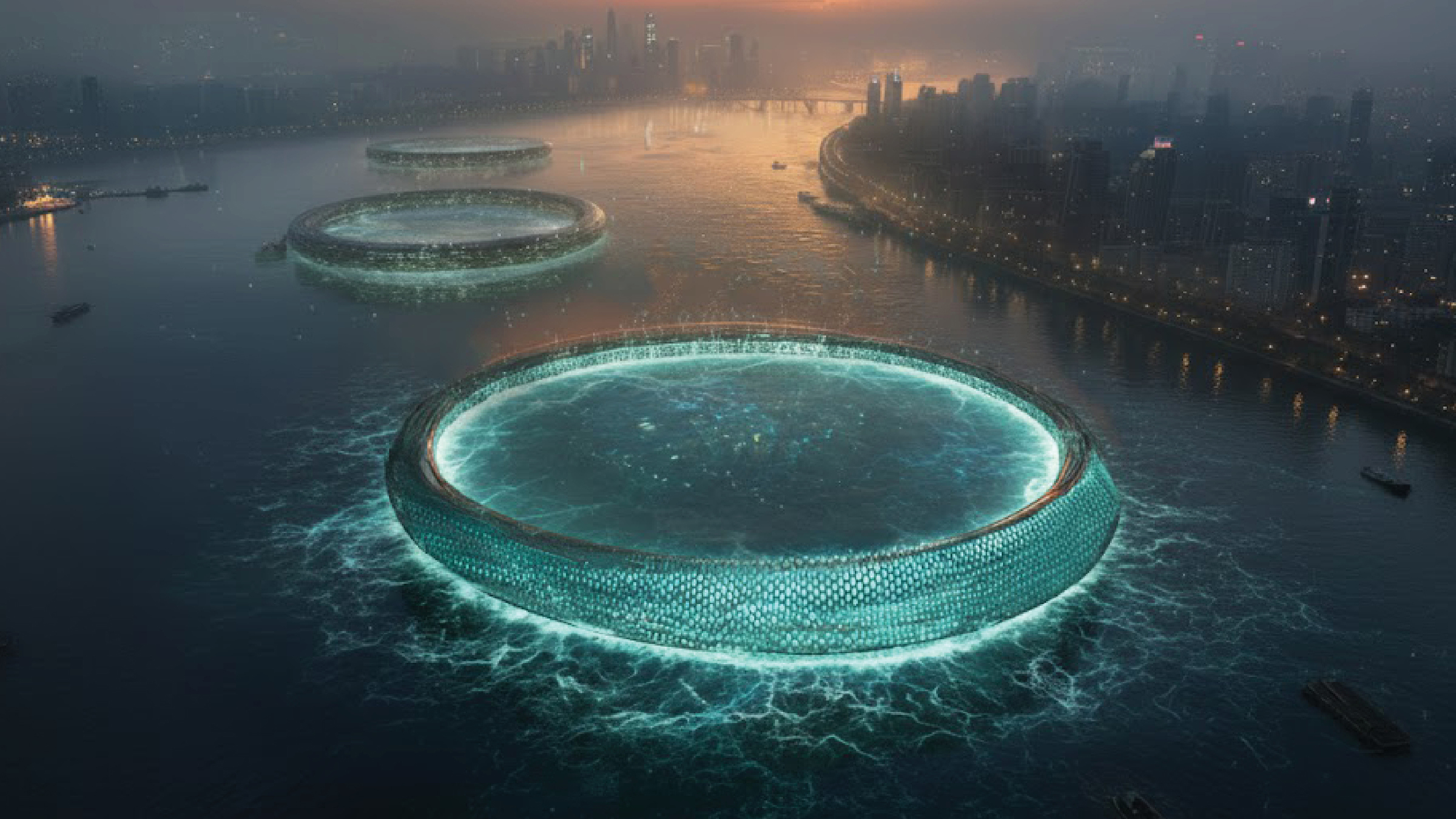
This design directly addresses the existential crisis faced by Tuvalu due to rising sea levels. Guided by the philosophy of “dynamic symbiosis,” it envisions a sustainable floating city capable of adapting to the marine environment while preserving cultural roots.

At its core, the design employs a central stabilizing column and a radial telescopic steel-pipe system to support six concentric functional rings. The platform can transform into three configurations according to needs: the flat daily mode provides a stable base, the conical storm-resistant mode dissipates wave energy, and the concave ceremonial mode encloses cultural spaces—making the structure a “living vessel” that dances with the sea.

On an urban scale, the project integrates essential functional systems for living, production, and public services. Tailored to Tuvalu’s geographic morphology and population size, it accommodates approximately a thousand residents within a layout that blends productive, residential, and communal spaces. Through multi level technological innovation, a future habitat is created—one that flexibly responds to nature and empowers community life.

The design not only responds to Tuvalu’s fisheries based economy but also incorporates local lifestyles and cultural practices. Architecturally, a modular approach allows residential units to expand flexibly according to family structure. These units integrate solar photovoltaic systems, rainwater harvesting, and water recycling to achieve semi autonomous energy and water supply—echoing Tuvalu’s fishing traditions and local cultural practices while enhancing the city’s environmental resilience.

Overall planning further clarifies the relationships among transportation, vertical farming, public spaces, and industrial functions, forming a compact, efficient, and resilient urban fabric. This floating city thus becomes a comprehensive platform for Tuvalu’s sustainable survival and development.

More than a technical response to sea level rise, this proposal represents an active exploration of ocean based settlement—a vision that merges engineering ingenuity with humanistic care, offering Tuvalu and the wider world a future filled with resilience, dignity, and hope in the face of global climate challenges.

Project Selene: Lunar City

By:  | February - 26 - 2026

2025 Skyscraper Competition
Honorable Mention

Zheyi Yang, Zhao Zhou, Jieying Luo, Yuxin Gu, Jinglei Xu
China

For millennia, humanity has gazed at the Moon, not merely as a distant celestial body but as a beckoning canvas for our future. Poets, astronomers, sailors, and dreamers have all found meaning in its pale light. Yet beyond romance and mythology lies a persistent, practical longing: to return, to learn, and to stay. Today, that ancient desire has sharpened into a clear ambition. Our momentum now roars toward establishing a permanent lunar city: Project Selene.

Project Selene envisions a lunar urban tapestry that is not a static base but an alive city, perpetually growing and adapting for brave adventurers, explorers, pioneers, builders, scholars, and scientists. It would welcome newcomers not as temporary visitors, but as citizens shaping a shared experiment in living beyond Earth. The city’s form would be legible and resilient, designed to expand in stages without losing coherence, dignity, or identity.

At the heart of this vision sits the expandable belt, a flexible urban spine. Imagine its metallic veins pulsing with new residential arteries as the city welcomes more pioneers and additional modules lock into place. This belt would not simply supply housing; it would also host clinics, schools, laboratories, workshops, libraries, and cultural spaces, along with the everyday services that turn survival into belonging. Transit lines, data links, power distribution, water recovery, and air management would be embedded in the belt’s structure, allowing the city to grow with minimal disruption and maximum continuity.

Above and around this outpost, a protective dome would stretch its embrace to encompass a thriving metropolis within. Engineered to mitigate radiation, micrometeoroids, and extreme thermal swings, the dome would create a stable envelope for life, agriculture, and delicate equipment. Within this protected sphere, daily routines could flourish in a meticulously designed microcosm where safety is integrated with beauty and comfort. Carefully calibrated light cycles, acoustic treatments, and interior landscapes would support mental health and social vitality, enabling residents to sustain not only bodies but also communities over long lunar seasons.

The green core would be an oasis of verdant life. More than a garden, it would be a sanctuary for recreation, ecological preservation, and food resilience. Residents might walk under cultivated canopies, rest by water features that recycle precious moisture, and participate in community farming that knits society together. The green core would also serve as a living laboratory, refining closed-loop ecological systems that can later benefit Earth’s cities and future deep-space missions.

Encircling this heart, the living belt would form a vibrant ribbon of civic life, weaving residential havens with bustling commercial districts and vital public arteries. Markets, maker spaces, research incubators, and event halls would give the settlement a rhythm of work, exchange, learning, and celebration. Local governance, emergency response, and education would be embedded throughout, enabling neighborhood-scale agency within a unified metropolitan framework.

On the outermost edge, the industrial edge and production ring would hum with tireless energy. Resource extraction, construction, waste management, and the ceaseless process of recycling would be conducted with discipline and care. By utilizing local regolith and available ice where feasible, this ring would reduce dependence on Earth, turning scarcity into innovation.

Project Selene would not merely be a testament to our ambition. It would be a cradle for a new chapter in our cosmic saga: a refuge for humankind, a springboard for further exploration, and a unique vantage point from which to contemplate our place among the stars. In building a city on the Moon, we would also be building a mirror—one that reflects the values we choose to carry into the wider universe.