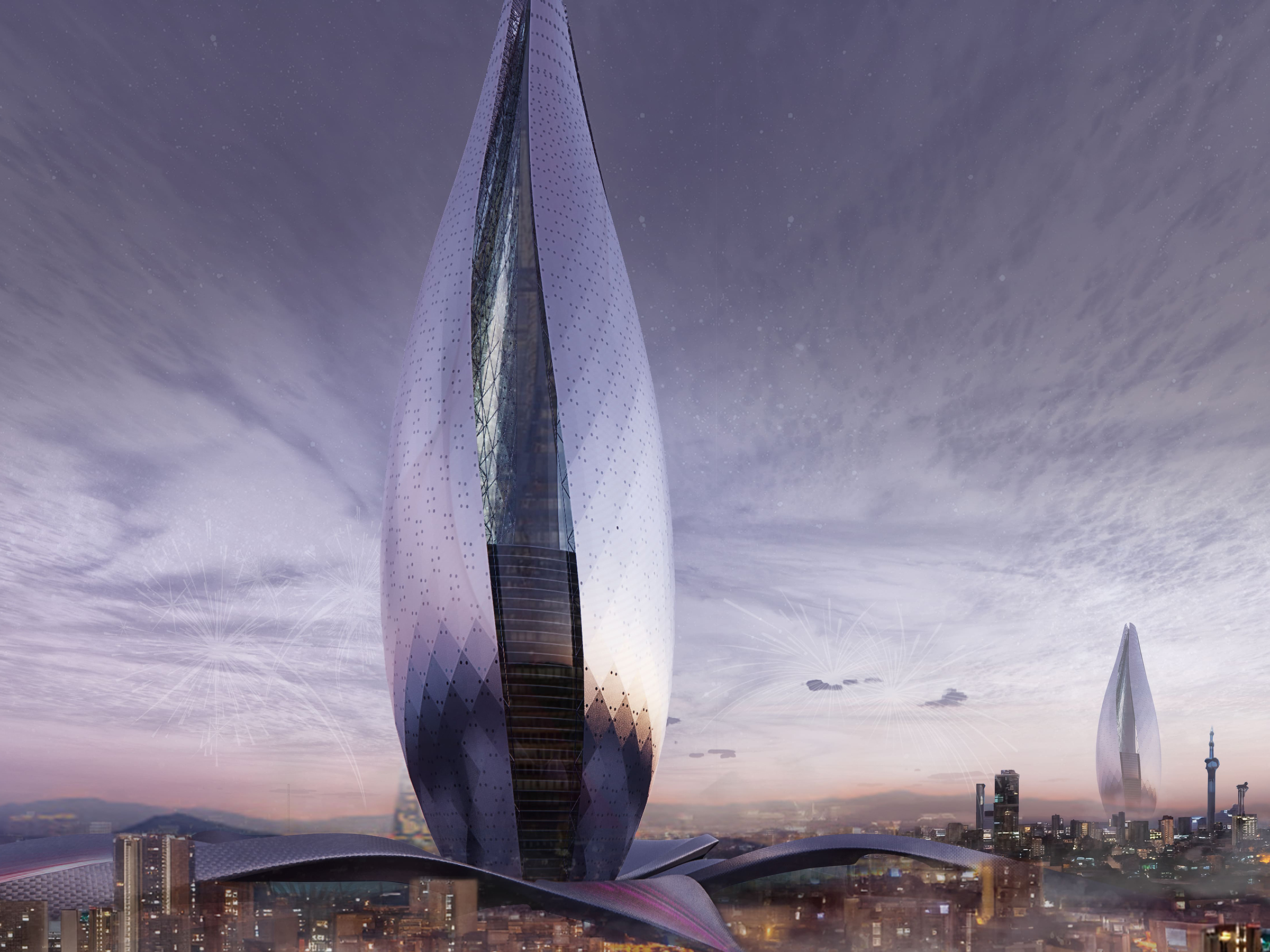
Urban Intercropping

By:  | June - 10 - 2024

2024 Skyscraper Competition
First Place

Penghao Zhao, Hanyu Sun, Sinuo Jia, Jingxuan Li, Songping Jing,  Yibo Gao, YuJie Zeng, An Jiang
China
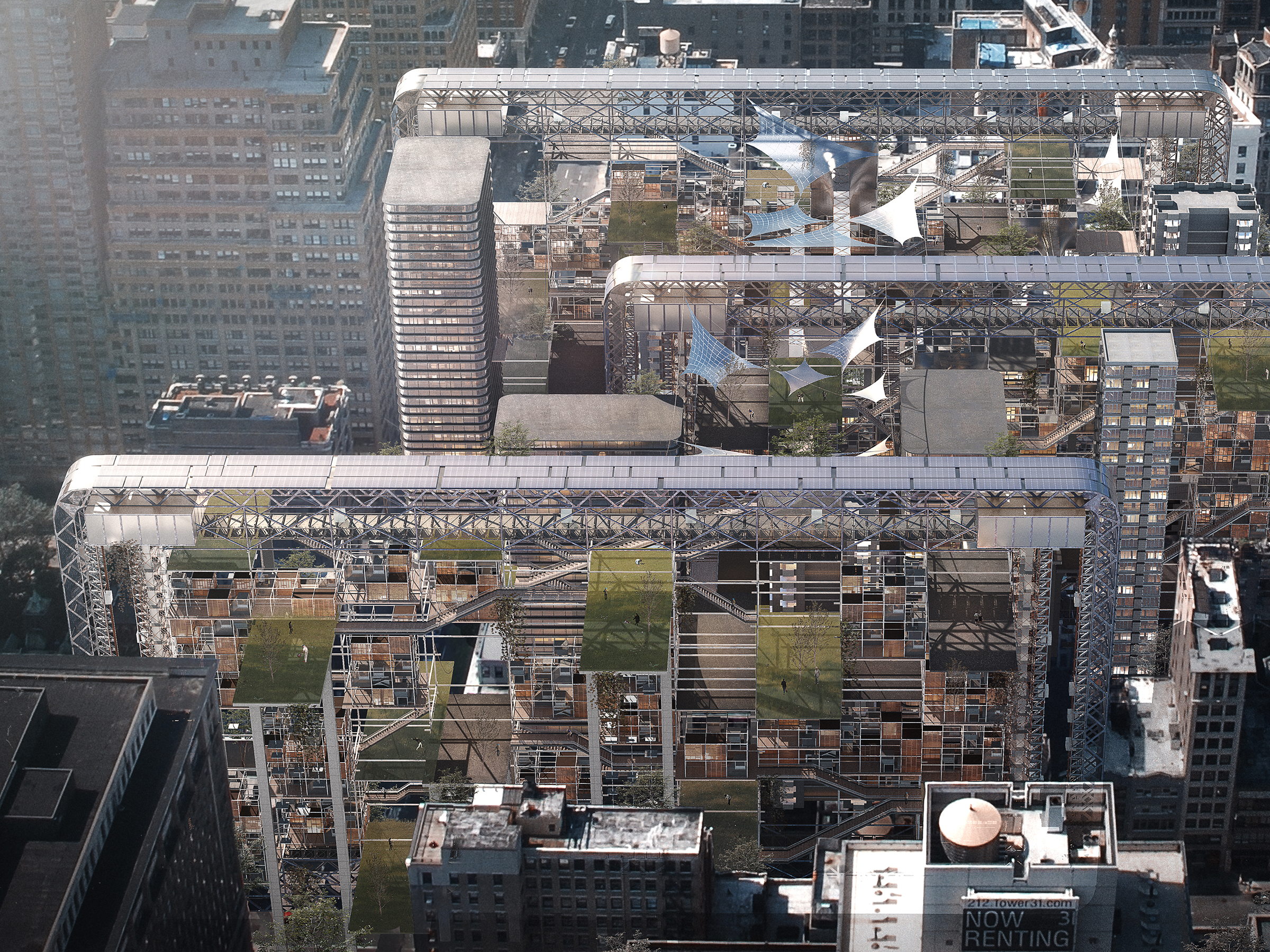
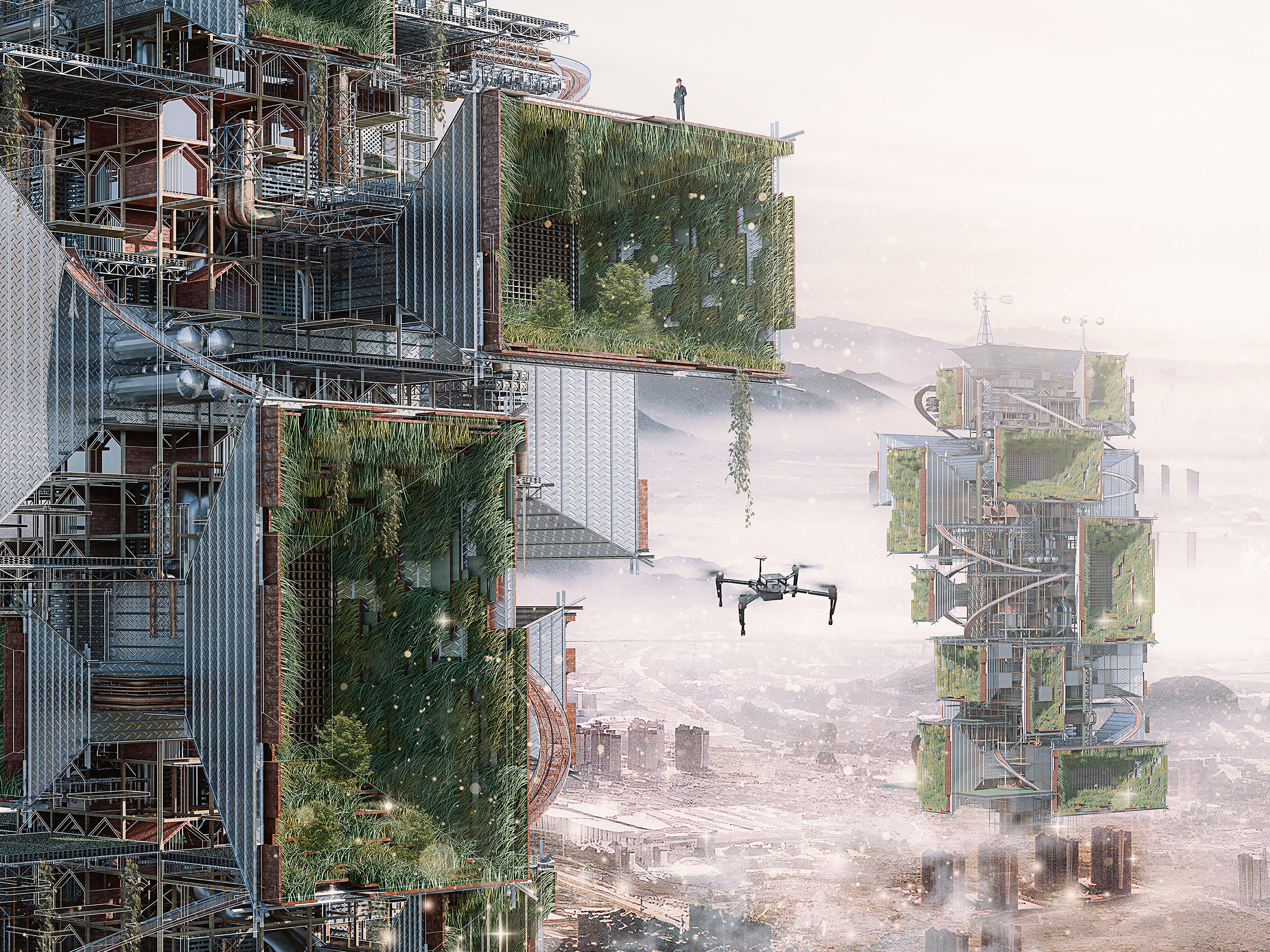
In today’s urbanization process, the distance between cities, agriculture, and natural ecology is gradually widening, leading to numerous issues. As the political, economic, and cultural hub of Xinjiang, Urumqi, located in northwest China, faces the contradiction between urban development and agricultural ecological resources. To address this, the architectural design concept of “Urban Intercropping” is proposed.

Inspired by the intercropping planting system in agriculture, this design integrates this planting pattern with urban spatial planning. By inserting architectural slicing devices into the “gaps” of the city, a new urban system is formed, enabling any point within the city to become a new system, thus realizing a de-centralized urban development model.

Simultaneously, the design concentrates on agricultural industries in high-rise buildings, leveraging the vertical intercropping planting model to maximize the utilization of space, light energy, and resources. Composed of mechanical devices, non-mechanical facilities, and movable living units, this architecture addresses issues such as urban housing shortages, traffic congestion, and a lack of green spaces, enhancing urban efficiency and revitalizing intermediate urban areas.
The design emphasizes the transformation of urban morphology. Depending on the varying functions and forms of urban buildings, skyscrapers are inserted into the urban space, creating a new urban system that further connects to the underground transportation system, relieving the city’s traffic burden. Read the rest of this entry »
The Streamline Concerto

By:  | June - 10 - 2024

2024 Skyscraper Competition
Second Place

Jianwei Zhu , Haoyu Liu, Yi Liu, Yanchu Liang
China

The streamline concerto
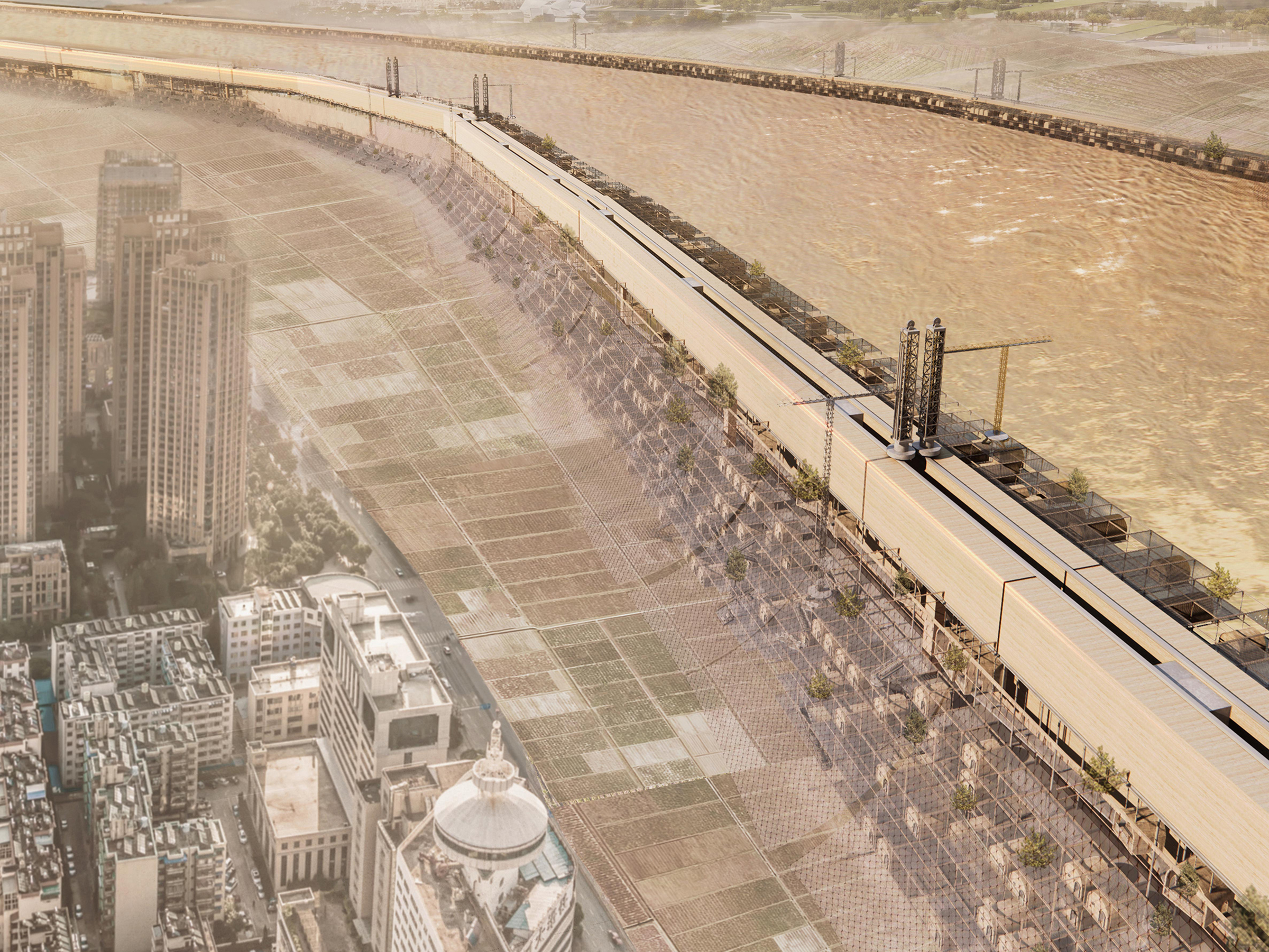
The Yellow River, revered as the Mother River of the Chinese nation, has shaped the banks along its course and the North China Plain, creating an ideal environment for agricultural revolution and laying a solid natural and geographical foundation for the emergence and development of Chinese civilization. However, as human history has progressed, the ancient ecology of the Yellow River has increasingly deteriorated. Sandstorms have become more severe near the Yellow River basin, and due to excessive cultivation and grazing upstream, soil erosion in the Loess Plateau has intensified. This has led to significant sediment accumulation and a continual rise of the riverbed downstream, resulting in the current situation of the elevated river, or ‘hanging river’, posing an imminent threat of riverbank breaches and urban flooding.

This design focuses on the environmental challenges of the Yellow River, addressing soil erosion upstream and the ‘hanging river’ phenomenon downstream. It adopts a philosophy of Yin-Yang harmony and collaborative management to comprehensively tackle these issues, aiming to achieve natural balance and soil-water improvement. We aspire that, in three 50-year cycles, through phases of restoration, regeneration, and sustainability, the architecture will blend into nature, and the sandstorms will be effectively controlled, soil in the upstream will no longer be lost, and the Loess Plateau will flourish; the riverbed downstream will be reduced to a safe level, turning the ‘hanging river’ into history. People will no longer fear the Yellow River’s breaches flooding cities, and the river will once again be the life-sustaining Mother River. We consider that skyscrapers may not develop vertically and could have a more diverse definition which means if necessary, skyscraper can extend in any certain direction. The twisty form of the Yellow River inspires us to design a skyscraper which develops along the riverbank and integrate with the natural environment, aiming to solve the ecological problem of the Loess Plateau. Read the rest of this entry »

Ocean Lungs Skyscraper

By:  | June - 10 - 2024

2024 Skyscraper Competition
Third Place

Mohammed Noeman Coutry, AbdelRahman Mahmoud Badawy, Toka Hassan Taman, Amr Khaled Mahmoud AbdElsstar, Hend Mahmoud Hassan Rashad, Menna Tallah Mahmoud Fouad, Mohamed Mahfouz Abdelaziz Abdelwadoud, Nagwa Khaled Mohamed Mohamed, Norhan Mohammed Abdel-Hamid Abdel-monem, Omar Ahmed Salah Mohamed
Egypt

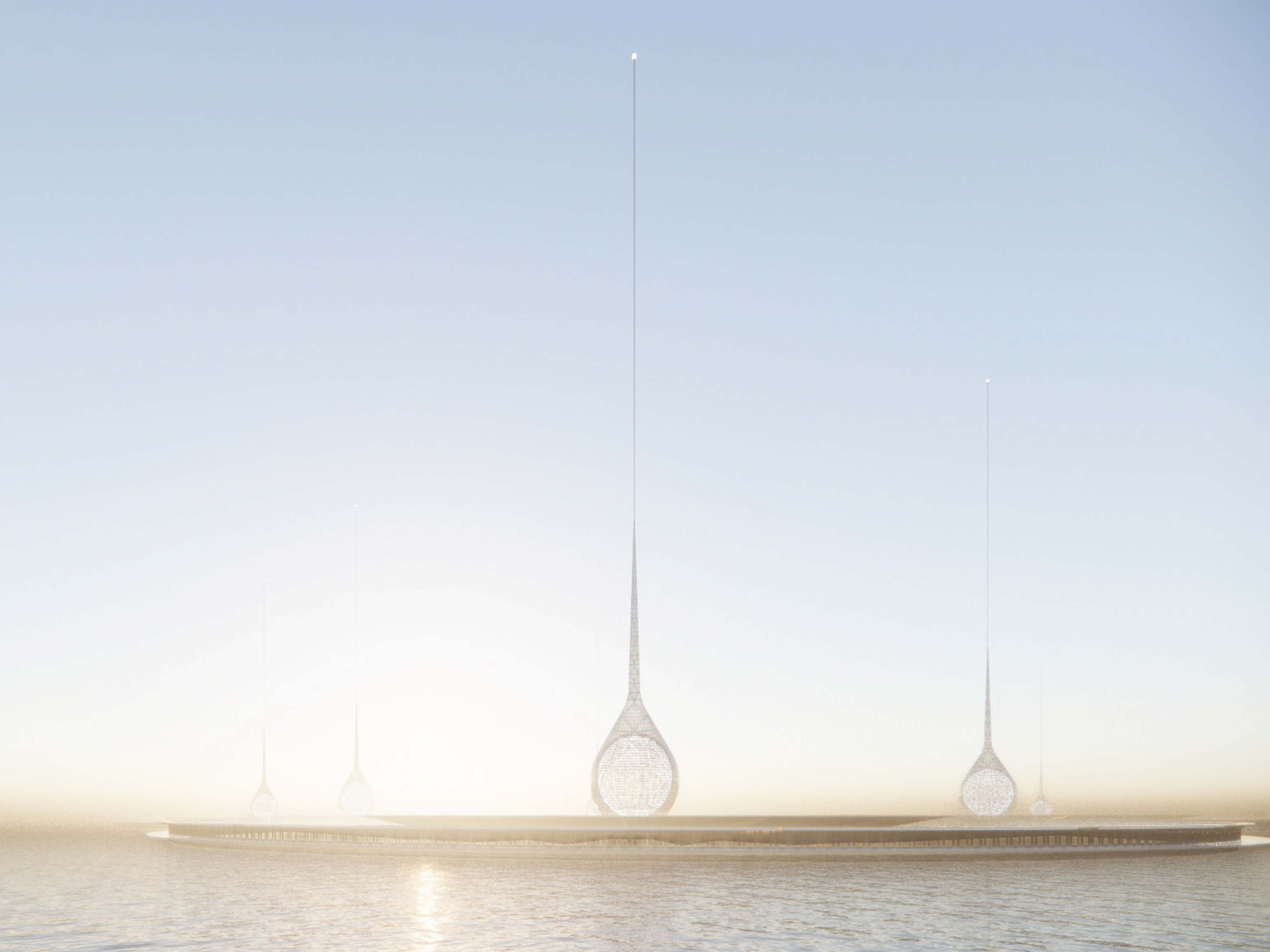
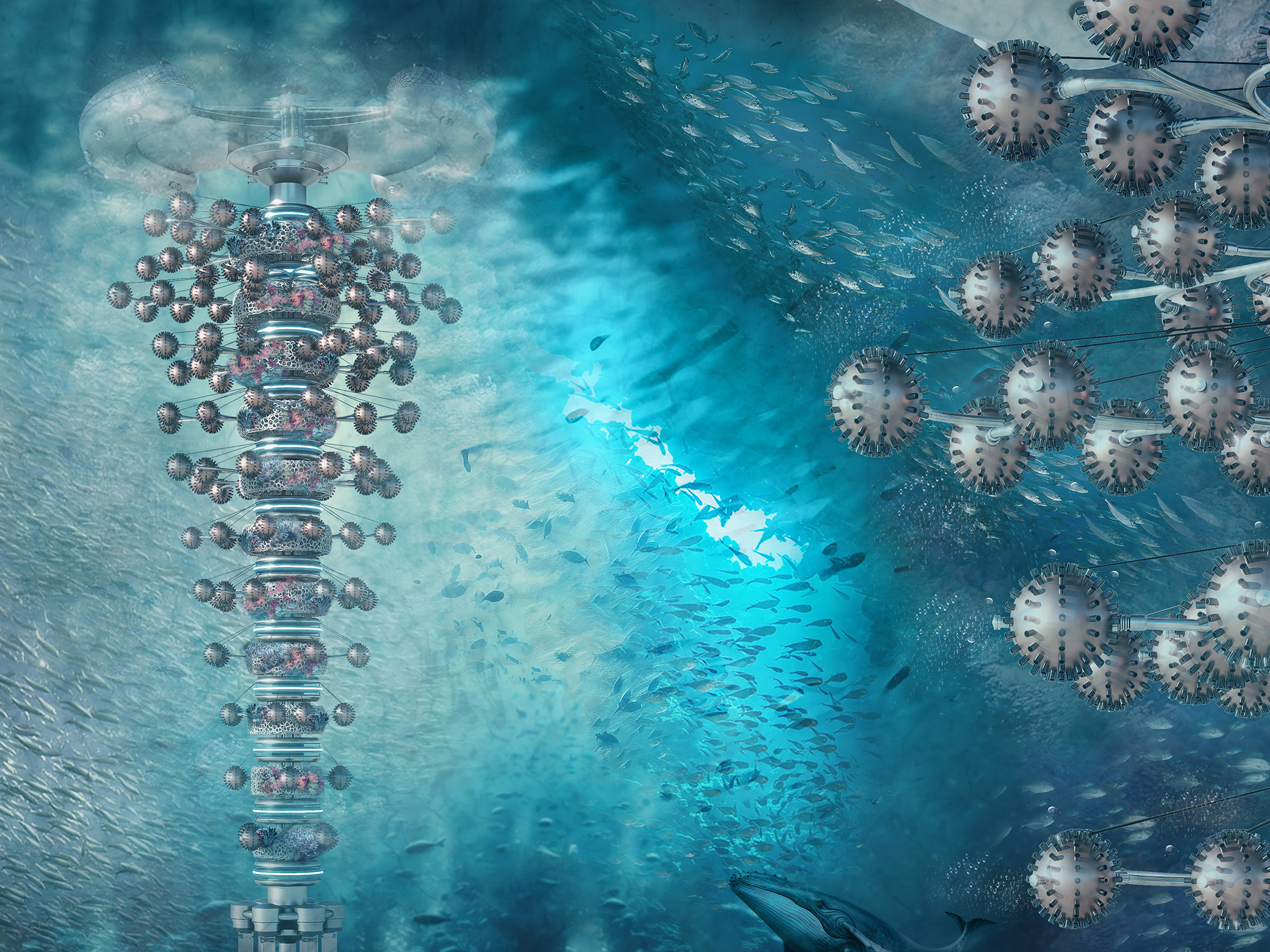
Our oceans face a double threat: rising CO2 levels and the devastation of coral reefs. These issues are intricately linked. CO2 dissolving in the water creates carbonic acid, leading to ocean acidification. This acidification weakens coral skeletons and delays their growth and survival. Coral reefs, teeming with marine life, are essential for the health of our oceans. The Ocean Lungs project tackles both problems simultaneously, offering a glimmer of hope for the future of our marine environment.

Ocean Lungs envisioned as a skyscraper positioned 1000 meters beneath the surface with a floating beacon above, embodies a lifeline for the ocean. At its core, the project harnesses state-of-the-art carbon capture technology. Imagine submerged, sphere-shaped segments enveloped in specialized membranes like high-performance, microporous sulfonated polyphenylsulfone (sPPS). These membranes allow CO2 to pass through while remaining impermeable to salt and other minerals, functioning as the ocean’s purifier by removing CO2 and other pollutants. This initiative directly confronts the root cause of acidification, promoting healthier marine environments crucial for the survival and prosperity of oceanic life. Read the rest of this entry »

Cloud Net Above The Three Gorges

By:  | June - 10 - 2024

2024 Skyscraper Competition
Honorable Mention

Zhengsheng  Pu, Bingrui Liu, Jingxiang Hong, Yunqian Wang, Yujie Feng, Kehan Sun
China

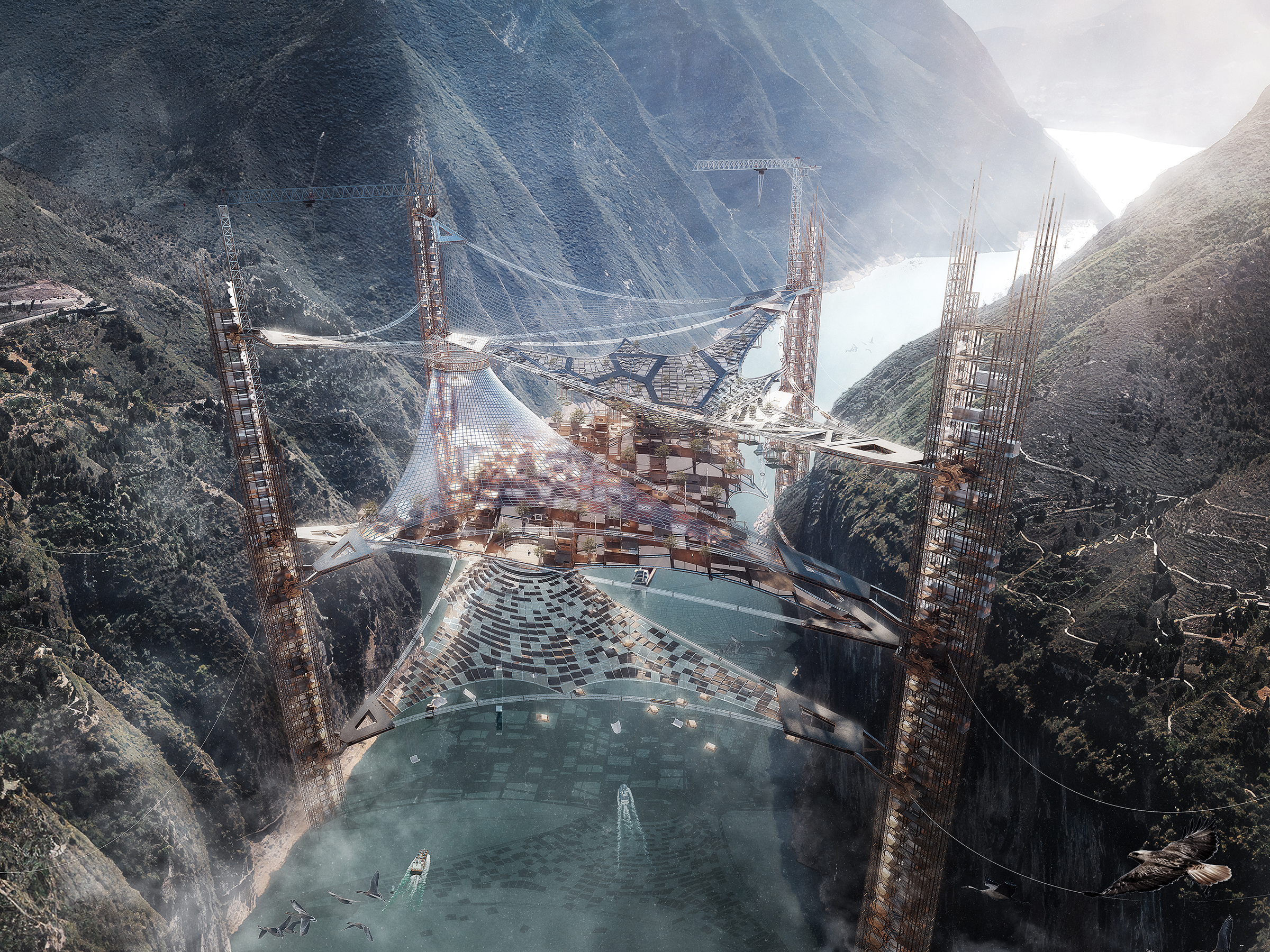
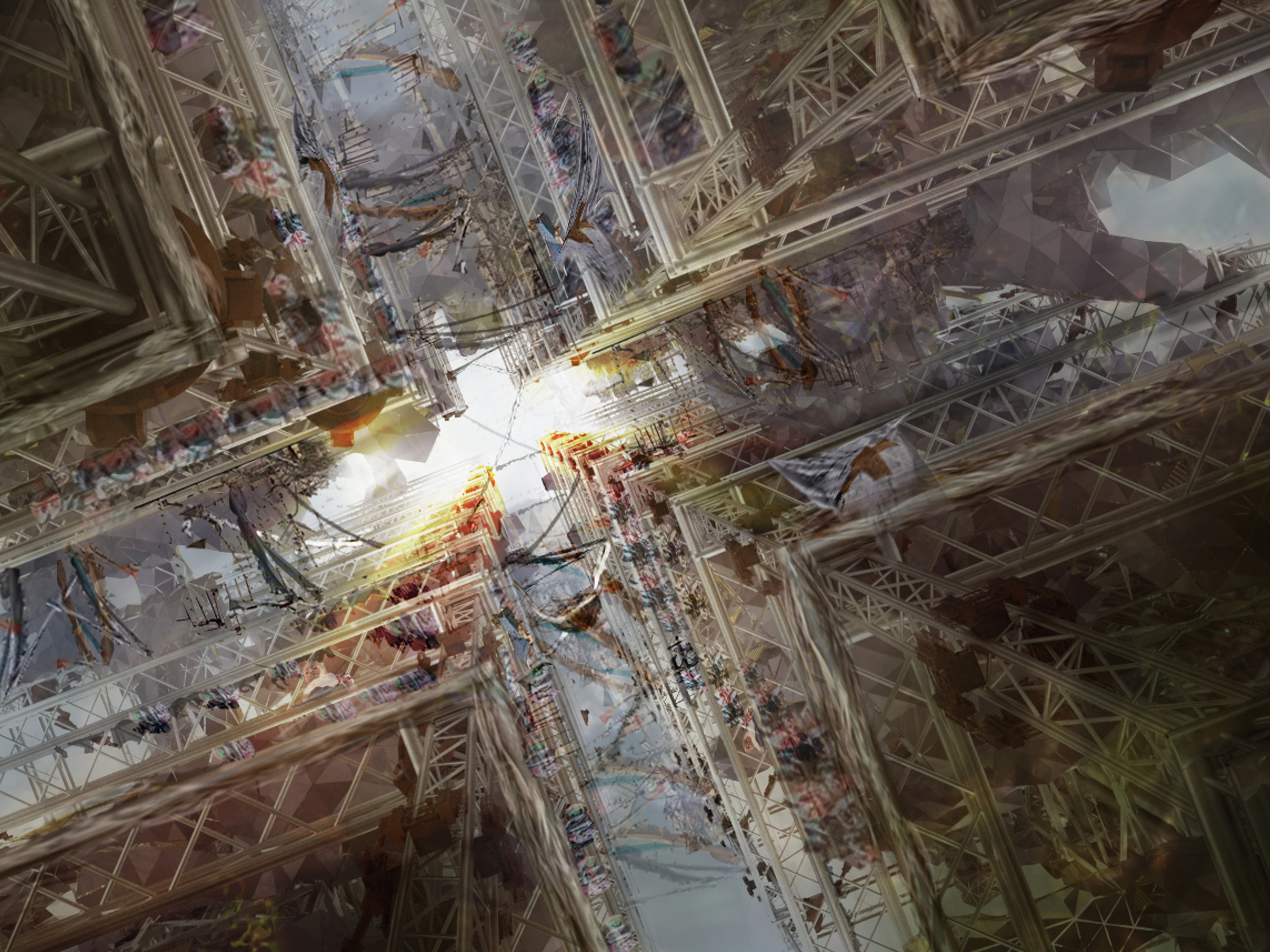
The Three Gorges Hydro-power Station, as the world’s largest hydro-power project, has been controversial since its inception, mainly involving issues of resettlement and the environment. The project inundated 632 square kilometers of land, affecting the lives of 847,500 people and a large amount of farmland, houses, and roads. The construction of the dam altered the ecology of the river segment, causing serious impacts on biodiversity and leading to the extinction or reduction of certain species.

To mitigate the ecological damage caused by human activities in the Three Gorges reservoir area, we have proposed a high-rise building design with a lightweight mesh structure. This design starts with fog collection and water harvesting, gradually evolving into planting, transportation, and living spaces, with each layer complementing and supporting each other. This dynamic and adaptable spatial design aims to provide a new paradigm for old urban spaces, stimulating spontaneity and social participation in spatial construction. Read the rest of this entry »
Air Catcher Skyscraper

By:  | June - 10 - 2024

2024 Skyscraper Competition
Honorable Mention

Kai Xu, Fangyuan Wang, Shuyang Lin, Gaole Wei, SongLin Liu, YuHan Zhang, Jiayi Feng, Chengshuai Liu, Zijie Gao
China

In today’s context of escalating global air pollution, this issue has vastly exceeded the scope of individual cities to become a global challenge. Every day, hundreds of millions of people are forced to breathe polluted air, making air pollution a severe public health concern. As architects, it is our duty to take action and create a cleaner, healthier future for humanity.

Our proposed design philosophy is grounded in a green solution—the air catcher. We believe this strategy holds great potential. By integrating air catchers into the design of skyscrapers, we can leverage the height advantage of these buildings to more effectively capture clean air from higher altitudes. Air capture devices installed on the exterior walls or roofs can not only maximize the use of wind energy resources, reducing reliance on traditional energy sources, but also provide buildings with a unique appearance, creating iconic architectural forms with a sense of the future and environmental awareness. This enhances the eco-friendly image of skyscrapers while providing residents with clean air and renewable energy, contributing to urban sustainable development.

To achieve this goal, we rely on state-of-the-art simulation software. These tools assist us in simulating and optimizing our design solutions, ensuring the environmental friendliness of our architectural plans. With these software applications, we can precisely predict air Read the rest of this entry »

Memory Drop Skyscraper

By:  | June - 10 - 2024

2024 Skyscraper Competition
Honorable Mention

Pablo Allen Vizan, Inma Herves González
Germany

We are a generation that shares and has access to all kinds of information through the global network. We live almost permanently connected to the world and what is happening in it. We affect and are affected by it.

Moreover, we have the means to record every single experience that is shared with us and at the same time we share it. There is a permanent traffic of experiences, to tell them, to share them or to seek the approval of people we have never seen or will never meet in our lives. We need feedback almost permanently.

At the same time, this same generation, and because we have all these means, looks to the past not without a certain nostalgia and condescension for our ancestors, who did not have the means to have been able to record all that we would like to see, hear and experience from them. We know more and better people we will never get to shake hands with than we do our own grandparents and their life experiences, which are something intimate and personal. Read the rest of this entry »
Urban Framing Depot

By:  | June - 10 - 2024

2024 Skyscraper Competition
Honorable Mention

Yifan Shen, Yue Zhuo, Xiong Fei
United States

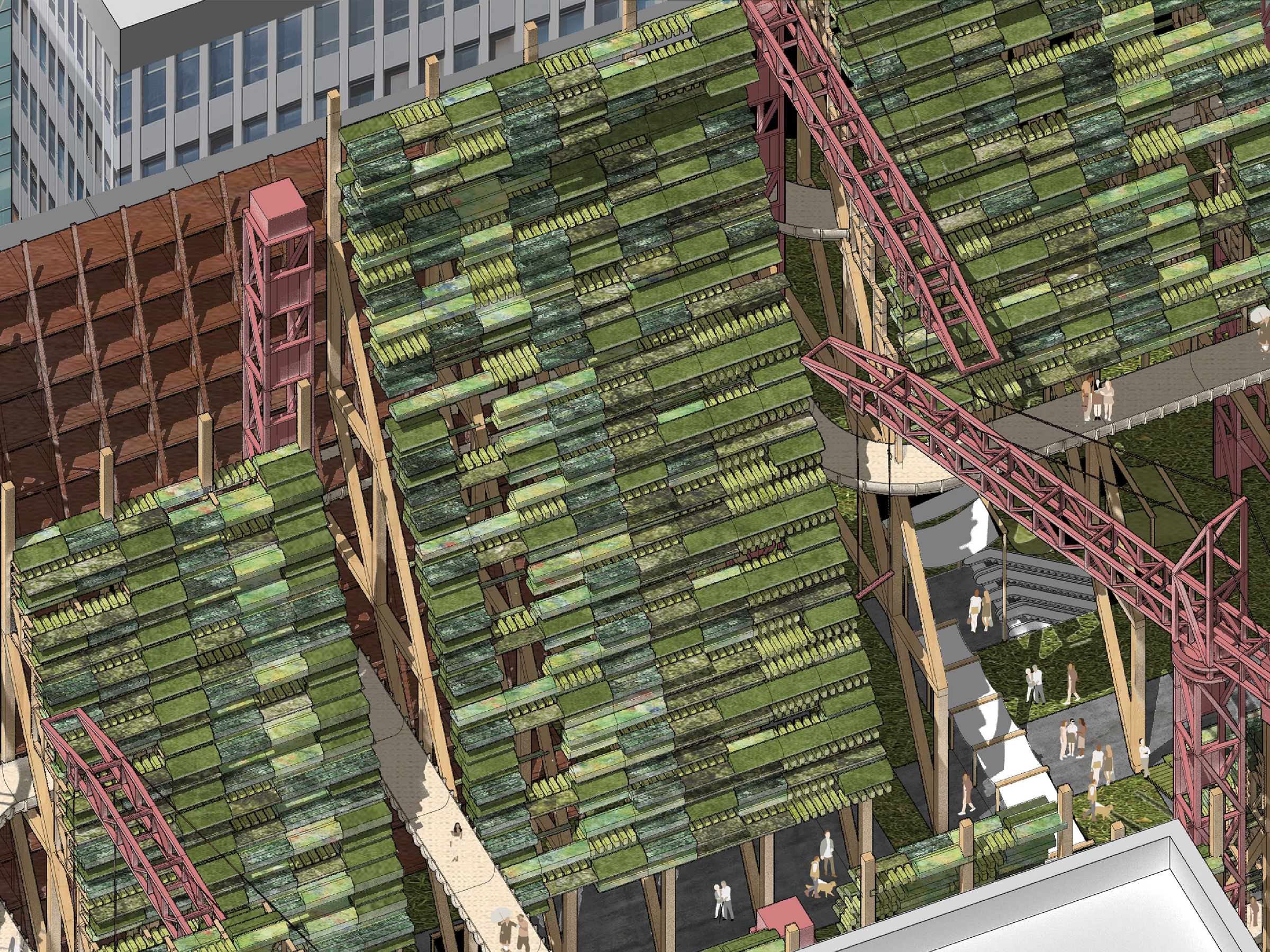
The Urban Farming Depot is conceptualized as a radical apparatus for food production and an urban monument. Through provocatively choreographing the food system and public activities between existing skyscrapers in cities, the project attempts to address urban food insecurity in metropolises around the world, using London as a testing site.

The existing food system in London is characterized by long-distance, carbon-heavy transportation. 99% of the food is imported from outside the city boundary, perpetuating excessive carbon emissions and unequal access to fresh and healthy food in the city. Currently, food is harvested in the countryside, processed in the suburbs, transported to wholesale markets by train, trucks, and planes, and distributed to local supermarkets or restaurants. A fundamental way for London to diversify its food source is urban farming. The farming depot collapses the whole food production process from a territorial scale to available urban sites as porous facade additions. Using vertical farming, we turn an abandoned site into a food production machine to make urban farms a considerable food source. The form is optimized to maximize the growing area. Sowing, growing, harvesting, retailing, and composting are all integrated into the megastructure. Read the rest of this entry »

Vertical Mega Region

By:  | June - 10 - 2024

2024 Skyscraper Competition
Honorable Mention

Lee Sang-min, Baek Changheon, Kim Yong Hee, Jung Chang Gyun, Kang Somang, Jo Youngjae, Seo Chaebin
South Korea

Background
Currently, the birth rate of the Republic of Korea has plummeted with rapid economic development since the 1960s. This is the result of a combination of social and cultural factors as well as economic factors. In fact, Korea’s total fertility rate reached 0.78 percent in 2022, the first OECD member to reach 0 percent range, less than half of the OECD average, indicating the seriousness of the low birth rate problem in Korea. As such, the low birth rate problem in Korea is one of the major social problems that raises concerns about the current population structure and future social and economic stability.

The causes of these problems can be seen socially, time, and physically, but time and physical problems can be seen based on social problems.
Currently, if you look at Seoul and neighboring Gyeonggi-do, there are many business facilities in Seoul, and the residential area per person in Seoul is very small, about 30㎡. Most of the population lives in the outer Seoul area and goes to and from Seoul using private and public transportation. It takes about twice as long to commute from here as 58 minutes each way compared to major OECD countries, but these commuting conditions reduce the quality of life, which can only take more than an hour at real distance due to poor transportation infrastructure and huge usage population. In other words, the distance in time is greater than the physical distance. Therefore, the residential environment centered on large cities found in Korea not only causes gentrification due to high cost and congestion, but also acts as a factor that makes marriage and childbirth hesitant. Read the rest of this entry »

Middle Land Skyscraper

By:  | June - 10 - 2024

2024 Skyscraper Competition
Honorable Mention

Xinyu Ma, Shengming Li, Zehui Li, Changyu Lu, Xinyu Ma
China

The building we are designing is called Middle land, which is a building that represents neutrality. Our idea of a neutral skyscraper comes from some disputes. With the intensification of international friction and competition for resources, all kinds of friction may become more frequent in the future, whether it is military conflicts or economic disputes that will affect people’s lives. We create such a space in order to bring more security to the lives of ordinary people and neutrals, it is not only a use of space, but also a sense of neutrality and distance conveyed to the future of human living space of the beautiful ideal.

The building is surrounded by a frame structure, equipped with lifts and robotic arms, which can be easily dismantled and erected to extend the height of the building upwards. In the middle of the structure are the building’s plumbing and various facilities. The building is made up of countless small monoliths. There are more than a dozen different mini-monoliths, each of which represents a different space with functions such as housing, public activities, protection, management, storage, and various facilities. Each monolith is supported by a telescopic pole, and each telescopic pole is connected by a movable sphere, so that it can be folded and compressed to save space when not in use or transported for fabrication. Read the rest of this entry »
Aerofiber Apex Skyscraper

By:  | June - 10 - 2024

2024 Skyscraper Competition
Honorable Mention

Fahim Ashab Faroquee, Mahir Aritro
Bangladesh

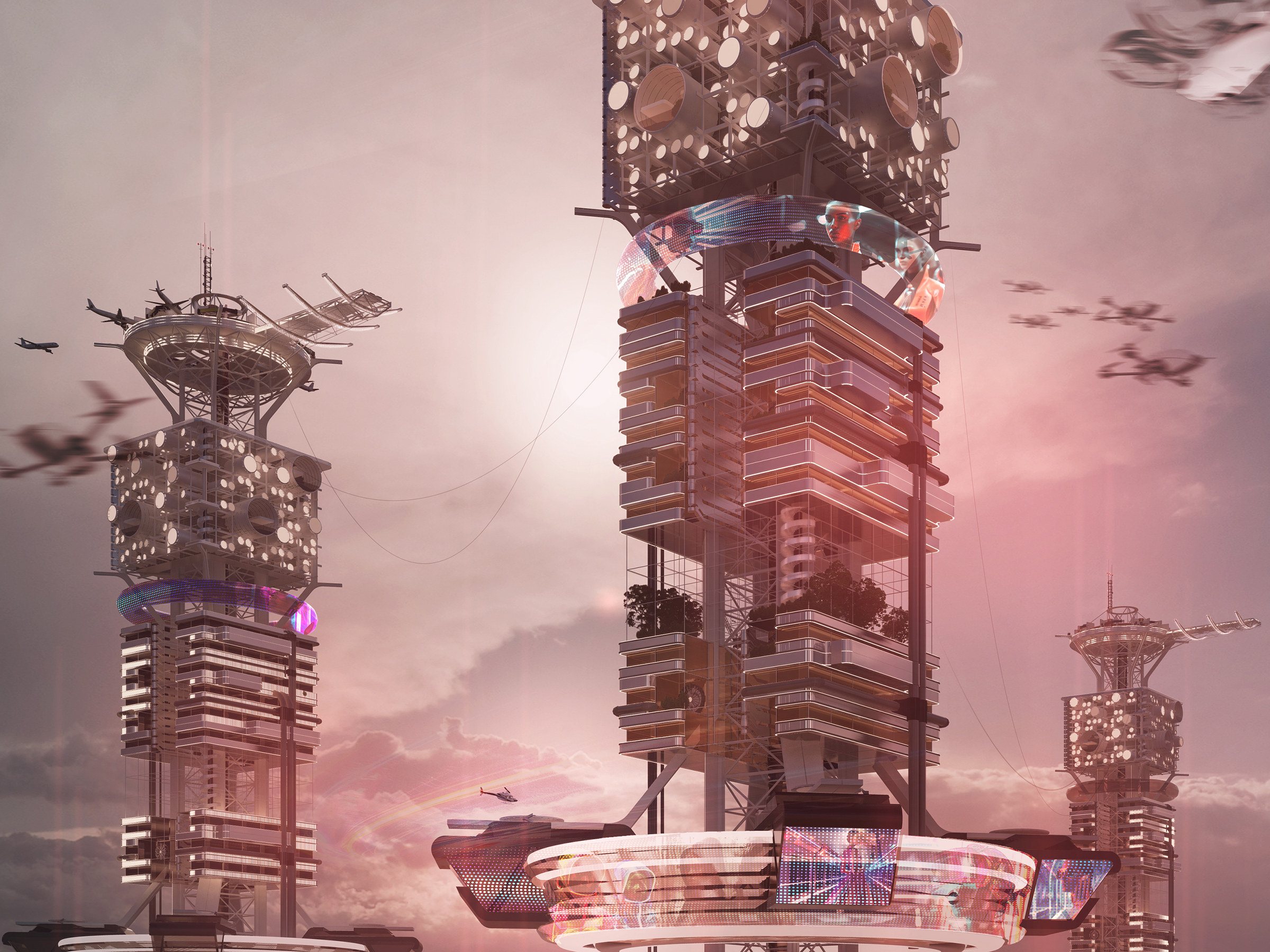
Within the ever-changing global economic landscape, industries serve as crucial drivers of growth, meeting increasing demands and propelling economic progress. However, the growing number of industries, while essential for meeting rising needs, brings environmental challenges. To address these issues, many industries are shifting toward sustainable practices, considering concerns about carbon emissions and resource depletion. Simultaneously, there’s a need to reassess traditional horizontal expansion, calling for vertical growth aligning with sustainable practices and efficient space utilization. This shift aims for more than just economic advancement, seeking a harmonious coexistence with the environment and recognizing the need to balance industrial growth with ecological preservation.

In the context of Bangladesh, the Readymade Garments (RMG) industry is a cornerstone, significantly contributing to export revenue and maintaining a prominent position in global apparel exports. Bangladesh’s global prominence in the Ready-Made Garment (RMG) sector significantly influences the nation’s GDP, contributing nearly 80% of export earnings. From $4 billion in 2000, the RMG sector expanded to $30 billion annually by 2018. As of 2022, Bangladesh ranks as the second-largest single-country contributor to the global garment export market, reaching $45 billion. However, the increasing number of garment factories poses multifaceted challenges, including environmental issues, logistical problems, and concerns about unsafe working conditions. Addressing these challenges, a visionary skyscraper project is proposed in Chittagong, strategically positioned to accommodate the projected increase in garment factories by the 2500s. With its unique housing solutions, such as living pods and common spaces, this design prioritizes the well-being of the staff and adopts a vertical, modular approach to sustainable expansion. The plan aims to balance ecological responsibility with economic growth in order to promote Bangladesh’s long-term prosperity. This design aims to set the standard for any industry considering vertical growth, independent of its consequences for the apparel sector. Read the rest of this entry »