Honorable Mention
2025 Skyscraper Competition
Dorsa Shahim, Mohamad Mobin Yousefi, Rana Karimibavandpour, Abolfazl mahdavi, Fateme Sadat Hoseini, Samin Soleimani
Austria, Belgium, Canada, Estonia, Italy, Netherlands
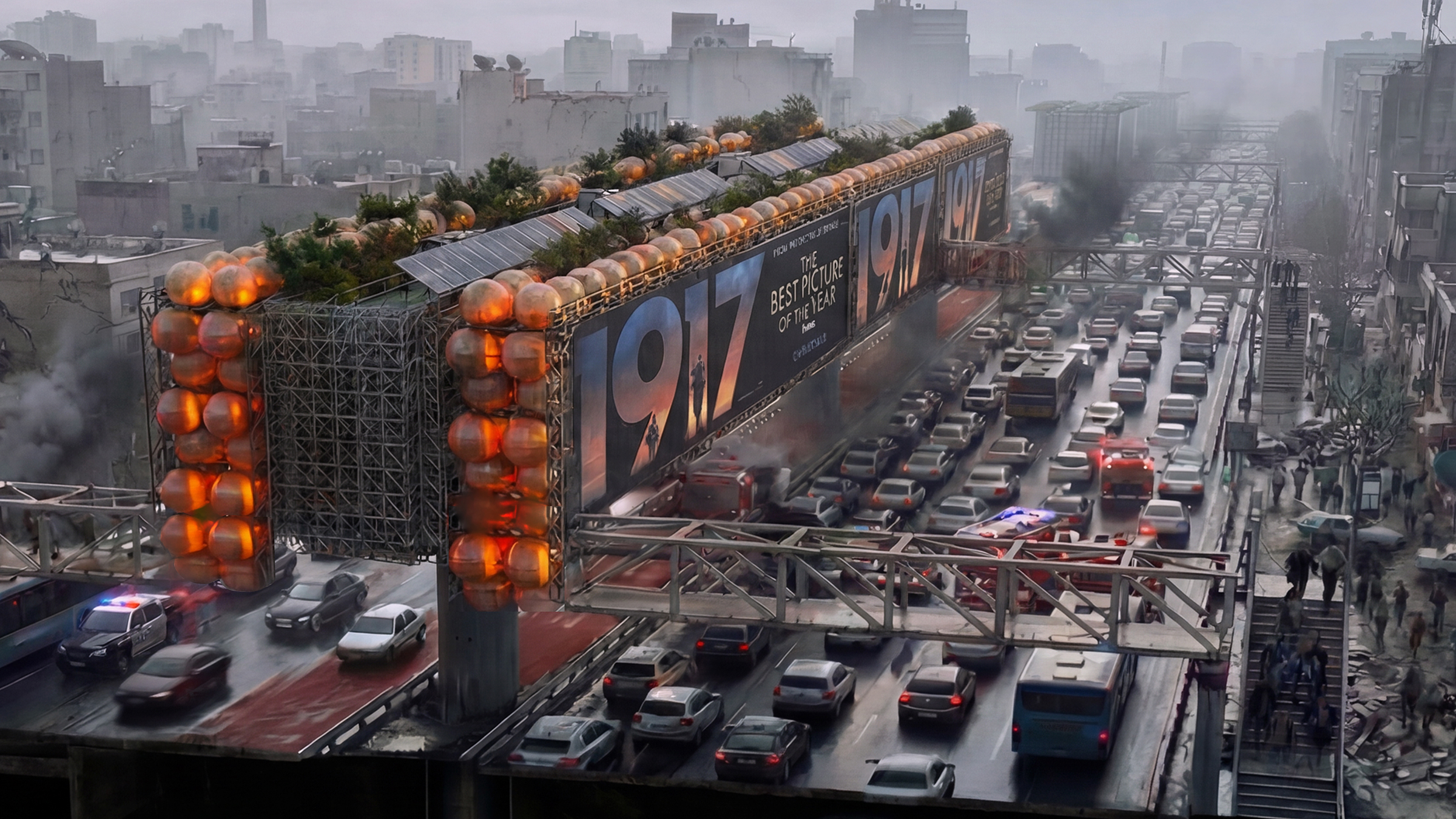
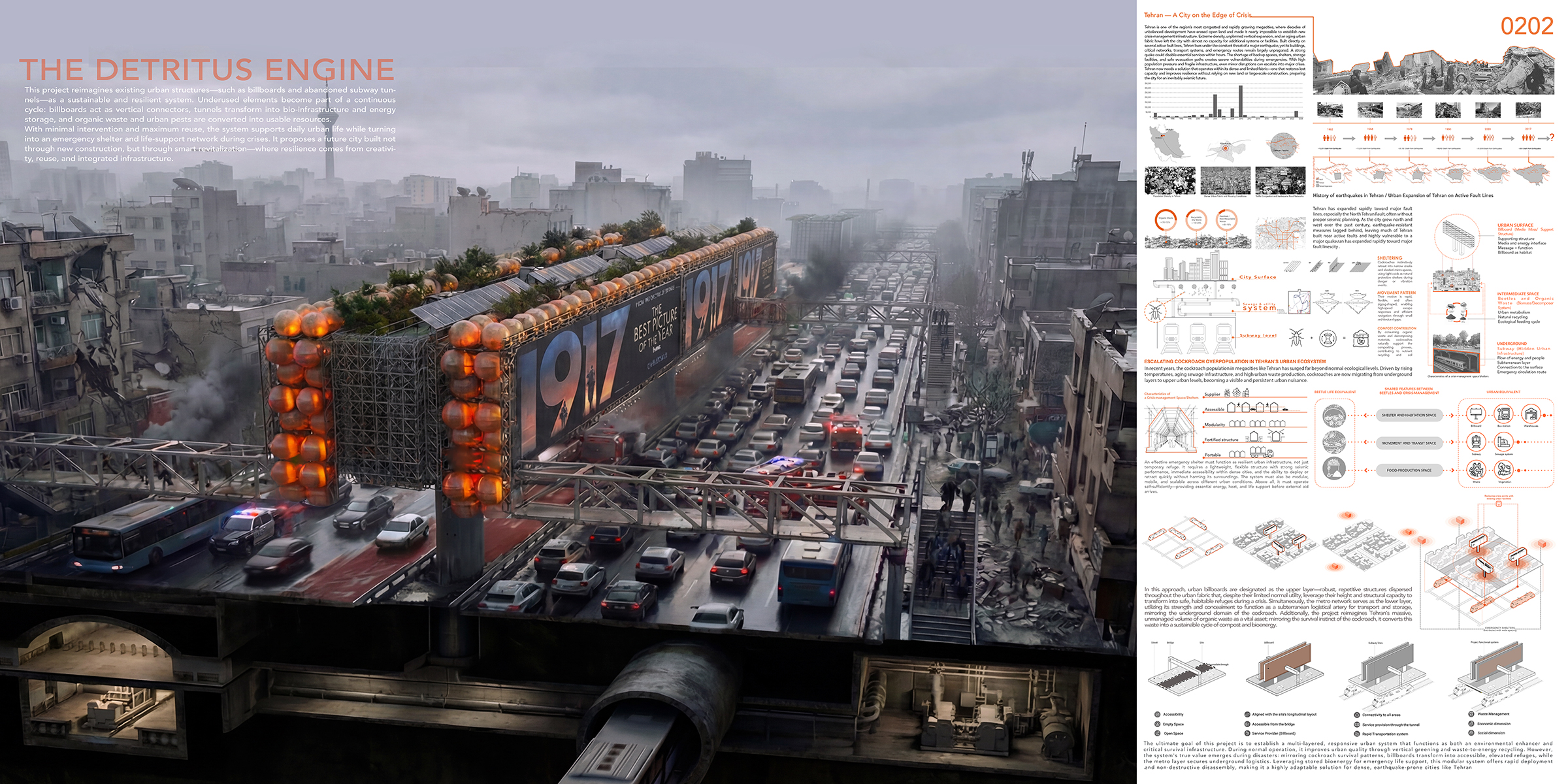
Tehran is a city caught between rapid expansion and an aging, overstretched urban infrastructure. Extreme density, limited available land, vulnerable building stock, and the absence of reserved spaces for emergency management have placed the metropolis in a state of constant risk. Beneath the city lies a network of active fault lines, while above ground, large portions of the built environment and emergency routes lack the resilience needed to withstand a major earthquake. In such conditions, Tehran can neither expand horizontally nor easily develop new infrastructural systems. Any viable solution must emerge from within the existing fabric—from overlooked elements that have never been recognized as potential resources.
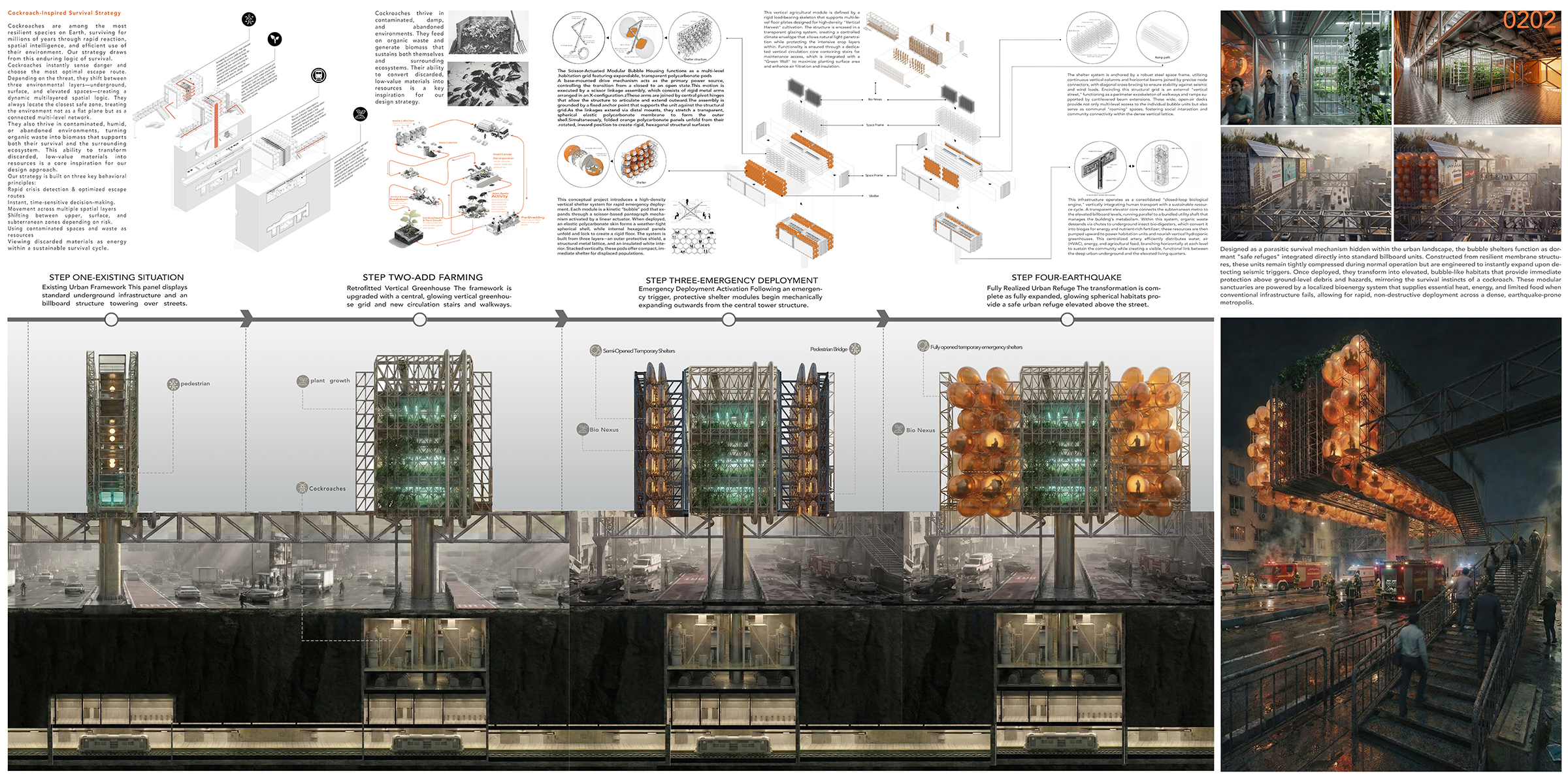
The project’s strategy draws inspiration from the survival logic of cockroaches—one of nature’s most adaptive species. These organisms survive through rapid response, quick movement between multiple layers, and the ability to utilize discarded organic matter. In moments of danger, cockroaches transition between three spatial layers: height, ground, and the underground. They locate the nearest safe zone and continuously create cycles of survival using resources found in polluted or waste-ridden environments. This multilayered, swift, and efficient behavioral pattern forms the conceptual backbone of the project.
Within this framework, urban billboards are reimagined as the upper layer—structurally strong, widely distributed, and elevated across the city. Though their current role is limited, their height, accessibility, and repetitive structural logic make them ideal candidates for rapid transformation into safe, inhabitable units during emergencies. Correspondingly, the metro network becomes the lower layer, mirroring the subterranean ecosystem of cockroaches. With its structural stability, spatial continuity, and inherent concealment, the metro system has the capacity to function as secure corridors for transport, storage, and emergency support.
A third component integrates Tehran’s substantial volume of organic waste, much of which is currently mismanaged. Just as cockroaches sustain themselves using decaying organic materials, the project harnesses this waste stream to generate compost and bioenergy. What is now a burden becomes a functional input in a closed urban cycle.
However, the project is not merely about redefining billboards, metro tunnels, or waste streams. Its ambition is the creation of a responsive, multilayered urban system—one that enhances environmental quality during normal conditions and transforms into a life-support structure during crises. In everyday operation, the system enables elevated green areas, material recycling loops, and partial energy self-sufficiency. In a city like Tehran, where every square meter of green space is precious, these elevated pockets can reduce heat, improve air quality, and contribute to overall urban well-being.
The true value of the proposal becomes evident at the moment of disaster. Mirroring cockroach survival patterns, billboard units become accessible, elevated safe refuges. Integrated within are rapidly deployable, bubble-like shelters. These resilient membrane structures remain compressed normally but instantly expand upon seismic triggering, providing immediate protective habitats for displaced populations. The metro layer provides protected routes for movement, storage, and emergency logistics. Meanwhile, bioenergy produced during normal periods supplies essential resources—energy, heat, and limited food—when conventional systems fail. The structures deploy quickly without damaging the urban fabric. Their modularity and adaptability make them an appropriate solution for a dense, earthquake-prone metropolis.
Ultimately, this project is not a building; it is an urban resilience model. It demonstrates how forgotten infrastructures, discarded materials, and underused urban elements can be transformed into a survival ecosystem. Rather than resisting the looming threat of disaster, the proposal imagines a Tehran that learns to generate its response from within the crisis itself. This vision suggests a future where the city no longer relies solely on large-scale, resource-heavy interventions, but instead cultivates resilience from the very components it once ignored.