2025 Skyscraper Competition
Honorable Mention
Pardis Taji, Movahede Amirmijani, Milad Shahin, Niloufar Rezaei, Shahin Etminan, Mohsen Shabani Ravari, Amir Tahmoures
Italy
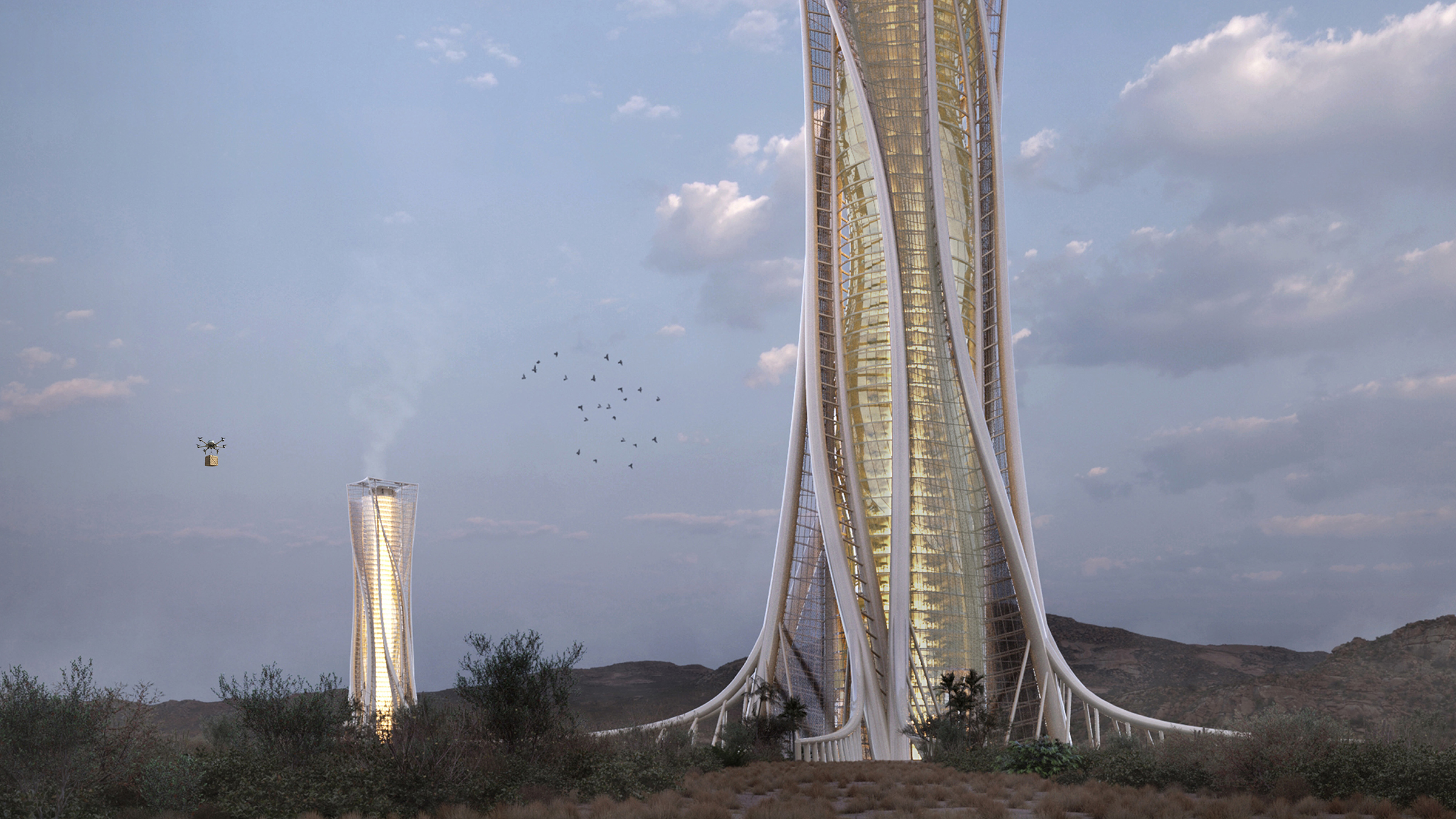
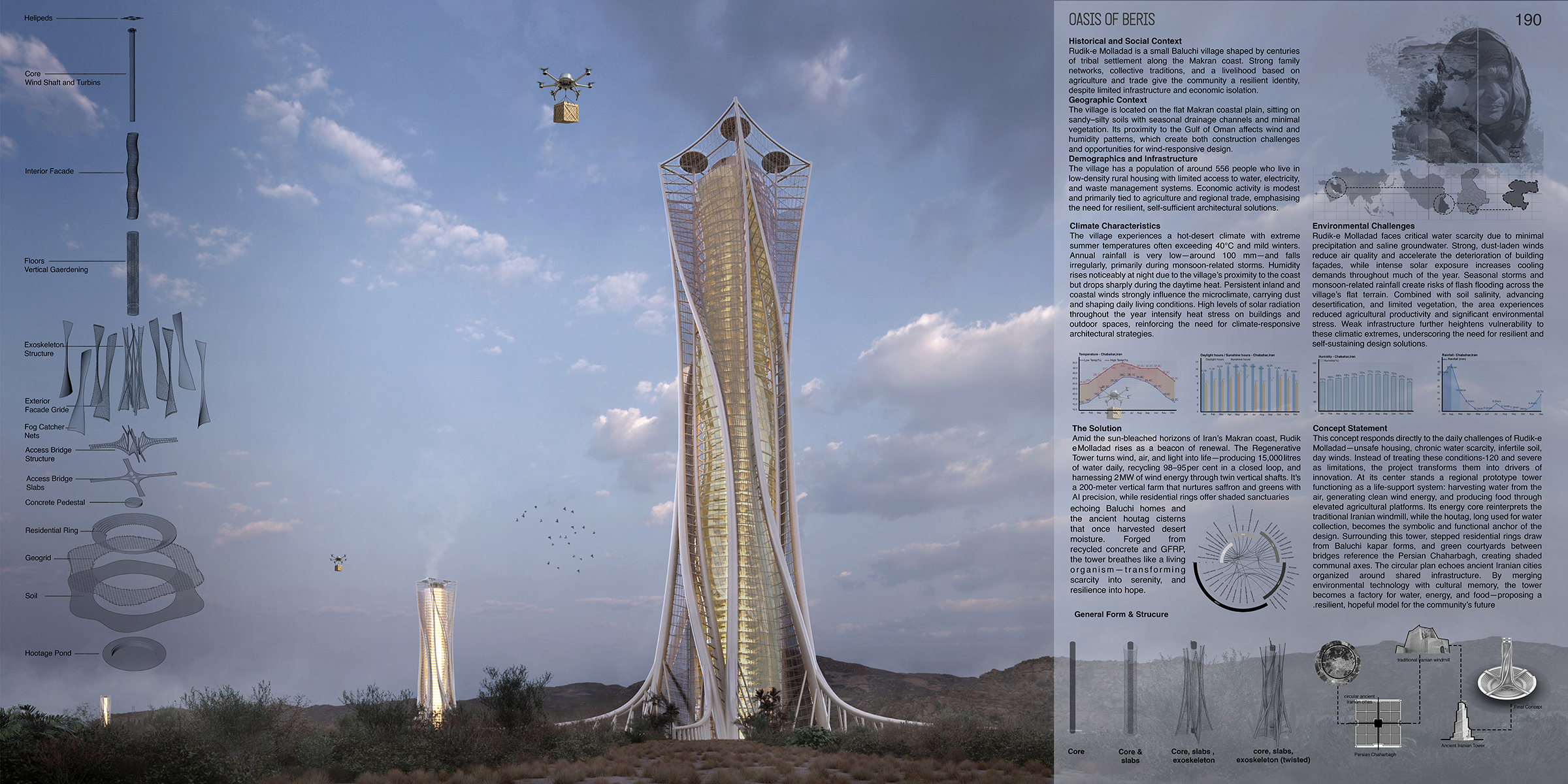
Amid the sun-bleached horizons of Iran’s Makran coast, Rudik-e Molladad rises as a beacon of renewal. The Regenerative Tower turns wind, air, and light into life—producing 15,000 litres of water daily, recycling 95–98 per cent in a closed loop, and harnessing 2 MW of wind energy through twin vertical shafts. It’s a 200-meter vertical farm that nurtures saffron and greens with AI precision, while residential rings offer shaded sanctuaries echoing Baluchi homes and the ancient houtag cisterns that once harvested desert moisture. Forged from recycled concrete and GFRP, the tower breathes like a living organism—transforming scarcity into serenity, and resilience into hope.
Site Analysis
Historical and Social Context
Rudik-e Molladad is a small Baluchi village shaped by centuries of tribal settlement along the Makran coast. Strong family networks, collective traditions, and a livelihood based on agriculture and trade give the community a resilient identity, despite limited infrastructure and economic isolation.
Geographic Context
The village is located on the flat Makran coastal plain, sitting on sandy–silty soils with seasonal drainage channels and minimal vegetation. Its proximity to the Gulf of Oman affects wind and humidity patterns, which create both construction challenges and opportunities for wind-responsive design.
Climate Characteristics
Rudik-e Molladad experiences a hot desert climate, with summer temperatures exceeding 40°C, mild winters, and very low annual rainfall. Humidity levels fluctuate sharply, and strong coastal and inland winds carry dust, while high solar radiation increases heat stress throughout the year.
Environmental Challenges
The village faces severe water scarcity, saline groundwater, dust-laden winds, and intense solar exposure. Seasonal storms pose flooding risks, while soil salinity and desertification reduce agricultural potential. Weak infrastructure heightens the community’s vulnerability to these climatic stresses.
Demographics and Infrastructure
The village has a population of around 556 people who live in low-density rural housing with limited access to water, electricity, and waste management systems. Economic activity is modest and primarily tied to agriculture and regional trade, emphasising the need for resilient, self-sufficient architectural solutions.
Concept Statement
This concept responds to the daily challenges of Rudik-e Molladad—unsafe housing, water scarcity, infertile soil, and severe 120-day winds. Instead of treating these conditions as limitations, the project turns them into opportunities. At its centre stands a regional prototype tower functioning as a life-support system: harvesting atmospheric water, generating wind energy, and producing food through elevated agricultural platforms. Its energy core reinterprets the traditional Iranian windmill, while the houtag, long used for water collection, becomes the symbolic and functional anchor of the design. Around this tower, stepped residential rings draw from Baluchi kapar geometry, and green courtyards between bridges reference the Persian Chaharbagh, forming shaded communal axes. The circular plan echoes ancient Iranian cities organized around shared infrastructure. By merging environmental technology with cultural memory, the tower becomes a factory for water, energy, and food—proposing a resilient, hopeful future for the community.
Structural and Environmental Systems
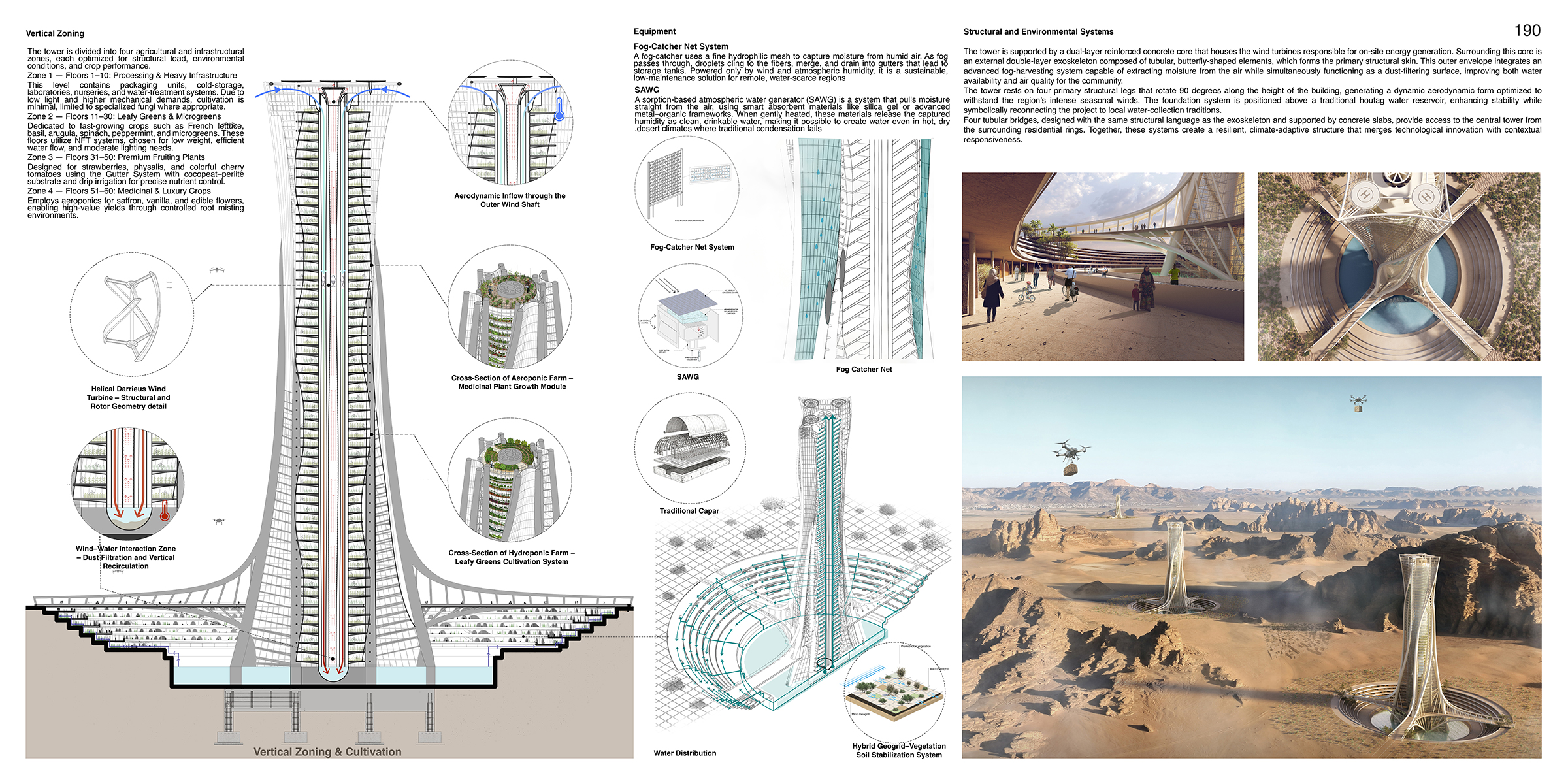
The tower is anchored by a dual-layer reinforced concrete core that houses wind turbines for on-site energy generation. Around it, a double-layer tubular exoskeleton with butterfly-shaped elements forms the primary structural skin and incorporates a fog-harvesting system that captures atmospheric moisture and filters dust. The tower stands on four structural legs that rotate 90 degrees along its height, creating an aerodynamic form capable of resisting intense seasonal winds. Its foundation is positioned above a traditional houtag, reinforcing both stability and cultural continuity. Four tubular bridges connect the residential rings to the central tower, completing a resilient, climate-adaptive architectural system.
Vertical Zoning
Zone 1 (floors 1–10) processing and water systems. Zone 2 (11–30) leafy greens via NFT. Zone 3 (31–50) premium fruiting plants using gutter–drip systems. Zone 4 (51–60) high-value medicinal crops grown through aeroponics