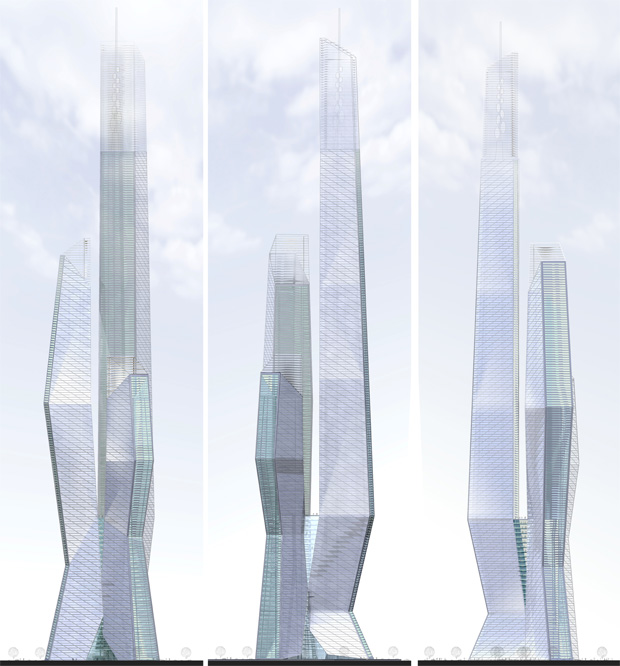
Upon completion, the 490 meter tall Solomon Tower, part of South Korea’s World Business Center in Busan (WBCB) designed by New York-based Asymptote Architecture, is poised to become one of the tallest buildings in Asia. The tower was commissioned as part of an international design competition organized by the Busan International Architectural Culture Festival (BIACF) and the Busan City municipality in 2008. Read the rest of this entry »
A Group of Towers Joined At A Strong Base Take Flight in Busan’s World Business Center
By: Antonio Pacheco | August - 8 - 2012
Undulus Lighting System / Scott Jarvie
By: Lidija Grozdanic | August - 8 - 2012
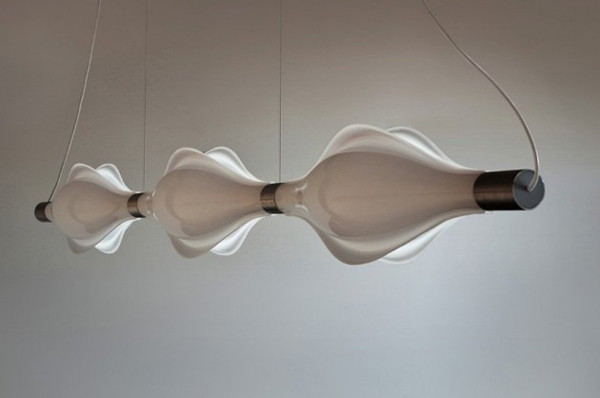
Undulus is a modular lighting system designed by London-based artist Scott Jarvie. It’s inspired by the beauty of cloud formations. It can be installed individually, in groups or in rows depending on the lighting requirements of the space. It provides a vertical directional light with a diffuse horizontal glow, utilising fluorescent tube bulbs, which have a number of benefits, including energy efficiency, low cost, long life in service and wide availability. Unlike compact fluorescent bulbs you are not required to dispose of the electronic starter every time you change a bulb. Read the rest of this entry »
Nunawading Station / Grimshaw Architects
By: Lidija Grozdanic | August - 8 - 2012
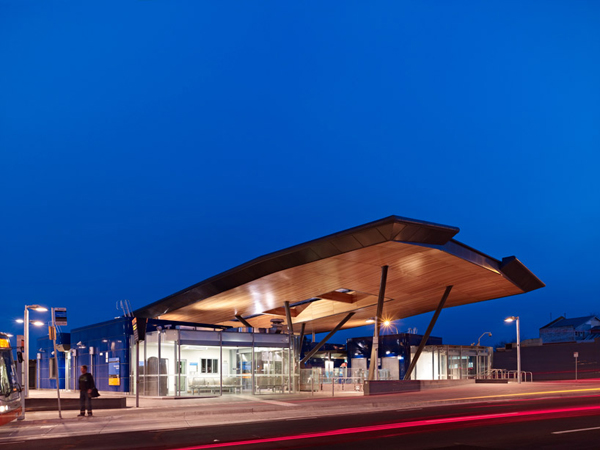
Designed by Grimshaw Architects, the Nunawading Station is part of the Springvale Road Grade Separation Project. The project incorporates pedestian connections, bus interchange facilities and an elevated concourse. The concourse canopies with asociated ETFE pillows provide weather protection and allow ona open and spacious environment with a single line of column supports. The amenity pods are clad in a robust vitreous enamel panel. Together with a central spine of perforated metal panels and associated lighting to the soffit of the underpass, the project aims to increase the light and visual amenity in the area. Read the rest of this entry »
Pedestrian Bridge Intensifies Tourist-Local Interactions in Amsterdam
By: Lidija Grozdanic | August - 7 - 2012
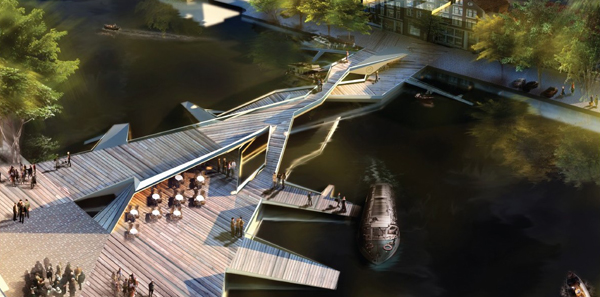
Designed for the [AMSTERDAM] Iconic Pedestrian Bridge Competition, the project offers more than just a possibility of crossing the Amstel river. Branching into several pedestrian trajectories, the bridge prioritizes on being an extension of the public space in front of the Hermitage Museum. In order to prolong the experience of being on water, the bridge comprises several routes that create a public promenade with small docking areas for the local houseboats. The iconic nature of the project is seen by the design team (Mariana Popescu, Mihaela Radescu, Ovidiu Stanciu, Dimitrie Stefanescu) as an emergent feature resulting from both the geometry of the bridge as well as the socially enabled functional potential. Read the rest of this entry »
A Cut and Fold Brise-Soleil for the Peace Pentagon in New York
By: Antonio Pacheco | August - 7 - 2012

The ‘Peace Pentagon’ by New York-based architects Axis Mundi is part of a small scale competition to rebuild the famed ‘Peace Pentagon’ of 339 Lafayette Street in New York City. The proposal by Axis Mundi, one of the 339 invited architecture firms asked to submit proposals, acts as a modified brise-soleil. This multi-story building takes the notion of public, performance space and stacks it vertically, throughout five floors, culminating in a rooftop, open air ‘community space.’ Each floor is connected to a large, sky-lit stairwell that provides both access between floors, ventilation, and natural light. The structure is wrapped in a prismatic, triangulated, tinted glass facade that is intended to add a compelling and dramatic architectural geometry to the streetscape. Read the rest of this entry »
Biomorphic Abstractions Made from Tracing Paper / Mary Button Durell
By: Lidija Grozdanic | August - 7 - 2012
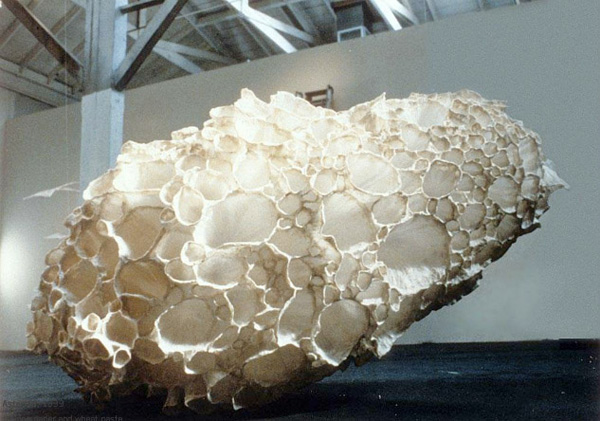
Designed by San Francisco-based artist Mary Button Durell, this body of work uses only tracing paper and wheat paste as material. At first glance these pieces appear to be built onto a rigid wire frame, however, the process is much more organic and the structure is created from hand building. Individual cells or cones that comprise most of the pieces are first formed over molds of various shapes and sizes and then joined together using wheat paste cell by cell. Additional layers of paper and paste are then added for strength and reinforcement which creates the net-like structure around the individual cells.
The translucent quality of the tracing paper allows light to play a significant and dynamic role in the work. In combination with the physical structure of the work, this translucent quality creates an interior, as well as exterior, perspective. In certain light, however, the translucency of the paper appears to have the visual characteristics of more solid materials, such as oyster shell or marble. Read the rest of this entry »
Piazza d’Armi Urban Park / Modostudio
By: Lidija Grozdanic | August - 6 - 2012
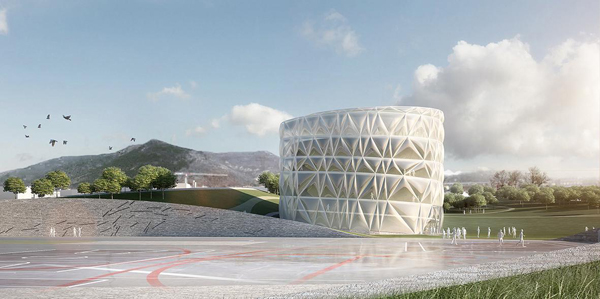
Designed by Modostudio, Piazza d’Armi Urban Park approaches the issue of context through two major aspects: the artificial and the natural. The edges of the site, influenced by the surrounding urban structure and by the condition of these spaces, create a series of artificial and anthropological areas, that serve as a filter between the surrounding urban design and the area of the urban park. Read the rest of this entry »
An Environmental Screen That Promotes Social Interaction Through Commerce
By: Antonio Pacheco | August - 6 - 2012
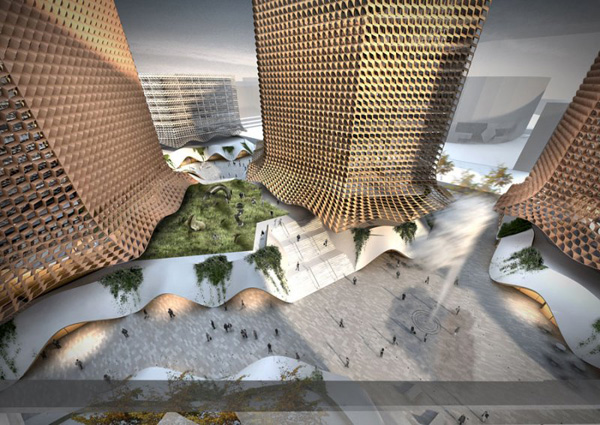
The Intercity Project, by Slovenian architects Sadar+Vuga, is part of a competition entry for the redevelopment of the Houptbahnof in central Vienna. Meant to act as a tourist’s first interaction with the city of Vienna, the complex will consist of several ‘hybrid buildings,’ comprising the city’s first ‘hybrid district.’ The proposal aims to build six hexagonal structures that sit on a total four ‘islands’ that act as raised platforms for the district, each island providing space for large, urban plazas. The size, shape, and geometries of buildings surrounding each island plaza will create different kinds of programmable space around each plaza, allowing for customized and unique public spaces. Read the rest of this entry »
A 3-D Printed ‘Noize’ Chair From Brazil
By: Antonio Pacheco | August - 3 - 2012
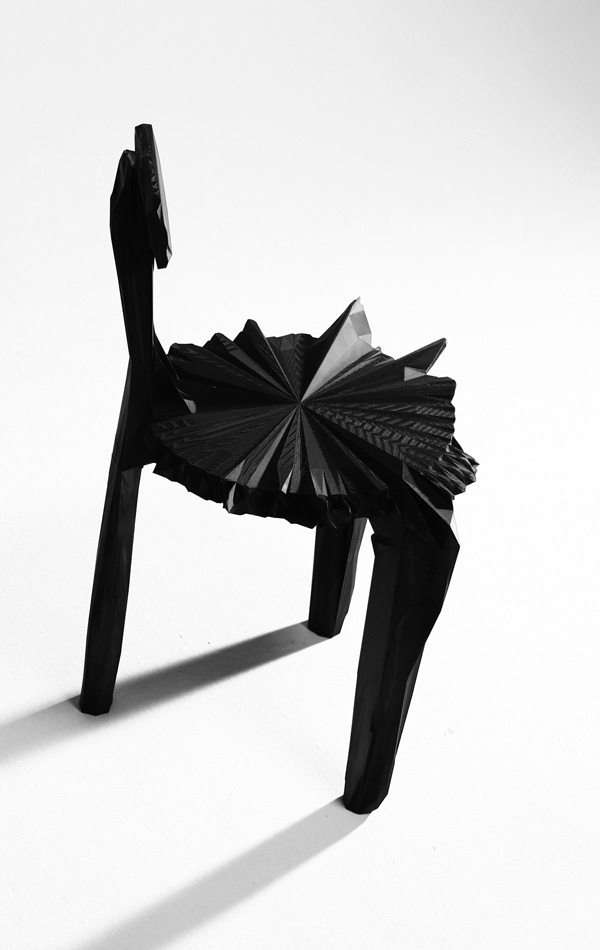
The Nóize Chair, by Brazilian designers Estudio Guto Nequena combines an appreciation for the past with a contemporary method for making. Estudio Guto Nequena begins with a digitized model of great Brazilian Modernist architect Lina Bo Bardi’s ‘Girafa Chair’ from 1987 as a starting point for design. The chair, renowned for its formal simplicity and clear structural expression, is manipulated and deformed through a set of digital processes. The digitized model’s geometries are combined with the sound signatures of mapped sounds. These sounds, taken from recordings of urban ‘Nóize’ are translated into equations that when applied to the geometries of the existing digitized chair, alter the chair’s composition, distorting the seat, legs, and back of the chair in accordance with the decibel level, frequency, and pitch of the recorded sounds. Read the rest of this entry »
Georgian Airport Takes Flight Through Concrete
By: Antonio Pacheco | August - 3 - 2012
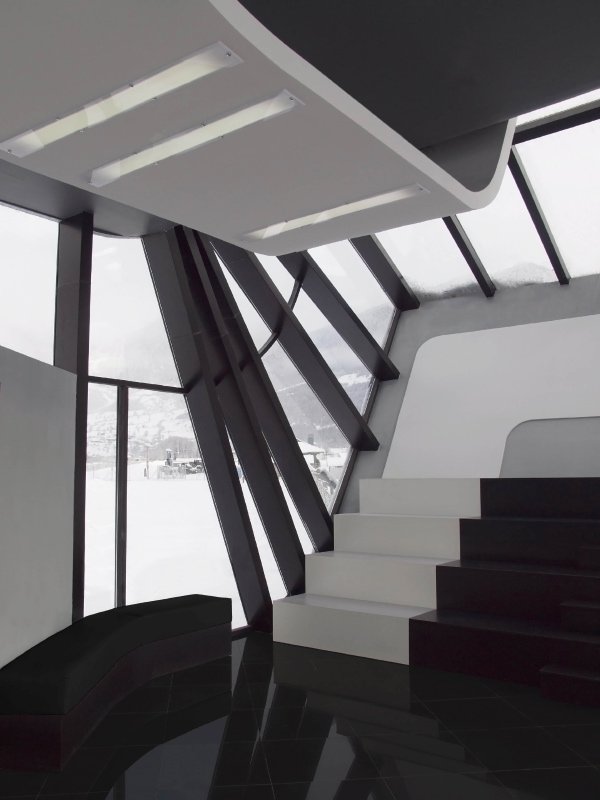
German architects J. Mayer H. Architects’ newly-constructed SAG Airport in Mestia, Georgia employs an innovative use of engineered concrete to render swooping, ascending forms for this small Medieval town’s municipal airport. The project, developed alongside a new House of Justice and Police Station complex, is typical of Mayer’s recent projects, many of which manipulate planar concrete forms in a variety of dimensions, giving a sense of movement, structure, and wonder to typical buildings. The architecture of the airport is evocative of Mestia’s skiing traditions, resembling the quarter- and half-pipe take off ramps used in the sport to gain vertical height and speed. Here, these forms are interpreted literally, relating to the airplanes with their own vertical mobility. Read the rest of this entry »