Honorable Mention
2023 Skyscraper Competition
Haoru Dai, Weitong Zhao, Zhengzheng Wang, Tianjiao Li, Wenqing Qi, Jiabao Chen
China
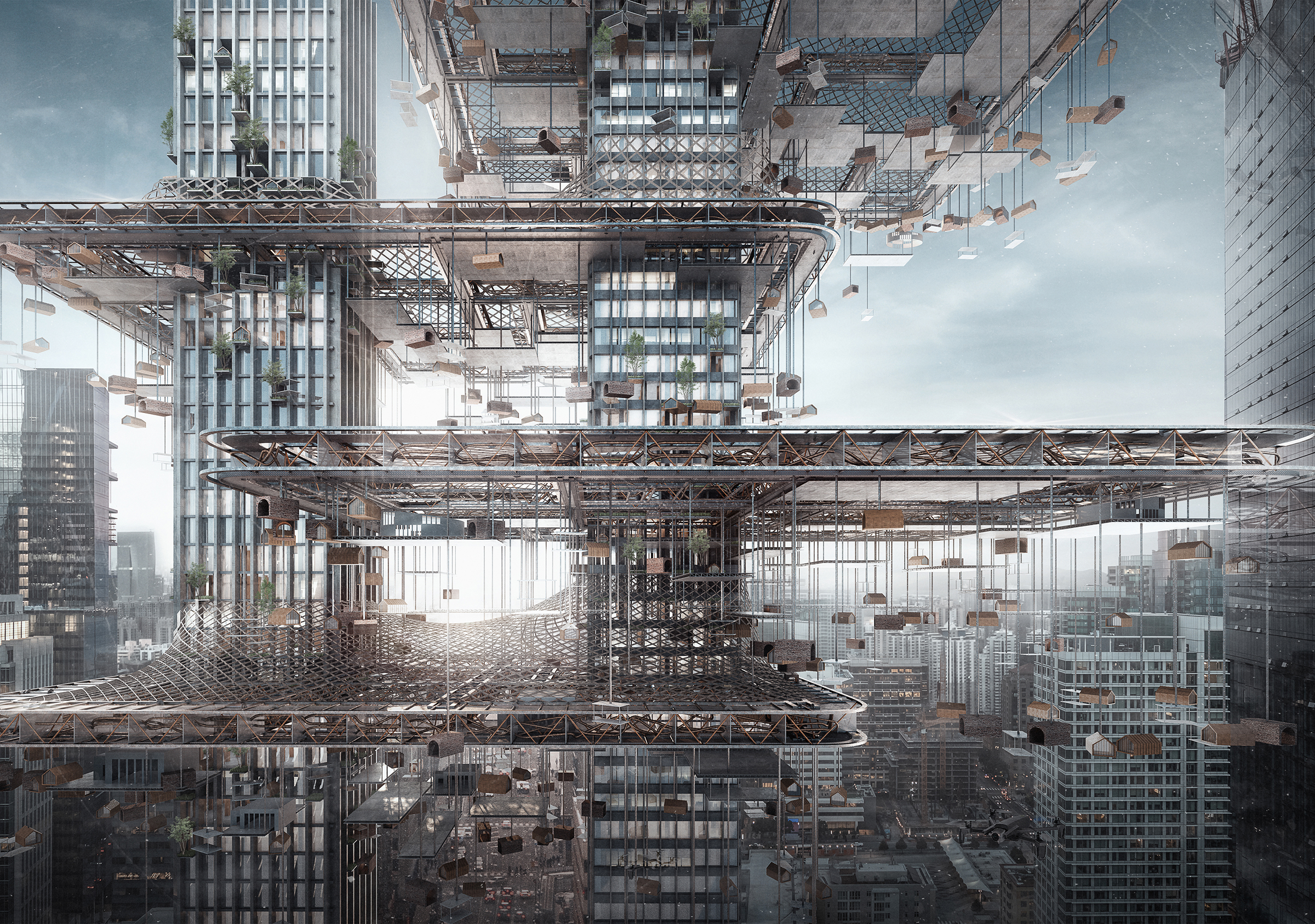
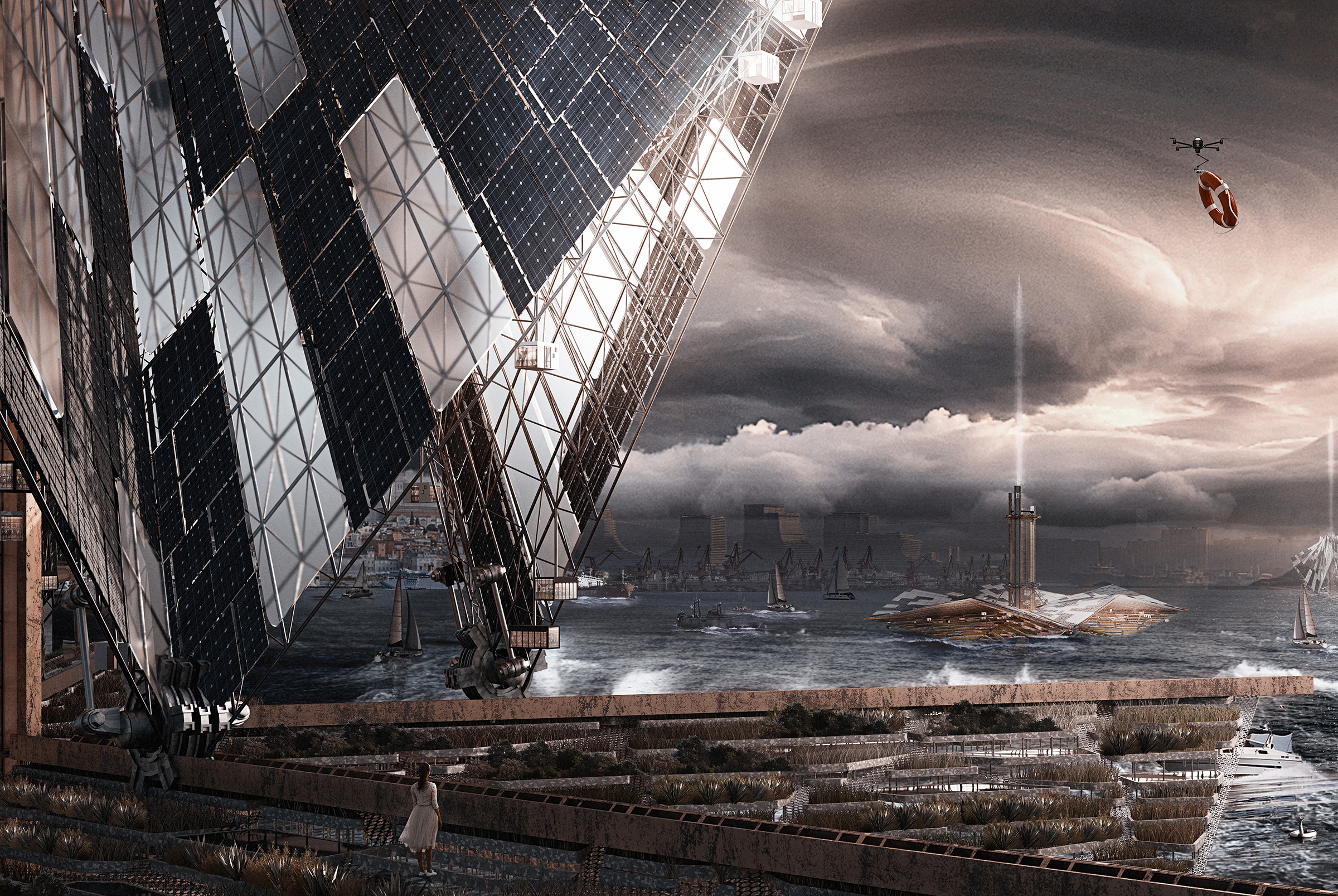
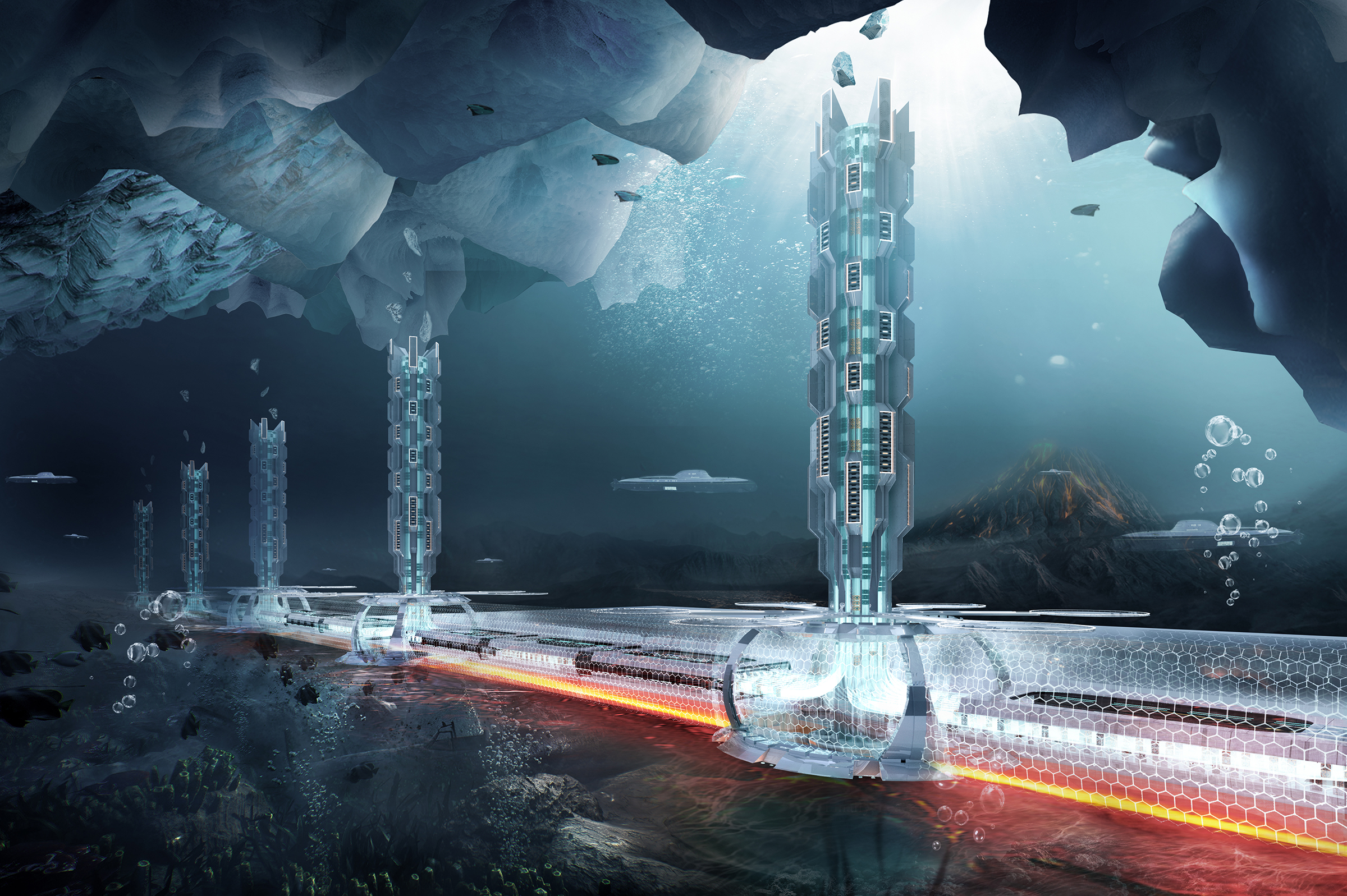
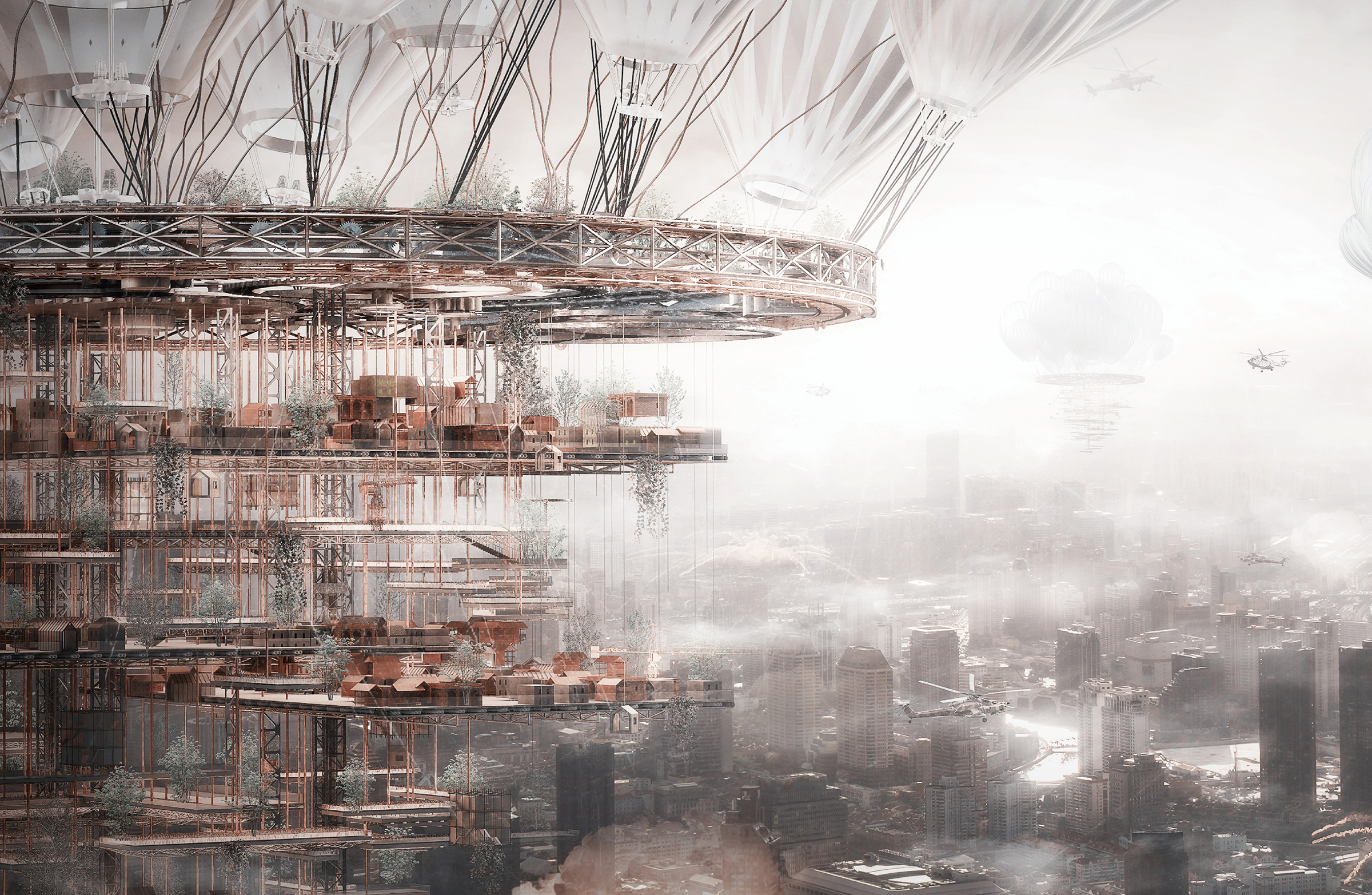
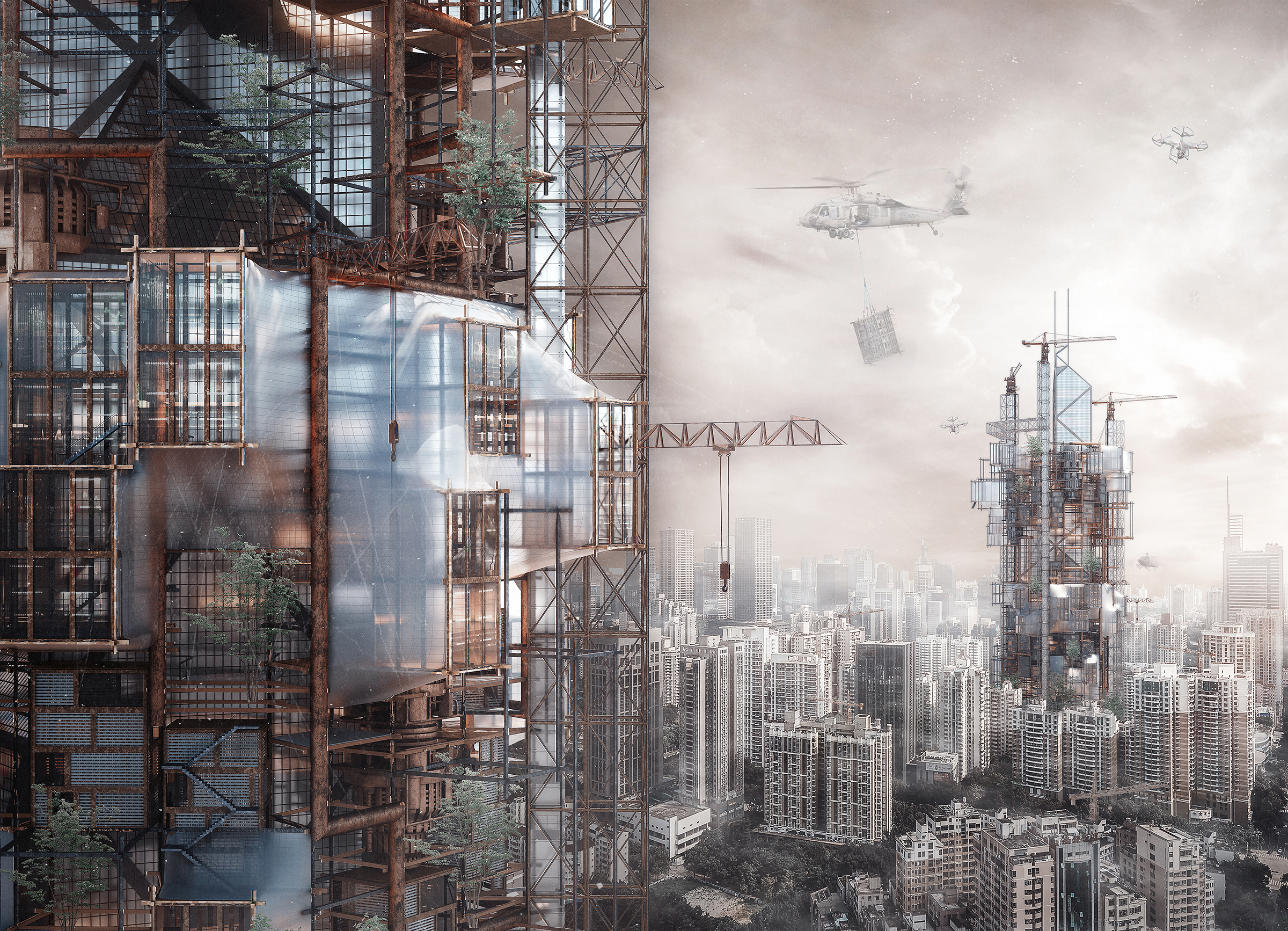
With the rapid development of industry, skyscrapers have become a symbol of the internationalization of metropolises. However, there are many inherent problems in the basic system of typical skyscrapers. For example, the lack of use of external space among high-rise buildings, the lack of diversity of interconnection, and many defects and hidden dangers gradually exposed in safety, health and environmental protection, coupled with the rapid lifting of elevators, led to dizziness, nausea and other “superhigh-rise building syndrome”, which cooled down the “high-rise fever”.
Due to a single architectural form, a large number of glass curtain walls absorb and reflect sunlight, forming a sun room, and at the same time explode outward, which is very harmful to people. The surge in demand for housing in high-density cities has caused congestion between buildings and brought about the problem of the tidal peak of traffic flow. Faced with the current high-intensity lifestyle, people lack the time to get in touch with nature and the opportunity to breathe. Skyscrapers damage people’s equal access to light and fresh air, and their shadows will prevent healthy sunlight from shining on the low buildings below. Currently, there is an urgent need for a concept that takes into account the diverse needs of economy, life, ecology and safety, actively cracks the “big city disease” and promotes the slimming and fitness of mega-cities to better serve people. Read the rest of this entry »