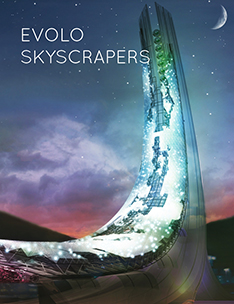
Recombinant Skyscraper

By:  | April - 29 - 2019

Honorable Mention
2019 Skyscraper Compettion

PIN Architects + Kalebodur Team
Salih Kucuktuna, Fikret Sungay, Mert Sezer, Ekin Arslan, Erdem Gunsur, Hande Mumcu, Oznur Pehlivan, Yildiz Yildirim, Eda Cidamal Erdogmus

Turkey

The Philosophy of Architecture 
From Vitruvius to Le Corbusier, A.gaudi to Z.hadid, architects are constantly adapting to new situations by developing their own methodology and by continuously pushing the boundaries. From the Pantheon to the Bilbao Museum by Gehry, architects are also building under different conditions, sometimes by following principles of architecture and sometimes by challenging them. The tension that exists between the architects and the age in which they belong creates this evolution. Our environments are constantly forcing us to discover.

Unfortunately, this process has had a dramatic breaking point in the middle of last century. In the second half of the 20th century we built massive quantities of buildings, which caused the cities to get more and more crowded. Architects, urban planners, engineers and other professionals began to feel more helpless about the complexity of the problems in the cities. Architecture lost its appeal as cities began to strive to meet the housing demand through the mass production of buildings.  We are hoping the first quarter of the 21st century is a turning point and we will see the wind change in a more positive way.

The Team & The Methodology
This inquiry is based on creative ideas derived from multidisciplinary collaboration supported with scientific research and experimentations. Read the rest of this entry »
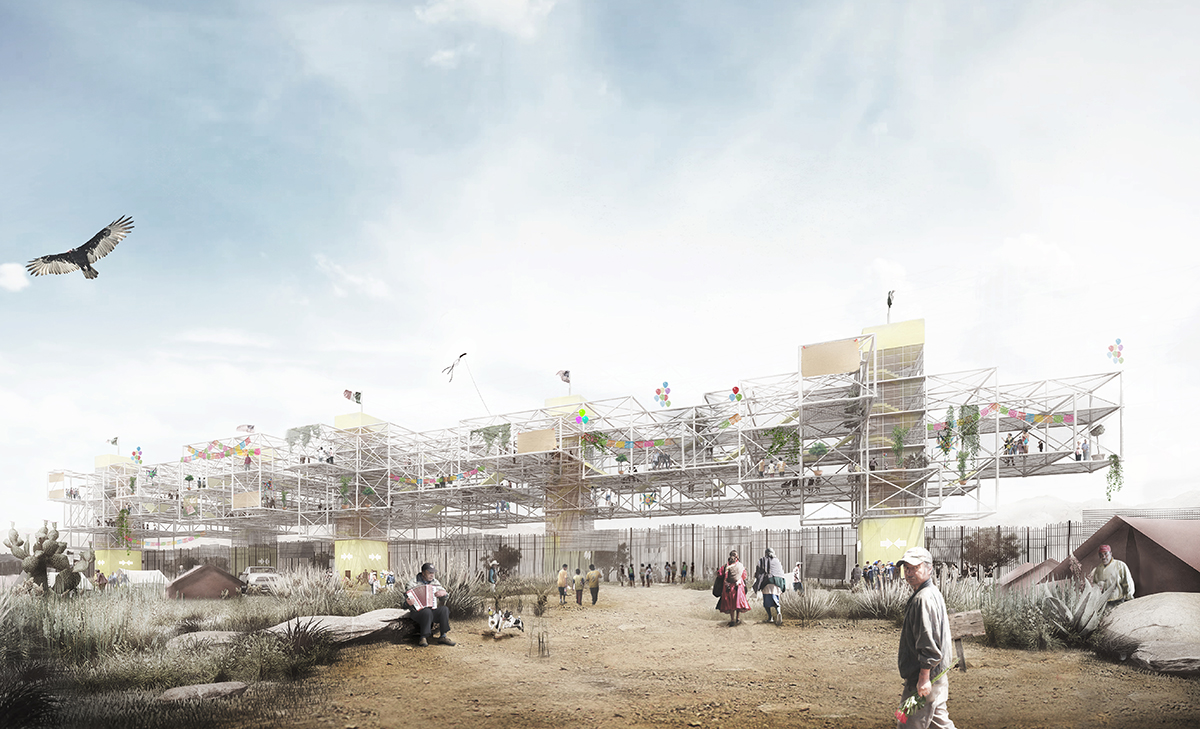
Bi-National Community Skyscraper

By:  | April - 29 - 2019

Honorable Mention
2019 Skyscraper Competition

Charles Tzu Wei Chiang, Alejandro Moreno Guerrero
Taiwan

Although with the recent American governments intents to enhance the construction of border between Mexico and U.S. to reinforce control. There are many stories regarding how such border separate family members who hold different citizenship, or work and live on different side of border. This proposal aims to transform perception of political border from boundary of separation to gathering for connection.

Friendship Park located next to border between San Diego and Tijuana, as one of the location where many separated families will meet from both side of border. In 1900s, there is no well defined border but only patrols to control for access. Many travel back and forth to meet their family during weekend. Later, metal fence was constructed to establish the border. In 1990s, additional metal mesh had been applied to prevent physical contact for illegal activities. Despite seeing each other through metal mesh almost like seeing prisoners in jail, families still willing to travel far to reunite on border. Read the rest of this entry »

Armature: A Topophilic Tower

By:  | April - 29 - 2019

Honorable Mention
2019 Skyscraper Competition

Weber Thompson Architects
Kristen Scott, Cody Lodi, Myer Harrell, Kristen Clemens, David Burpee, Nicole Winn, Erin Hatch, Leslie Riibe, Allison Rose, Weston Hambliton
United States

I remember watching the rapid transformation of our beloved city from the window of an overcrowded bus. On commutes to and from work I would wonder: how can we as a community embrace this change, and adapt without losing our identity? This place we love grew from a humble city to a booming, unrecognizable metropolis. Despite the technology that was meant to bring us together, we were left feeling less connected than ever – to each other, to nature, and to the small-community values that defined our cozy hidden nook in the northwest corner of the country. Read the rest of this entry »

Ka’ poy yepü Skyscraper

By:  | April - 29 - 2019

Honorable Mention
2019 Skyscraper Competition

Zöe Russián Moreno
Venezuela

OUTLINE | PURPOSE
Forests cover more than 30% of the entire planet. They create oxygen, they absorb malicious greenhouse gasses, they provide a substantial source of medicines, and many more actives necessary for life. However, even with these vital characteristics, it has not stopped developers from exhausting its resources while being misinformed; never reaching its full potential. Therefore, “Ka’ poy yepü” seeks to address this problem by proposing a multi-platform research center with a focus on geo-biological education. The purpose is to expand knowledge on how to harmonize technology and nature by networking around the globe on how to use and discover new forms of energy. Read the rest of this entry »

Floating Egyptian City

By:  | April - 29 - 2019

Honorable Mention
2019 Skyscraper Competition

Tao Qiyang, Wang Kun, Chen Ruihua, Sun Yunjuan
China

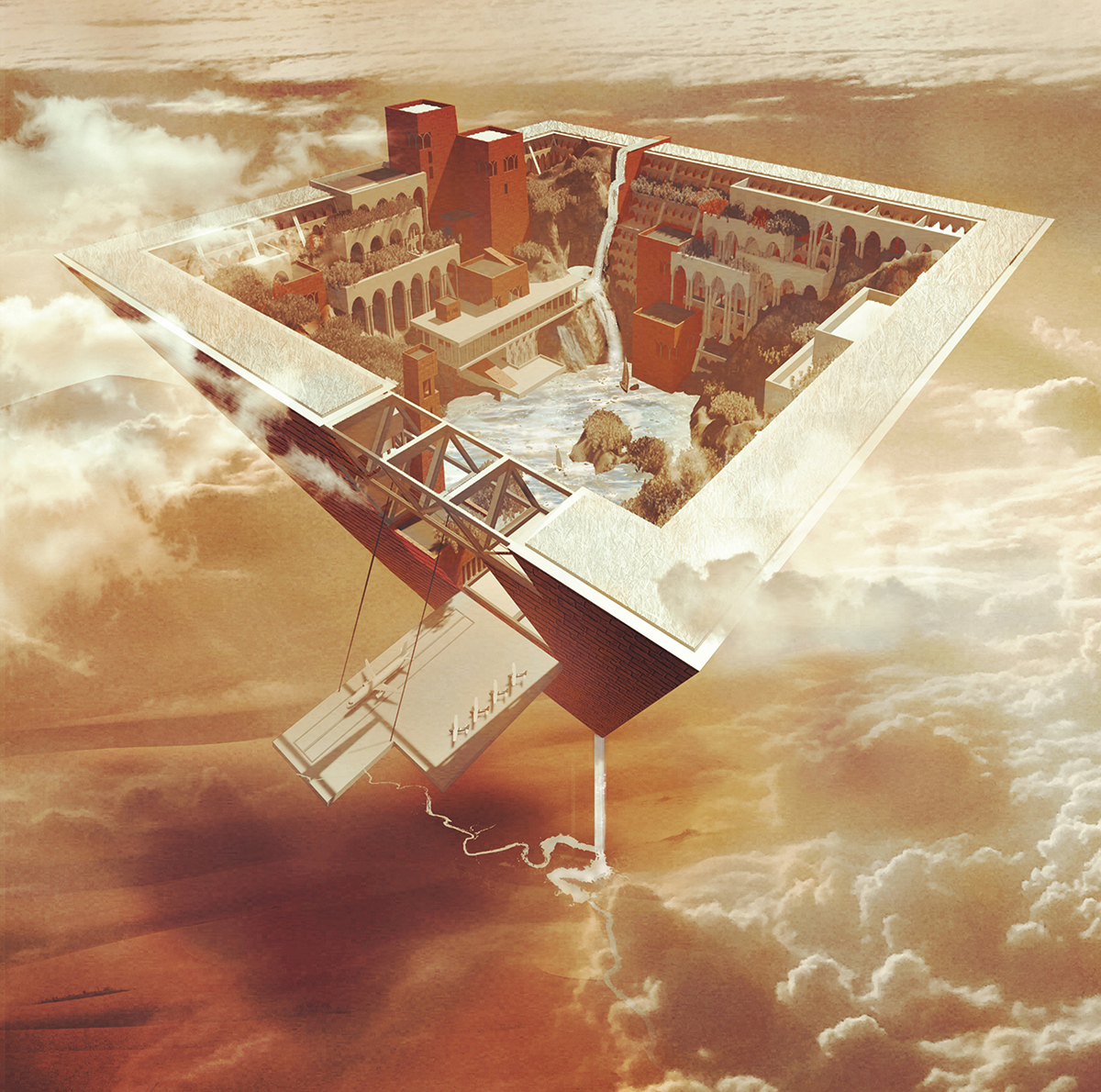
It is a grim reality in many parts of the world that the sand is pressing on. Desertification is a worldwide ecological and environmental problem. On average, there are about 50,000 ~ 70,000 square kilometers of land desertification every year in the world. This design is located in the desert of Egypt, and choose a typical pyramid group as an example, trying to explore the combination of modern technology, using skyscrapers to improve the desert environment and Egyptian culture(pyramids、temples、castles) combined with the architectural situation. The skyscraper is not only a building, but also a culture and a national symbol. The prototype is based on Cook’s idea of a “plug-in city”. On the basis of improving the ecological environment of the desert, the internal production, life and transportation should be organized. Form the appearance of the inverted pyramid. Floating above the desert, the structure is shaped to collect and produce water. At the same time, the interior of the building collects and manufactures water sources, stores and accumulates them into artificial lakes, and effectively interacts with the desert ground. The interior of the building becomes a hanging garden. The facade is in the solid form of pyramid.In the future, we hope that, thanks to the development of technology, the the vision of desert oasis will be realized and gradually improve the desert environment. Read the rest of this entry »

Tower Of Life

By:  | April - 29 - 2019

Honorable Mention
2019 Skyscraper Competition

Turan Akman
United States

Water is the foundation of life. Now, imagine a world without water. 33% of the land in the world are deserts, so life without water is a reality for those regions. In fact, around 1 billion people lack access to safe water, and this number is growing as the water crisis in the world is getting worse. On top of this, climate change is affecting our water sources. Rivers and lakes are either drying up, or becoming too polluted to use.  Moreover, hundreds of thousands of people die each year because of diseases caused by lack of water. New buildings are usually designed to save water, but this solution is simply not enough. At the current rate of water consumption, this problem will only get worse and we need a better solution. Read the rest of this entry »

Honorable Mention
2019 Skyscraper Competition

Romain Josue, Corentin Fraisse
France

ANALYSIS: OUR MOUNTAINS ARE CRUMBLING
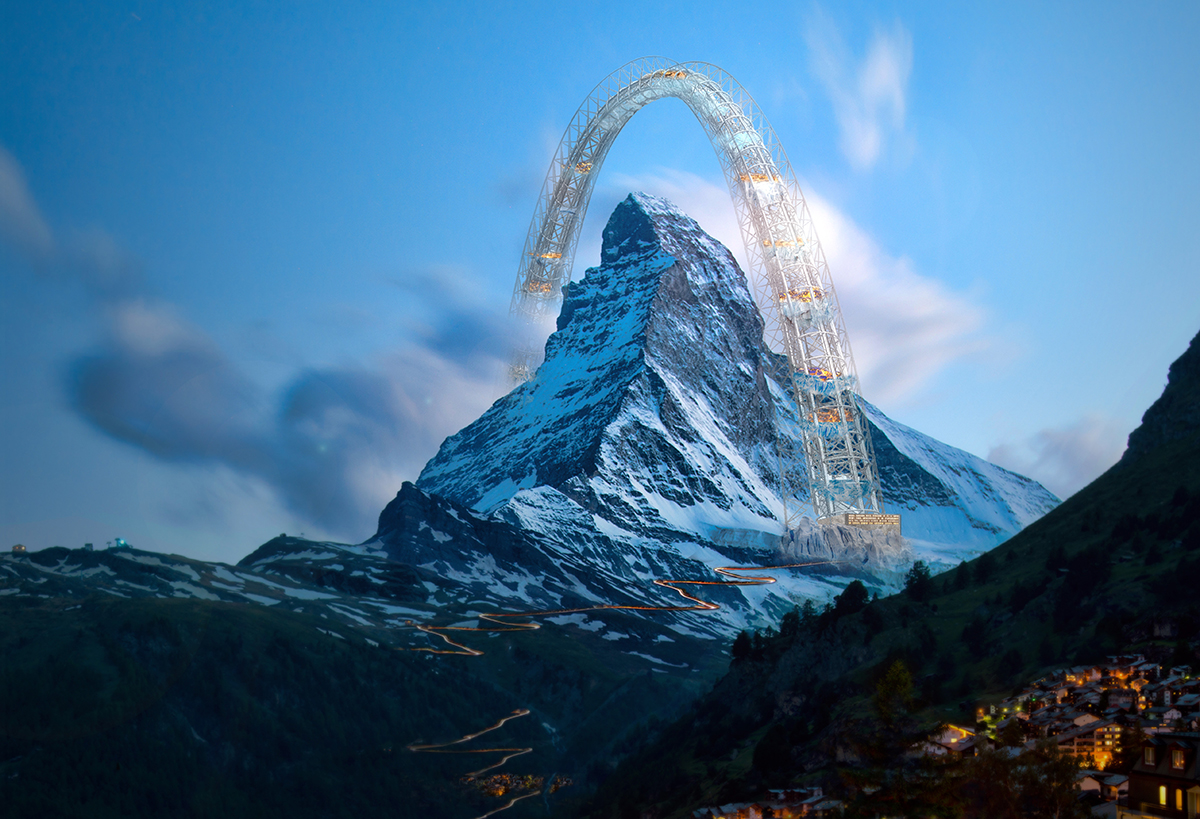
Mountains are not only made of ice and rock but also of our dreams and our desires. Man has always believed that, as a witness to our birth, mountains would also be around for our departure. But for the past twenty years, the continuous thawing of the permafrost which binds the Alps together has triggered an increase in the number of landslides. 2018 was another record-breaking year with one of the hottest summers ever recorded, and as a result, the temperature of the earth has never been higher. With rising temperatures come new issues for the world’s population to tackle: unstable peaks kill tens of alpinists every year as rocky outer layers crumble away, causing landslides and the mass flooding of valleys. Thus the Alps become more and more dangerous each day. Mont Cervin is the perfect illustration of these new dangers: located at the Swiss/Italian border, this icy rock formation has been subjected to the changes in permafrost and its decay, and as a result, the countries’ border has moved over 150m in 60 years. Read the rest of this entry »
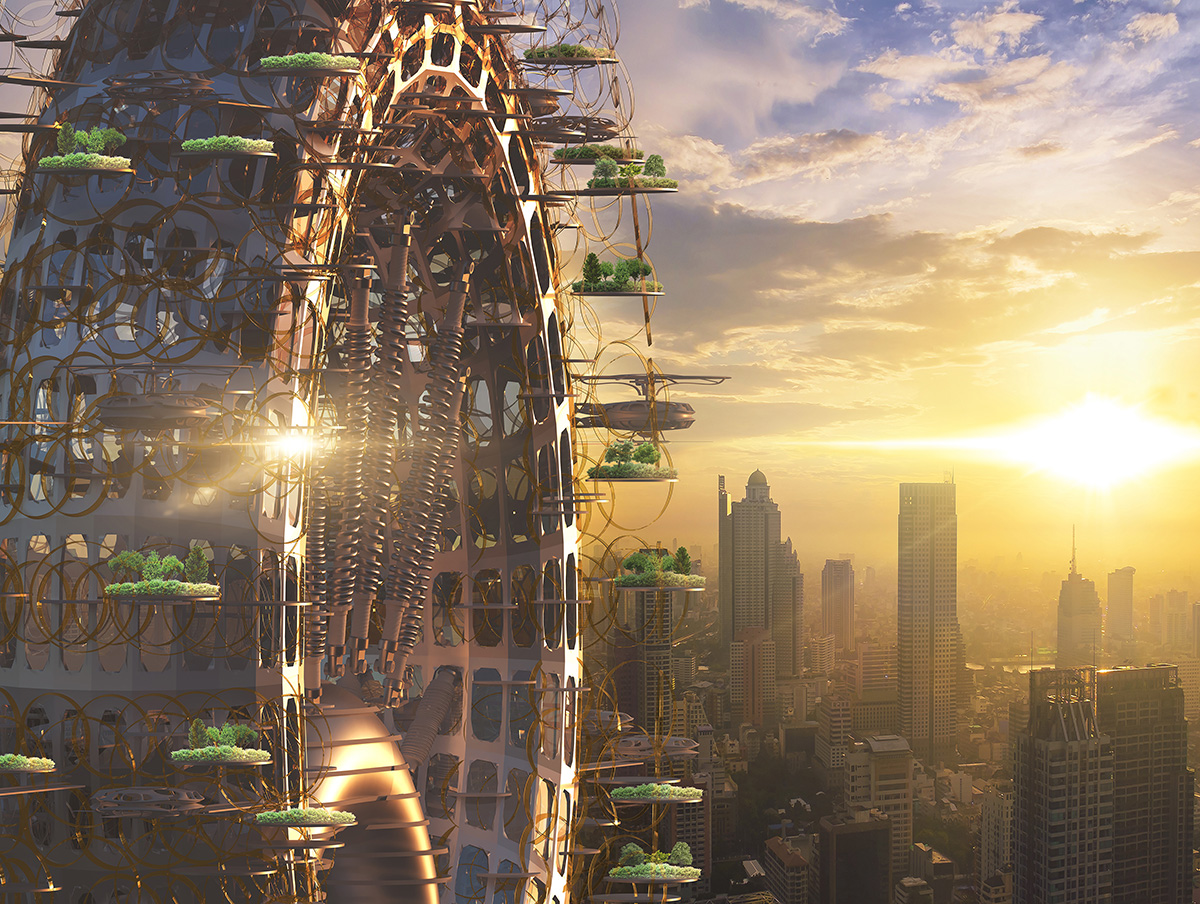
Memory Cube Skyscraper

By:  | April - 29 - 2019

Honorable Mention
2019 Skyscraper Competition

Keyi Shen, Zichao Zhong, Dingyu Li, Jian Yan, Yuan Zhang
China

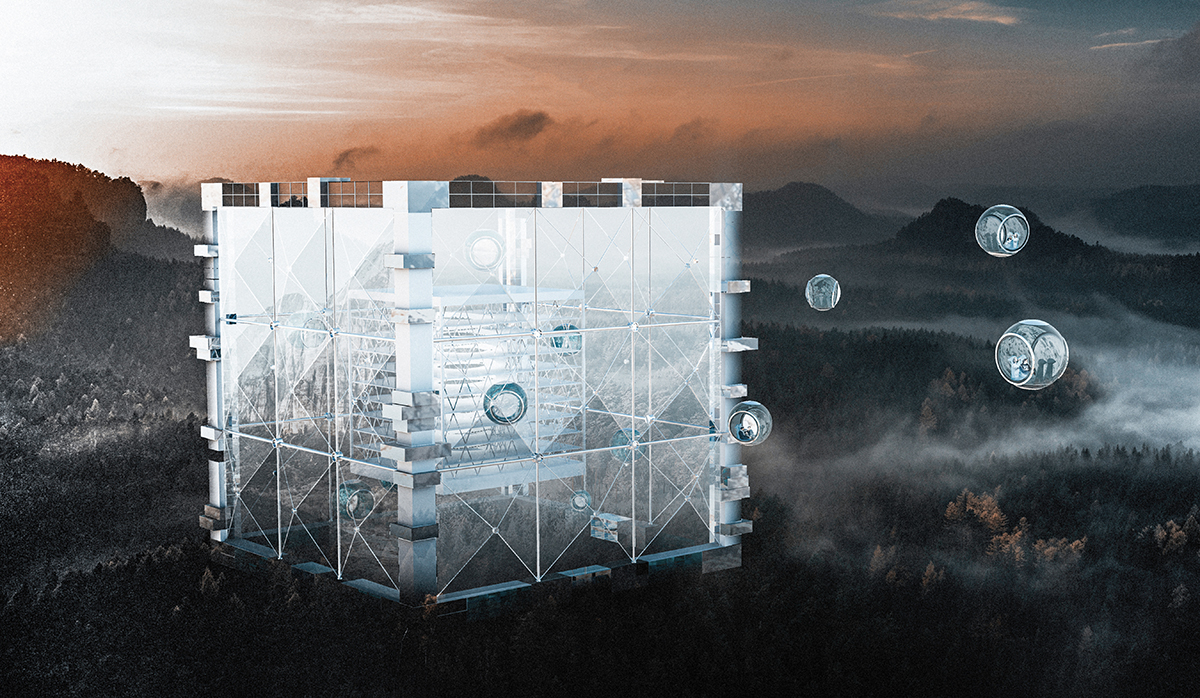
As we all know, there are many natural wonders caused by uncontrollable factors such as climate or plate movement. It is likely that after several Centuries, there are no Everest, East Africa Rift Valley, Colorado Grand Canyon, etc.

Just like us now, we are eager to understand what the world before is like, and we can only guess and restore through fossils and incomplete historical documents. No one provides us with an accurate statement. Meanwhile we don’t have a way to document the natural landscape.

So this Skyscraper will play the role of a historical scene recorder and narrator, simulate a real scene for future humans, and let landscape wonders continue. Read the rest of this entry »
Editor’s Choice 
2018 Skyscraper Competition

Maryam Fazel, Sukaina Adnan Almousa, Maryam Safari
Iran, United Kingdom, United States

Following the tragic earthquake of 2017 in west part of the Iranian terrain, people of the affected area have witnessed a devastating feeling; fleeing their homes or trapped under buildings. This tragedy and similar ones in the world are all due to many reasons that together weaken the supporting system offered to people in earthquake regions. One of the main causes of such disaster is the lack of alarming systems that can detect the approach of earthquakes. A post-disaster situation of kiosk and devastation is caused also by lack of efficient evacuation structure that can help people run for a shelter in a short time.

Addressing these problems, this project is a proposal of a skyscraper that responds to earthquake before it happens. In this premise, the structure works on two levels; one is the monitoring system, which constitutes of a biotechnological facade containing microfluidics channels continuously culturing genetically engineered harmless bacteria that is engineered to acts a biosensor system. The other level is the core of the building and the evacuation system. The skyscraper is built on a shock absorbent structure that will increase safety factor once in an earthquake emergency. It is -on the other hand- supported by pods that are set on platform scattered along multiple levels. These pods work as assembly points that can then fly people to the nearest safe zone. Users of the building can access the platforms easily. Read the rest of this entry »

Earth Parasol

By:  | October - 9 - 2018

Editors’ Choice
2018 Skyscraper Competition

Haotong Sun, Zonghao Wu, Fengwei Jia
China

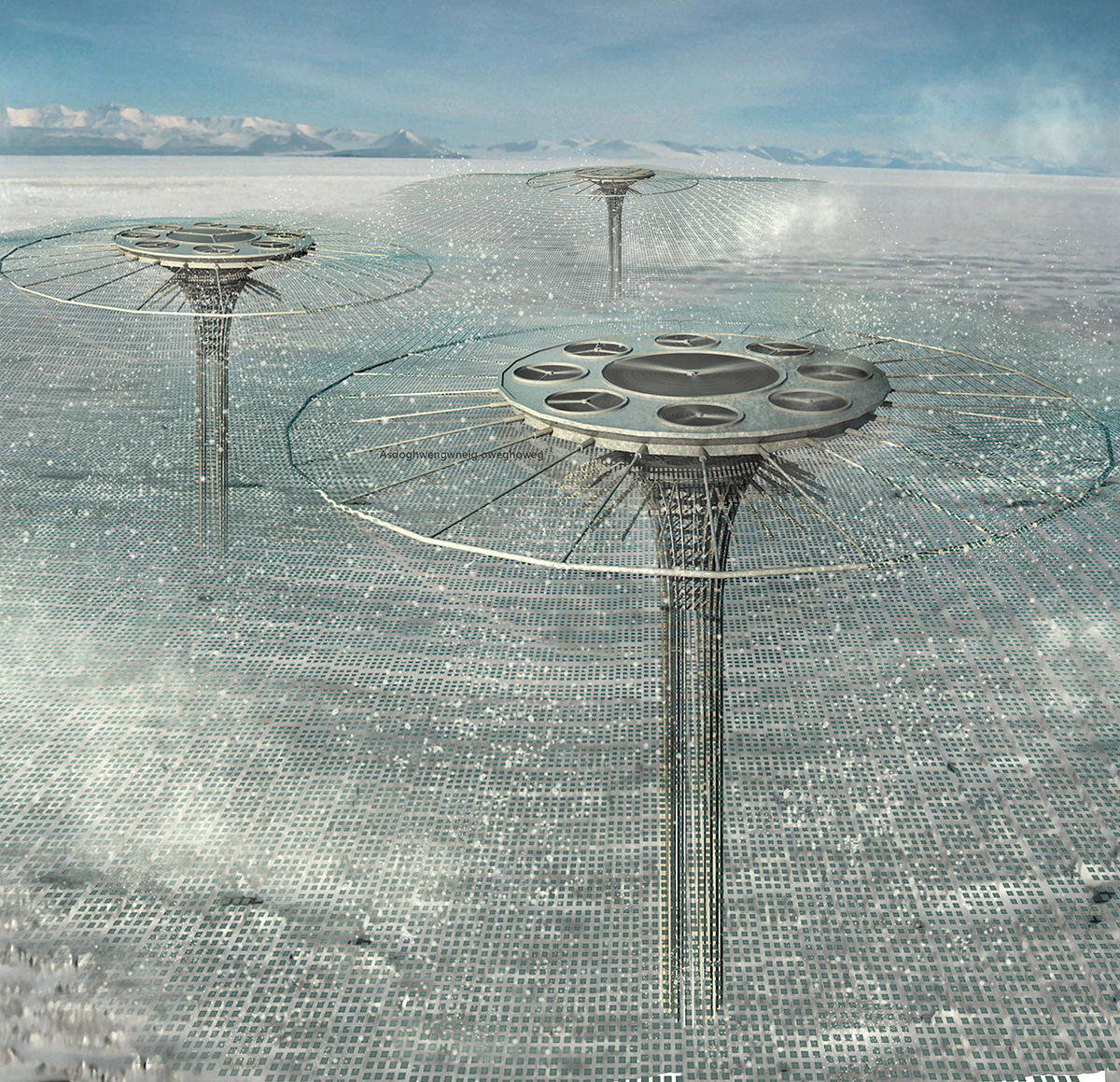
The melting of arctic ice
A reduction in Arctic summer ice cover has become more intense in recent years, culminating in a record low of 3.4 million square kilometres in 2012 – 18 per cent below the previous recorded minimum in 2007 and 50 per cent below the average in the 1980s and 1990s. Land ice is also retreating and permafrost is melting.

The retreating ice brings easier access to natural resources such as gas and oil, thus prompting increased human activity that may threaten the already fragile ecosystems and wildlife, the UN Environment Programme’s report says.

The reason of melting
1.The reasons for the Arctic warming twice as fast as the rest of the globe are manifold. More heat is brought into the Arctic through the atmosphere and ocean currents, while the melting itself prompts further melting by reduced reflection of incoming sunlight.

2.White ice and snow acts as a mirror, reflecting 85 per cent of solar radiation; however, ice-free areas of the ocean reflect only 10 per cent and the bare tundra only 20 per cent.

3.Black carbon (soot), a short-lived climate pollutant, is also believed to contribute to warming by darkening snow and ice and reducing reflective area. UNEP and partners last year launched the Climate and Clean Air Coalition to address black carbon and other such short-lived climate pollutants.

4.The thawing of permafrost will also contribute to further warming as the organic matter stored therein – up to 1,700 gigatonnes of carbon across the northern hemisphere – also thaws and decomposes, releasing the trapped carbon as CO2 and methane. Read the rest of this entry »