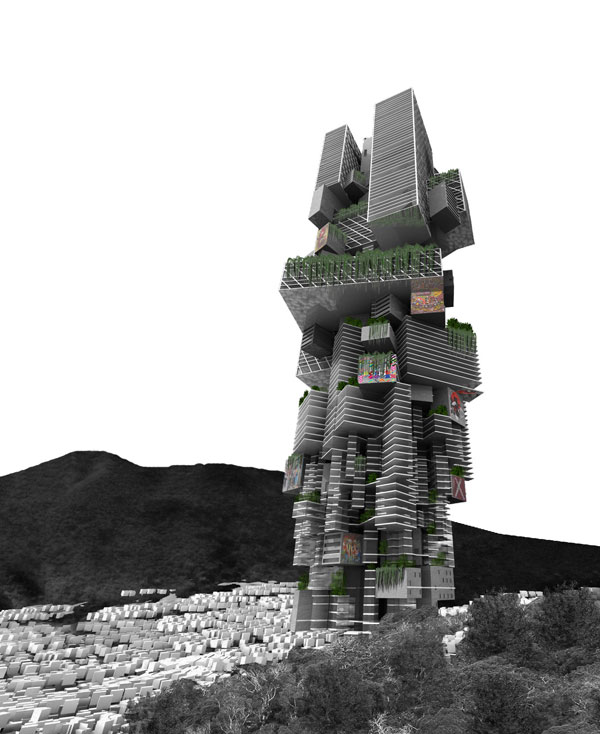

Kibera in Nairobi, Kenya is Africa’s second largest slum and one of the densest human settlements on the planet; over a million people in a congested mess of cardboard and corrugated tin shanties in a bare two-and-half square kilometers area.
The settlement’s illegality is at the heart of its perverse attraction; chaotic, anarchic – unbound by tenancy laws or building restrictions or any of the strident, stringent limitations of a modern city. The land is cheap, and the slum, with both its proximity to Nairobi and its own, semi-autonomous economy, exercises a magnetic attraction on the millions of Kenyans fleeing rural poverty. Yet the area is dominated by a handful of landlords, who have no incentive to invest in Kibera’s infrastructure. Illegal in the eyes of their government, and ignored by their erstwhile landlords, the residents of the slum make do as best they can; struggling with the – literally – shifting territory, with internecine and inter-ethnic strife, with fire and floods. Read the rest of this entry »