Designed by Anggoro Putro, Raul Renada

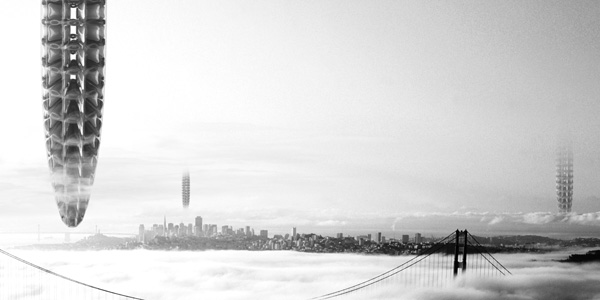
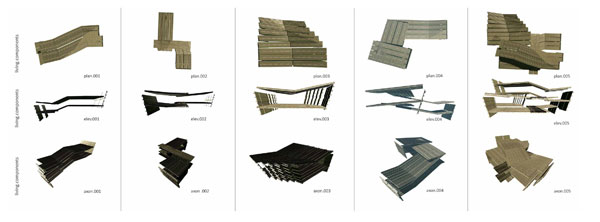
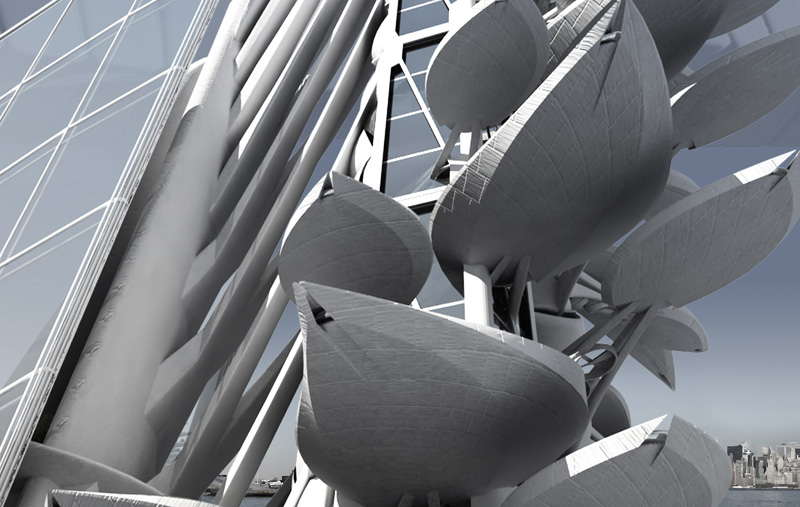
This project proposes the idea of living on the water surface instead of inland. It is not a problem-free solution but takes a small step of human-living evolution.

The first step of this project is to build this building on shore, where it still has a physical connection with the land nearby, such as bridges or piers. These buildings will interconnect with other similar concepts such as retail along the piers or transit nodes at the bridges. As we learn how to adapt and enhance the technology, we slowly move to off-shore areas and start to live independently; detached from the land. This proposal is also a logical and practical step to respond to the rising of sea levels due to the melting ice caused by global warming. Earth is covered with 70% water and this number will keep on increasing. Land will become scarce and it will be essential to sustain its natural properties for the life of humankind. Read the rest of this entry »

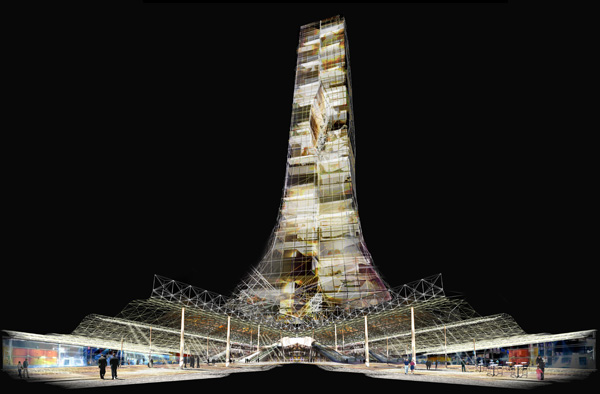
Designed by Mohamed Hassan

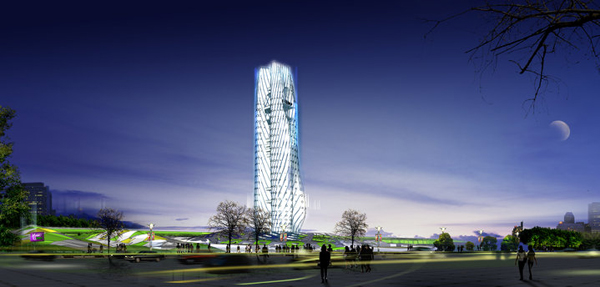
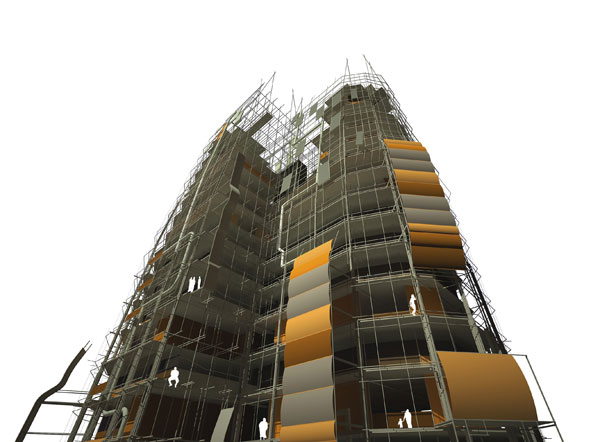
Inspired by Ken Yeang, who states that “a bioclimatic skyscraper is a tall building whose built form is configured by design, using passive low-energy techniques to relate to the site’s climate and meteorological data, resulting in a tall building that is environmentally interactive, low-energy in embodiment and operations, and high-quality in performance”, this skyscraper is generated through the analysis of  the climatic conditions of the site using parametric and algorithmic architecture.

Environmental studies were translated to Grasshopper  to generate the desired form. An analysis of the Sun’s path was used to generate a voronoi shaded structural system while aerodynamic studies were used to design the profile curvature of the tower. Photovoltaic cells, wind turbines, and water recollection systems are some of the green aspects of the proposal.

Read the rest of this entry »
Dear Readers,

We are very excited to be celebrating the first anniversary of our print journal. It has been an unforgettable ride and an enormous satisfaction to discover and promote the work of excellent new designers that are pushing the boundaries of architectural design.   

We would like to show our gratitude and offer you a 50% off discount on our second issue ‘Skyscrapers of the Future’.  This offer is available worldwide all of June.

Thank you for an amazing year!


Skyscrapers of the Future

USA – 50% OFF One-year Anniversary Offer

International – 50% OFF One-year Anniversary Offer Read the rest of this entry »

Vertical Nation

By:  | June - 6 - 2010

vertical-nation-3

Vertical urbanization has been much criticized during the last few years and it raises numerous discussions in France. Should we build skyscrapers in Paris? How can we integrate them into an environment where vertical living has not been used? When we consider existing skyscrapers we note an important loss of social exchange. It is necessary to rethink their spatial organization and its relationship with the existing urban fabric and create a structure that benefits the city. Read the rest of this entry »

vertical-wetland-1

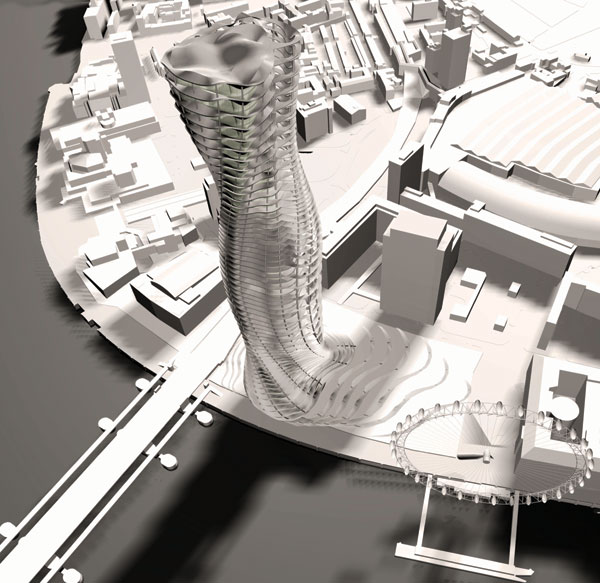
The Vertical Wetland Tower designed by London-based architect William So is located on a flood-plain area of the Thames River in London.  It has been designed to allow systemically growth in over populated cities. It is a 50 storey construction covered with vegetation and equipped with recreational and cultural amenities.

The tower’s reinforced structure acts as a flooding barrier to the city and accommodates some of London’s new infrastructure. Each floor has been designed as variable modules for customized units. The completed tower will be a double helix with interwoven programs. While one helix contains the residences and offices the other incorporates green open spaces for recreational activities. Read the rest of this entry »
singapore-marina-5

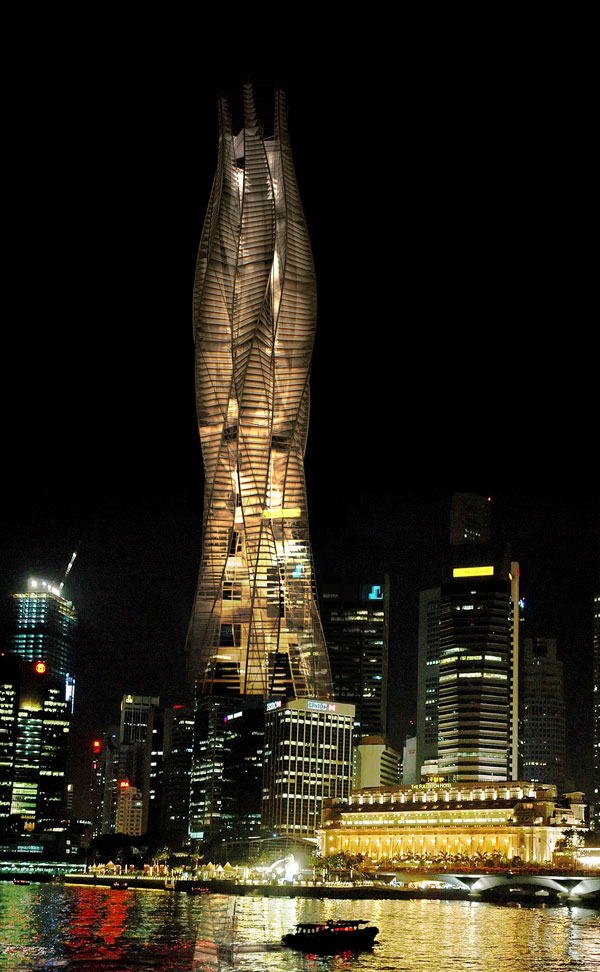
Volutes is a skyscraper conceived by Asami Takahashi and Jason Lim located in Singapore’s new marina. Our proposal is to pull upwards the urban fabric and create a helical volume. Public programs are wrapped around a central circulation core while six serpentine structures contain the private spaces. The morphology of the building results from the analysis of 6 control lines sweeping around the central core. The outer skin is linked to the main structure with spokes arranged in a hexagonal configuration.Volutes opens at the street level and closes at the top to allow direct sunlight into the city. Its porous skin maximizes ventilation and regulates the green parks and water reservoirs. Read the rest of this entry »

3-Strata

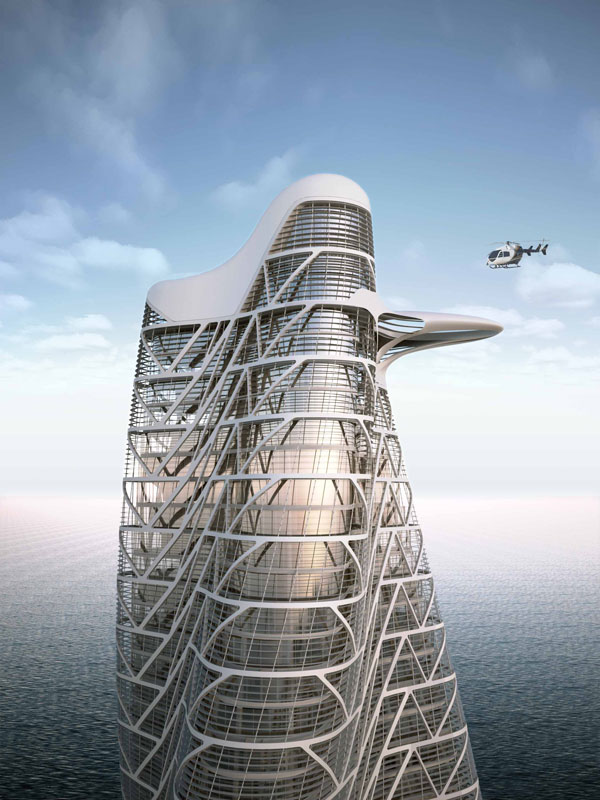
The Strata Tower, a forty-story, luxury residential building designed by architects Hani Rashid and Lise Anne Couture of Asymptote, has broken ground on Al Raha Beach and is now under construction. The tower is scheduled for completion in early 2011 and, at a height of 160 meters, will be the tallest building in the Al Dana precinct, the centerpiece of Aldar Properties PJSC’s prestigious Al Raha Beach development. The project and development was showcased at Cityscape Abu Dhabi from May 13–15, 2008. The landmark Strata Tower is designed to signify a dignified and important future for Abu Dhabi and the region.

As a signature architectural statement, the Strata Tower’s articulate, striking physical presence seeks to encapsulate meaning through the use of abstract form drawn from both local cultural landscapes and motifs and dynamic forces of global influence. The Strata Tower’s design utilizes primarily mathematical means in its design to achieve both a poetic, as well as highly pertinent, architecture for the UAE, a region in flux with ambitions for continued rapid growth. Read the rest of this entry »

Space Skyscraper

By:  | June - 1 - 2010

space-skyscraper-4

The main idea behind this proposal is to build a skyscraper in space. It will sit on the plane of an orbit where gravity is zero. The concept is to keep the median point of the structure on the orbital plane and build it until it almost reaches the Earth’s surface. This experiment is one of the many investigations to free the skyscraper from gravity and create the tallest structure which could completely solve our housing problems. The building is 1000 kilometers tall and its orbital plane would be at 500 kilometers. Read the rest of this entry »

linear-city-3

Architects Joseph Moore and David Tai Wai Pak believe that the future of urban design will be found in the interdependence of expansion and mass transit systems. In California the directionless sprawl of its largest cities has created a culture of cars, pollution and commuting. Continual independent growth was solution that provided great comfort and freedom while land and resources were available. However, California’s population has grown exceedingly in the past fifty years and it cannot sustain its current growth within this old system. Los Angeles’s population in particular has increased from 4.7 million in 1950 to a staggering 16 million in 2008 and it is projected by the U.S. Census Bureau to continue to grow to a total population of 24.6 million by 2050. To deal with this future population increase, Intension proposes to relocate any further expansion of California’s major cities towards a linear urban plan. The catalyst for this proposal was California Department of Transportation’s development of a high speed rail that will link major cities from Sacramento to San Diego. Read the rest of this entry »

slumdog-skyscraper-2

Kibera in Nairobi, Kenya is Africa’s second largest slum and one of the densest human settlements on the planet; over a million people in a congested mess of cardboard and corrugated tin shanties in a bare two-and-half square kilometers area.

The settlement’s illegality is at the heart of its perverse attraction; chaotic, anarchic – unbound by tenancy laws or building restrictions or any of the strident, stringent limitations of a modern city. The land is cheap, and the slum, with both its proximity to Nairobi and its own, semi-autonomous economy, exercises a magnetic attraction on the millions of Kenyans fleeing rural poverty. Yet the area is dominated by a handful of landlords, who have no incentive to invest in Kibera’s infrastructure. Illegal in the eyes of their government, and ignored by their erstwhile landlords, the residents of the slum make do as best they can; struggling with the – literally – shifting territory, with internecine and inter-ethnic strife, with fire and floods. Read the rest of this entry »