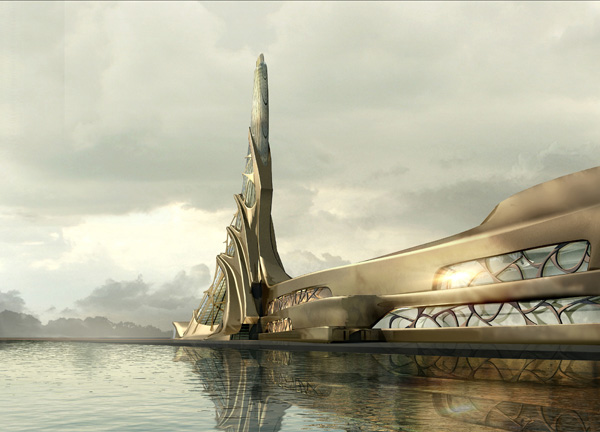
Biomorphic Skyscraper

By:  | May - 29 - 2010

biomorphic-skyscraper-1

As time transcends the virtual and physical limits of tall buildings, their ability to mingle into the existing urban fabric and transform a city’s dynamic core becomes a fine line between the density and physical mass already embedded in the metropolis and the ingenious ability to create grandeur. We therefore only see fragments of the past and brave gestures of the future in the densification of urban cores. Each gesticulation becomes an expression – a murmur on the reality of what could be achieved.

To allow for true freedom of expression that allows complete indulgence concerning the interplay of form and structure we have to consider the rationale of building placement. Allowing buildings to set their footprint in avenues of un-built mass provides for urban renewal in areas of cities previously left as urban wasteland from decaying manufacturing. Read the rest of this entry »
trabeculae-2

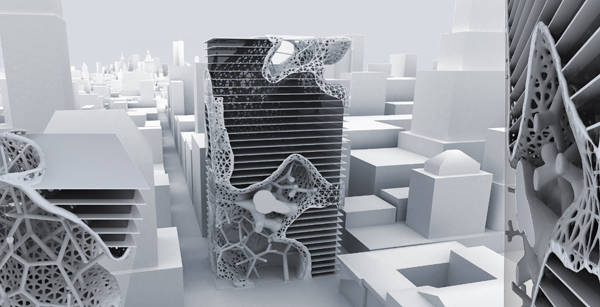
Trabeculae is the result of re-imagining the central atrium office tower. Replacing the traditional operation of repetitive extrusion, a heliotrope branching system actively seeks out those areas within the zoning envelope with greatest access to daylight. Forking and swelling in response to varying light conditions the atrium is thus conceived as a site-specific network that traverses intelligently and freely from one façade to another. The atrium becomes the defining element of differentiation within otherwise normative floor plates while maintaining efficient floor space ratios.

Within the atrium a second order proliferation of the same system at a finer scale develops a structural meshwork. The swellings and coagulations of this topologically free structural network-within-a-network accommodate meeting rooms and bridges.

The ambition of achieving inorganic speciation is part of Supermanoeuvre’s broader research into the capacity of generative architectural methodologies to negotiate novel spatial, formal and material organizations. Whereby, the performance and character of architecture is elaborated through both the internal systemic logics of the algorithm and its motivated response to external stimuli and latent conditions. Read the rest of this entry »
bioclimatic-tower-1

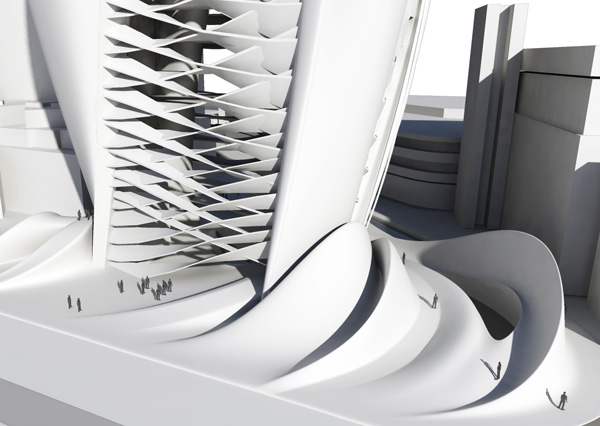
Helices Tower conceived by Julia Koerner is a building prototype that aims to transform the modern high-rise typology for equatorial climates through the incorporation of sustainable, bioclimatic building-systems. The design demonstrates that passive ventilation strategies can be exploited for both energy efficiency and formal beauty.

The design features innovative building systems that transition from highly articulated, two-dimensional façade patterns to three-dimensional bioclimatic interior spaces.

Helices Tower consists of two primary elements: opaque monolithic cores, incorporating the ventilation system and primary structural system, and the twisting helices that span in-between to form floor slabs and interior spaces. The cores are located on the east and west sides to shade the building from low solar angles while the helical slabs create a fluid gradient pattern on the façade and provide additional shading for the interior. Read the rest of this entry »

reforesting-tower-4

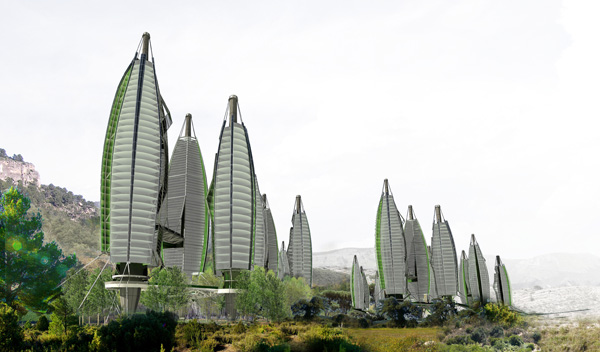
Benidorm is a Spanish town that enjoys a pleasant semi-arid Mediterranean weather. It attracts thousands of tourists to its pristine waters and beaches. In the last few years it has been affected by unregulated construction that destroyed most of its vegetation with catastrophic consequences. There has been an increase in temperature, reduction of humidity, and long summer droughts. Read the rest of this entry »

lyon-skyscraper-1

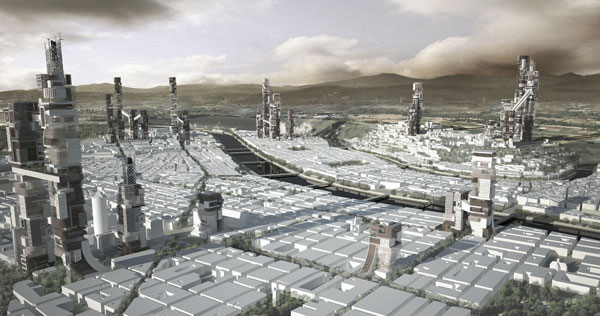
Urban Stakes is a new type of skyscraper designed by French architects Laurent Bariat and Yann Magnet for the city of Lyon in France. The first urban planning for this city dates back to the Roman Empire. The second one took place during the Middle Ages and the third one during the industrial revolution. During the last four decades its population has dramatically increased and the urban fabric is rapidly growing with careful consideration of the environment. Read the rest of this entry »
ASY_TheCircle_image011

The Circle at Zurich Airport is a mixed-use development designed by New York-based avant-garde architectural firm Asymptote Architecture. The complex near Zurich’s international airport seeks to become a cultural, commercial, health, and educational destination to the city while serving the needs of travelers. It is designed as four towers above a three story plinth that connects to the surrounding landscape. Between each tower there are external galleries that connect the interior of the Circle to the city. Asymptote’s design anticipates the evolution in transportations hubs that will become active urban environments utilizing the energy and action of flight and internationalism. Read the rest of this entry »

favela-skyscraper-1

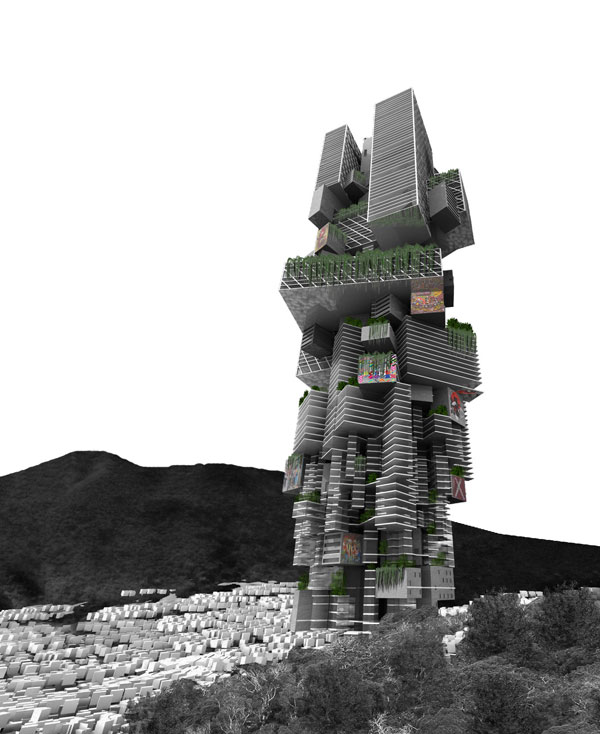
Rocinha, Brazil, is one of the world’s largest slums with a population over 150,000 people. It is located in the southern part of Rio de Janeiro; a hillside the overlooks the city and the ocean.  In the 1930’s the Rocinha community emerged from the division of large farm fields and in the 1940’s and 1950’s it was the epicenter of illegal settlements with lack of regulation. The result is an area with a strong community bonds but without any infrastructure or security.

One of the most interesting characteristics of the “favelas” is the non-existent boundaries between public and private space. The unorganized construction creates residual spaces that are use by the residents for all kinds of community activities. Our intention is to design a high-rise building that will provide safe housing for the people while preserving these in-between areas. Read the rest of this entry »

YON_R020

Award-winning architecture studio Asymptote, directed by Hani Rashid and Lise Anne Couture, recently unveiled their design for the FCD Yongsan Landmark Tower in Seoul, Korea.  The tower was conceived by Asymptote and engineered by Thorton Tomassetti. It was designed to confront the notion of a single spire, instead, proposes the idea of coupling and stringing three towers together.  According to Asymptote, “the inherent symbolism and reading of this tower will appeal to the global community and place a focus on South Korea, specifically Seoul’s aspirations for the future. Read the rest of this entry »

clover-table-1

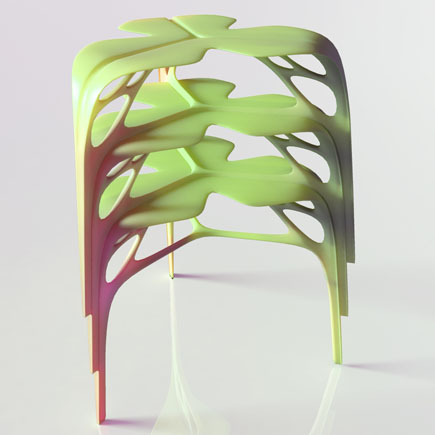
London-based architect Daniel Widrig designed a set of stackable side tables for a private exhibition in London. Its organic and nature-inspired geometry, fluid lines, and colors remind us Art Nouveau at the turn of the 20th century. Read the rest of this entry »

Hopkins-Architects-Kroon-Hall-Yale-AJ100-Building-of-the-Year-Winner-2

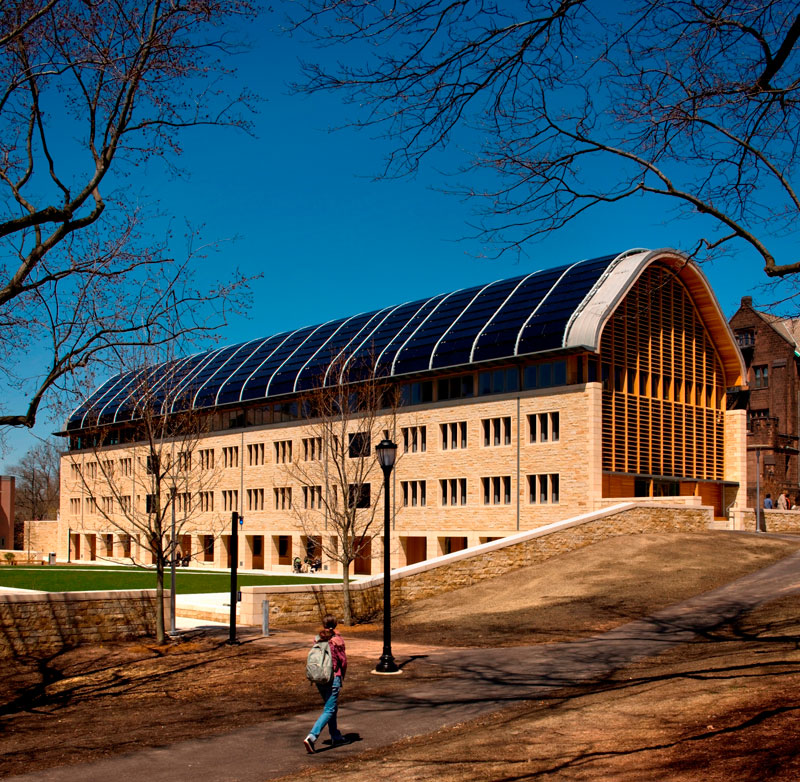
Kroon Hall at Yale University was named “Building of the Year” by the UK’s architecture sector, during the prestigious AJ100 awards. The new building, designed by Hopkins Architects for the School of Forestry & Environmental Studies, was one of six shortlisted entries – from a total of 33 – and ultimately selected as the winner by a panel of expert judges.

The judges were impressed with the school’s simple, aesthetic form and green credentials – the project has been awarded LEED* ‘Platinum’, the highest certification, and is designed to be as close to carbon neutral as possible. Clad with yellow Briar Hill stone, the structure is lined with American red oak, much of which has been sourced from the university’s own forests. Read the rest of this entry »