Vertical Streetscape

By:  | January - 25 - 2010

Green Skyscrapers
In the next few days we will showcase 25 innovative proposals for green skyscrapers. These projects were submitted for the Annual Skyscraper Competition from 2006 to 2009.

Project 24 of 25


Vertical Streetscape

Vertical Streetscape


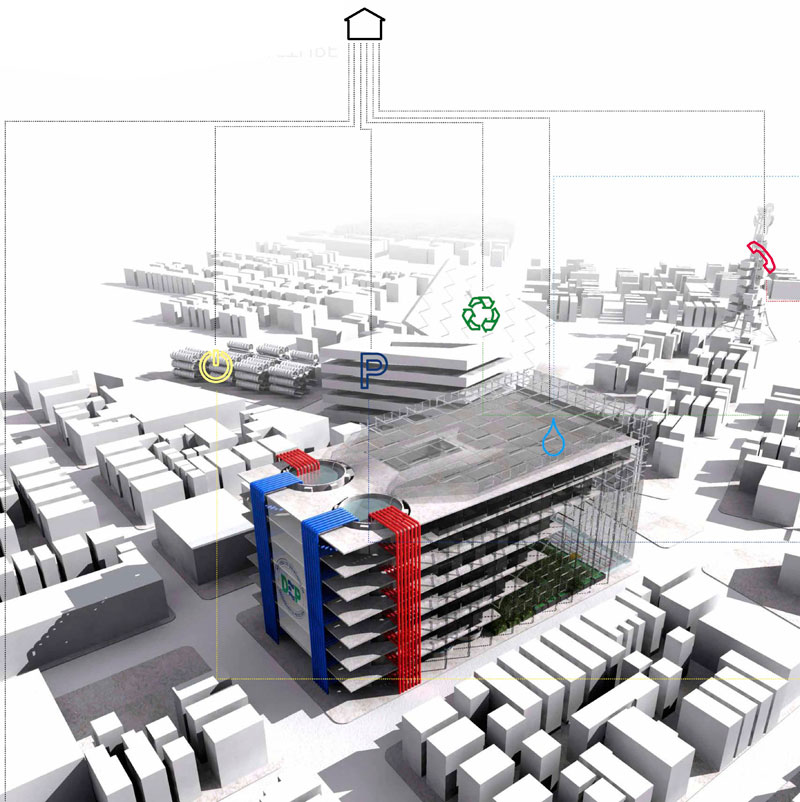
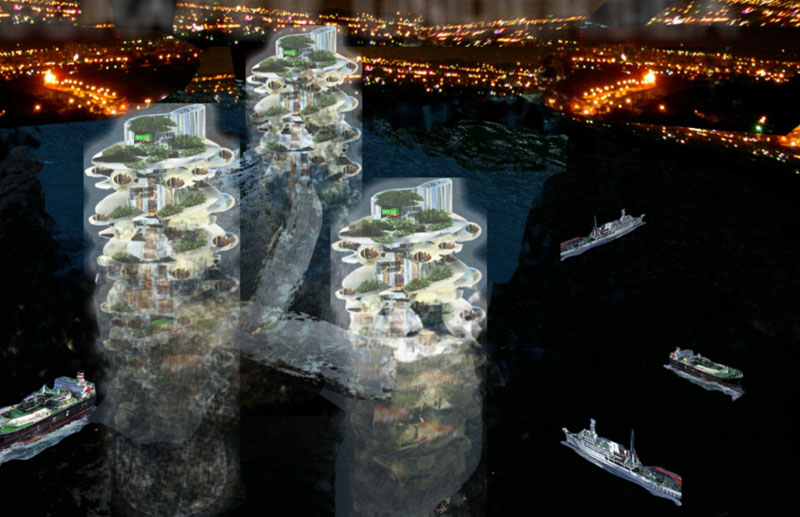
The main idea behind this project is to create a vertical city with the same qualities of traditional horizontal settlements. The goal is to define an outdoors vertical street that is connected to commercial, recreational, housing, and office areas. The vertical street would have a mix of escalators, ramps, elevators, and stairs with green parks and terraces. Read the rest of this entry »
Green Skyscrapers
In the next few days we will showcase 25 innovative proposals for green skyscrapers. These projects were submitted for the Annual Skyscraper Competition from 2006 to 2009.

Project 23 of 25


Epiphyte Architecture

Epiphyte Architecture


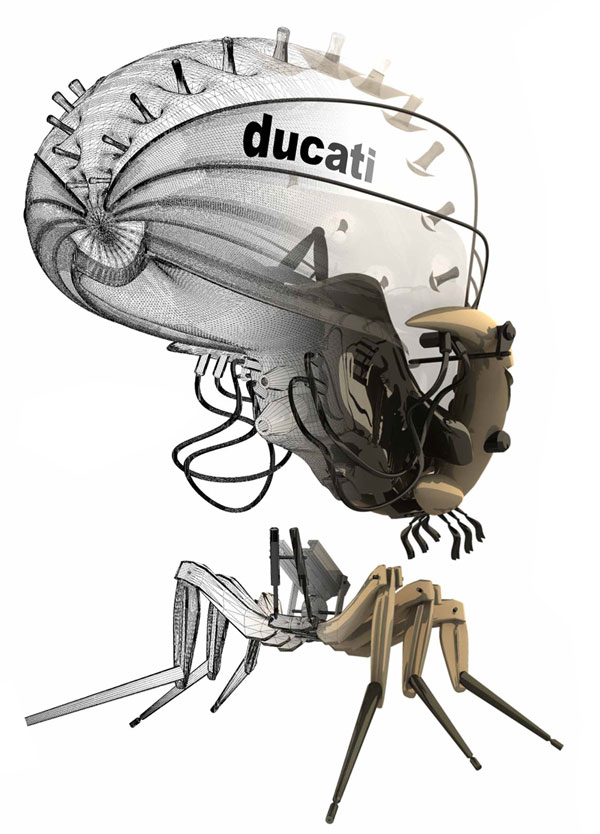
The increase in the tropical belt calls for a tropical response to the problems of resources, energy, and global warming. While, also trying to increase the life of structures for the benefit of all, until advanced structural techniques and increased highly developed environmental sustainable buildings become available. Our response is “Mechanical Epiphytes” (ME). ME are environmental energy generators; structures that have a symbiotic relationship to their supporting structure, namely the skyscraper. In nature, epiphytes grow above the ground extracting their nutrients from the atmosphere while using other plants or objects for support. ME anchor to their supporting structure in high strategic locations providing its companion energy through the means of solar power, wind turbine generations, water absorption and carbon dioxide collection and transformation.

Read the rest of this entry »
Green Skyscrapers
In the next few days we will showcase 25 innovative proposals for green skyscrapers. These projects were submitted for the Annual Skyscraper Competition from 2006 to 2009.

Project 22 of 25

Nathan Shobe
United States


Wastescraper

Wastescraper

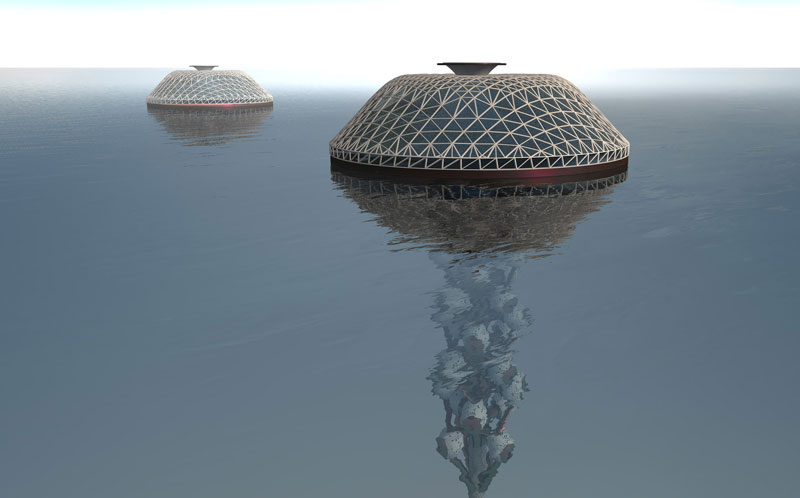
The integration of a vertical landfill system in the Deonar Landfill will mitigate pollution entering the subterranean layers of earth. The absence of a clay liner / impervious membrane beneath the waste allows leachate to penetrate deep into the ground. Emissions of toxic fumes are present in landfills that have not been properly designed. It is these hazards that inspired the Wastescraper as a socially and environmentally responsible skyscraper. Read the rest of this entry »

Vertical Agriculture

By:  | January - 22 - 2010

Green Skyscrapers
In the next few days we will showcase 25 innovative proposals for green skyscrapers. These projects were submitted for the Annual Skyscraper Competition from 2006 to 2009.

Project 21 of 25

Mark Buenavista
United States

Vertical Agriculture

Could a tall building be a living machine rather than a machine for living or working? What are the implications of not just going tall, but growing tall? Cornell University is currently undertaking a program to develop midrise housing for students and faculty on New York City’s Roosevelt Island. The initial mixed-use program calls for student dormitories, market-rate faculty housing and additional, leasable office space. Currently the residents of Roosevelt Island have little or no access to food in the immediate vicinity. Residents must go to Manhattan, Brooklyn or Queens to buy groceries. What would happen if viable food systems were introduced to the island? What if agriculture on the island was encapsulated within a tall building? This solution would add new depth to experiencing ecological and climatic systems in an urban, living, and working environment. Read the rest of this entry »
Poreux: A Voronoi Skyscraper

By:  | January - 22 - 2010

Green Skyscrapers
In the next few days we will showcase 25 innovative proposals for green skyscrapers. These projects were submitted for the Annual Skyscraper Competition from 2006 to 2009.

Project 20 of 25

Domenic Cerantonio, Michael Wu, Wilson Tang
Australia


Voronoi Skyscraper

Voronoi Skyscraper


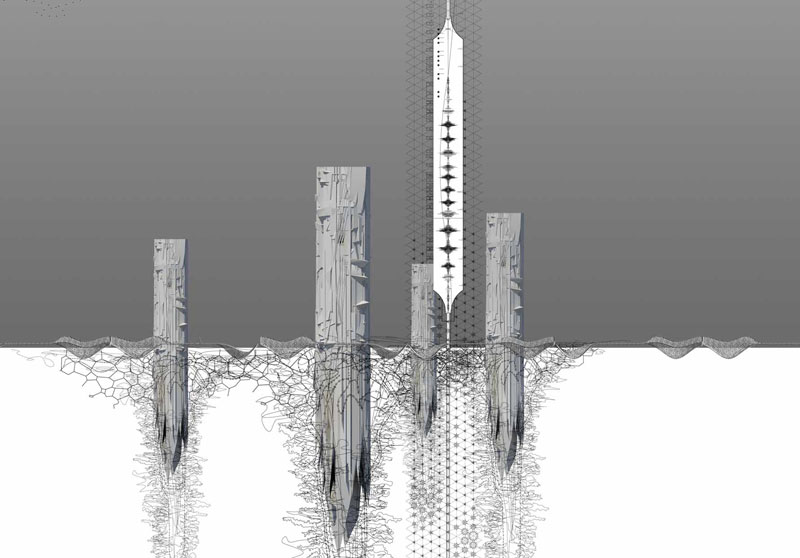
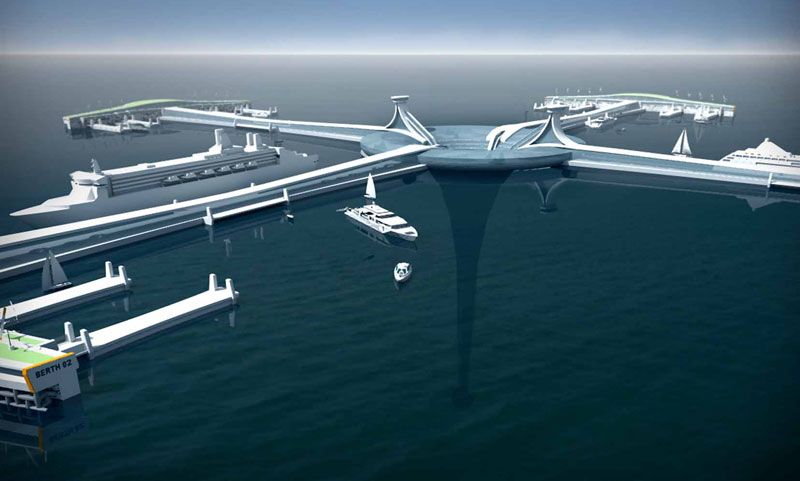
Poreux is a Project located in Docklands waterfront Melbourne, Australia. It is a proposal to Bridge Docklands to Melbourne centre activity district. The railway tracks split the two places, discouraging a fluid transition of urban life. A Voronoi network is used as the basis of the design concept as an attempt to evenly distribute density of population and programs horizontally and vertically, diffusing the hierarchical organization inherent in a city iron grid to encourage every network reaching its potential. The programs have been scrutinized at both the macro level and micro level to ensure it embraces and contributes to its surrounding to make Docklands a more accessible and a more pleasurable place to be in. Read the rest of this entry »

Megastructure as Urban Organism

By:  | January - 21 - 2010

Green Skyscrapers
In the next few days we will showcase 25 innovative proposals for green skyscrapers. These projects were submitted for the Annual Skyscraper Competition from 2006 to 2009.

Project 19 of 25

Ting Ho Cheung, Yiju Lee
Canada


Megastructure - Urban Organism

Megastructure - Urban Organism


The strategies of urbanization, especially the impacts of suburbia colonization, are a controversy. The hypothesis for this research is the influence of a higher population density in the Greater Toronto Area and how this will affect its inherent resources. The prosperity of cities depends on the smooth movement of people and goods and it is getting more difficult with the increasing sprawling developments where large portions of land are not utilized and houses, shops, and workplaces are very far from each other. Read the rest of this entry »

Vertical Urban Farmlands

By:  | January - 21 - 2010

Green Skyscrapers
In the next few days we will showcase 25 innovative proposals for green skyscrapers. These projects were submitted for the Annual Skyscraper Competition from 2006 to 2009.

Project 18 of 25

Guillaume Letschert, Dorian Bernards, Myriam Cesaroni
France


Urban Farmlands

Urban Farmlands


Today more than 50 percent of the world’s population live in urban centers, by the year 2050, it will be nearly 80 percent. During the interim it is expected that the population will increase by an extra 3 billion people. With today intensive farming practices, characterized by high inputs of capital, water, fertilizers, and waste; an estimated 10,000,000 hectares of new land will be needed to grow enough food to feed them. At the moment we have nearly reach the maximum of land that is sustainable for crops. Each year we are losing about 100,000 square kilometers of topsoil around the world, the majority with poor management and poor urban planning. Read the rest of this entry »
Vertical Living in a Forest

By:  | January - 21 - 2010

Green Skyscrapers
In the next few days we will showcase 25 innovative proposals for green skyscrapers. These projects were submitted for the Annual Skyscraper Competition from 2006 to 2009.

Project 17 of 25

Pierre Heuser, Markus Egle, Lars Junghans
Germany


Forest Vertical Living

Forest Vertical Living


The Forest
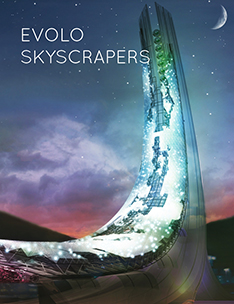
The aim of this concept is to reach a sustainable, ecological structure with a high living quality and a high population density. Therefore the skyscraper should not be seen as an expression of individuality but as an element of a larger system. In the forest (shadow, climate conditions etc.) it is possible to achieve special synergy effects. This proposal introduces a new layer above ground for symbiotic leaving with the forest.

Read the rest of this entry »
Green Skyscrapers
In the next few days we will showcase 25 innovative proposals for green skyscrapers. These projects were submitted for the Annual Skyscraper Competition from 2006 to 2009.

Project 16 of 25

Hong Seong-hyeop, Choi Jae-ho
South Korea


Symbiotic Tower Amazon

Symbiotic Tower Amazon


The rapid modernization and urbanization have changed the original meanings of the Amazon. The tropical rain forest has been degraded to one of the expendables and it has lost its value as the basis for the nature since its financial value is considered more important than the life quality. In this situation, a high-rise building delivers the symbolic message of the world called the symbiosis by incorporating the two unsuitable words, green and growth. Read the rest of this entry »

Mangrove Tower in the Baltic Sea

By:  | January - 20 - 2010

Green Skyscrapers
In the next few days we will showcase 25 innovative proposals for green skyscrapers. These projects were submitted for the Annual Skyscraper Competition from 2006 to 2009.

Project 15 of 25

Jaakko Kallio-Koski, Toni Österlund, Joose Mykkänen
Finland


Mangrove Tower

Mangrove Tower


The Sea at Risk
The Baltic Sea is the second largest brackish water basin in the world in terms of water volume. The water of the Baltic Sea is a mixture of ocean water and fresh water brought by numerous rivers. The unique brackish-water ecosystem is very sensitive to disturbances. About 85 million people live in the Baltic Sea catchment area, placing severe pressure in the ecosystem.
The Mangrove Tower is a temporary structure designed to prevent eutrophication in the sensitive archipelagos of the Baltic Sea. The actual process of reducing pollutants is simple, but needs a large scale self-sufficient system that can be relocated after the site has been cleaned. Read the rest of this entry »