Green Skyscrapers
In the next few days we will showcase 25 innovative proposals for green skyscrapers. These projects were submitted for the Annual Skyscraper Competition from 2006 to 2009.

Project 4 of 25

Chris Lee, Marcus Carter
United States


Park in a Tower

Park in a Tower


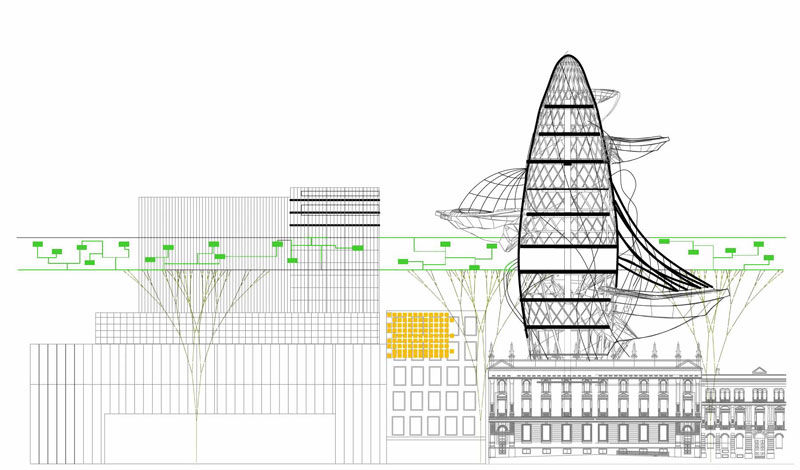
Le Corbusier’s Plan Voison, or City for Three Million, introduced a new order to embody what he thought were the spirit and needs of the Machine Age. His towers in a park sought to provide open space to the modern city, though in the end it destroyed the dense urban fabric necessary for vibrant urbanism. Our proposal inverts the building-park relationship by pulling the park into the building thus creating a new typology of the skyscraper: Parks in a Tower.

This new skyscraper rethinks the traditional notions of zoning by pulling the public space up from the street level. Often high-rise developers are required to provide public space in front of their buildings in exchange for additional height allowances. Instead here, the public space penetrates the interior providing an important amenity at all levels. Each level of the park would allow for different uses, vegetation, and possibilities for occupation. By pulling the park into the tower, the building can be urban-friendly, able to be inserted into a dense context. Read the rest of this entry »
Vertical Park for New York

By:  | January - 7 - 2010

Green Skyscrapers
In the next few days we will showcase 25 innovative proposals for green skyscrapers. These projects were submitted for the Annual Skyscraper Competition from 2006 to 2009.

Project 3 of 25

Remigiusz Brodzinski, Agnieszka Lepecka, Pawel Pawlowski, Michal Stys, Monika Tutaj-Wojnowska
Ireland / Poland


Vertical Park

Vertical Park


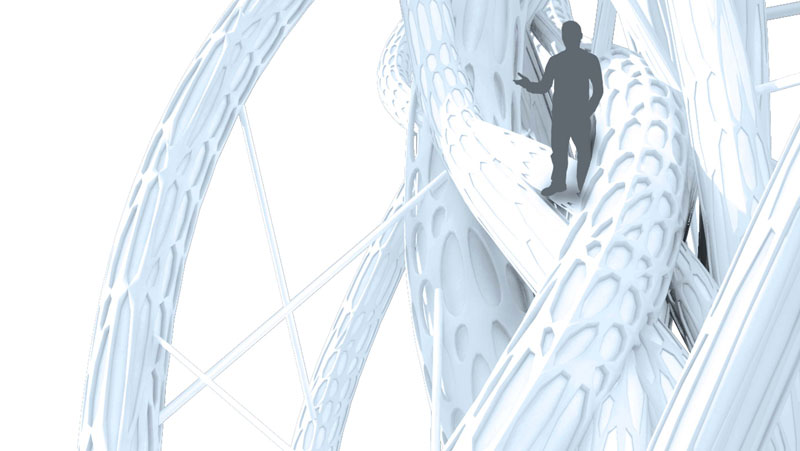
Imagine a skyscraper which is not an apartment block or an office building. Instead it is a vertical park that rises into the sky having its head in the clouds.
It’s a place for dreaming, playing and breathing. A peaceful place where in the middle of the hectic city on the 22nd floor there is room for birds chirping, rustling of leaves, lying on the grass and hearing your heart beat. Read the rest of this entry »

Green Skyscrapers
In the next few days we will showcase 25 innovative proposals for green skyscrapers. These projects were submitted for the Annual Skyscraper Competition from 2006 to 2009.

Project 2 of 25

Yuki Yoshita, Naoto Kondo, Daigo Kobayashi, Kosuke Okuda, Tatsuya Horii
Japan


Central Park Skyscraper

Central Park Skyscraper


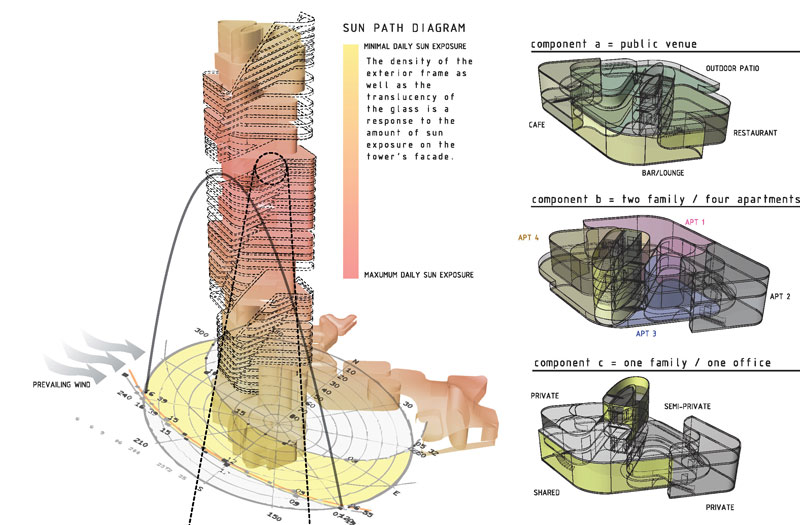
The 20th Century saw the birth of the skyscraper and the transformation of major global cities. Our proposal examines the skyscraper as a vertical park for high density urban areas. It is divided in four main areas according to its height. Read the rest of this entry »

Ecological Skyscraper

By:  | January - 5 - 2010

Green Skyscrapers
In the next few days we will showcase 25 innovative proposals for green skyscrapers. These projects were submitted for the Annual Skyscraper Competition from 2006 to 2009.

Project 1 of 25

Jaume Canals Parellada, Jonathan Arnabat Vila
Spain


Ecological Skyscraper

Ecological Skyscraper


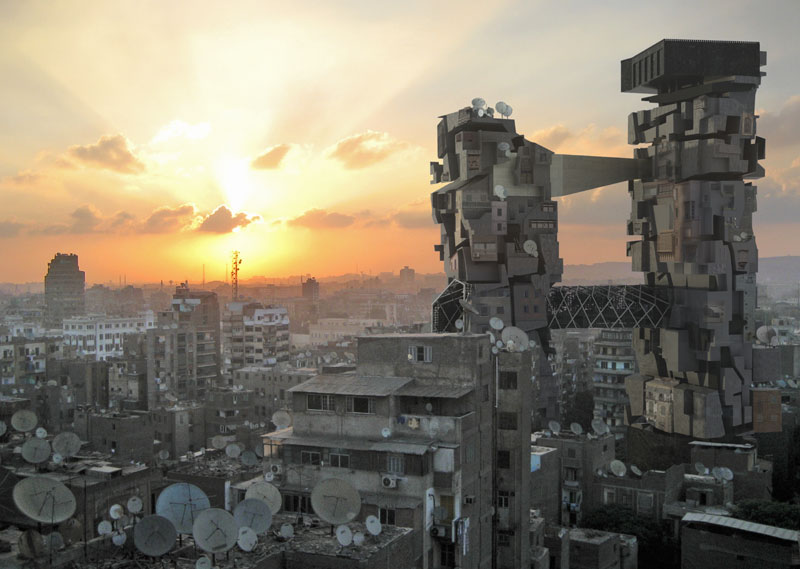
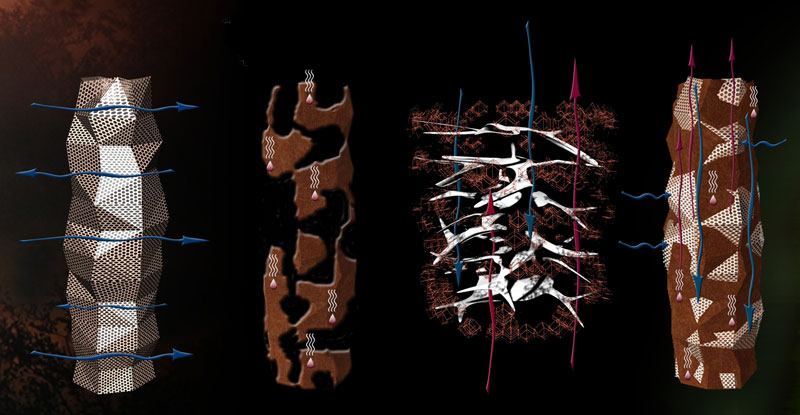
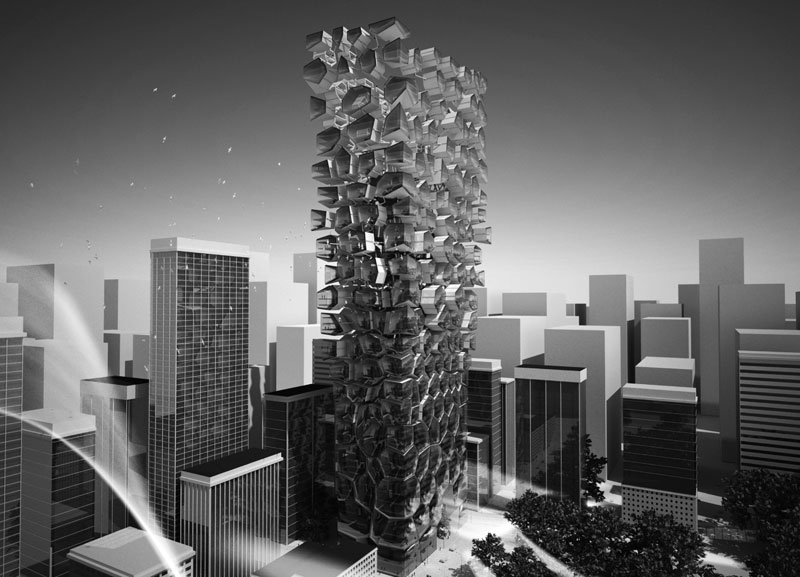
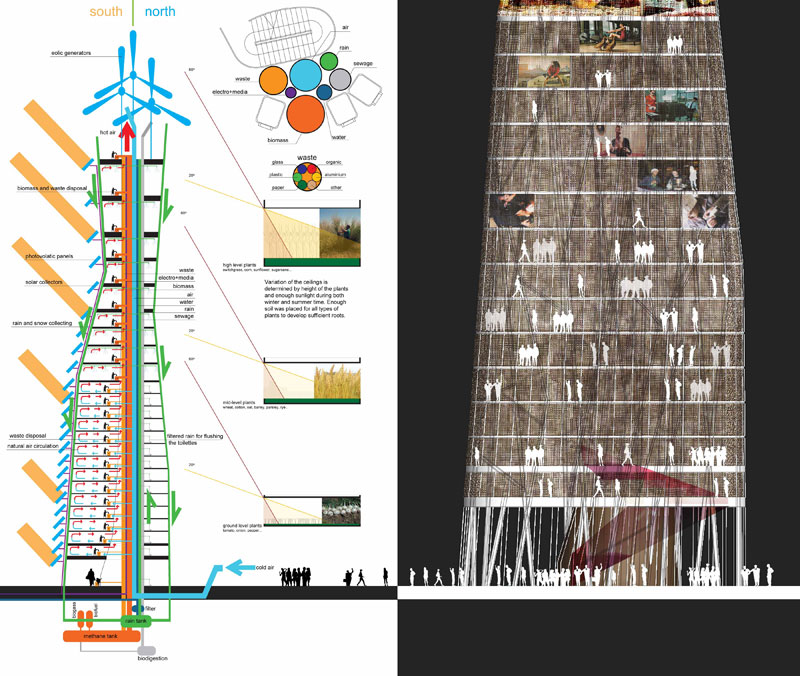
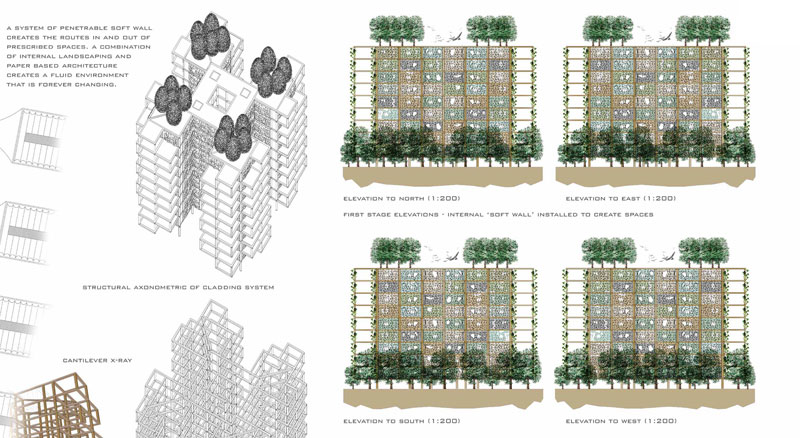
We designed a building that provides infrastructure, urban facilities, green zone, office and living space. In our view, the real challenge of Mediterranean self-sufficient skyscraper lies not in their design but in integrating these within congested urban areas. What can be designed without damaging historical centres? Read the rest of this entry »
Winners: March 8, 2010

By:  | December - 19 - 2009


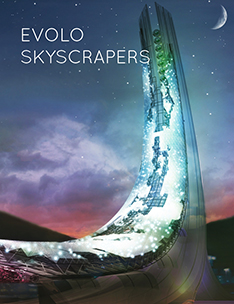
UPDATE: WINNERS WILL BE ANNOUNCED ON MARCH 8, 2010

eVolo2010-logo


After several years of organizing the annual Skyscraper Competition it has become a renowned architectural prize around the world. The best projects of each competition are widely published in architecture, design, and fashion journals, as well as in technology, business, and entertainment magazines. The winning projects are also featured in websites, television documentaries, and galleries.

We would like to invite students and professional architects, engineers, and designers to take part in the 2010 Skyscraper Competition. The main idea of this contest is to examine the relationship between the skyscraper and the natural world, the skyscraper and the community, and the skyscraper and urban living. Read the rest of this entry »
Neo-Arc

By:  | December - 15 - 2009

1st Place
2009 Skyscraper Competition

Kyu Ho Chun, Kenta Fukunishi, JaeYoung Lee
United States


First Place

First Place


This project examines a possible solution to the multiple environmental problems we might have in the year 2050. If we continue with the same year to year increment in air pollutants it will no longer be safe to breathe in the outdoors without a filtering device. Neo Arc is the solution proposed by a group of architects, engineers, scientists, and developers that are studying how to integrate the latest green technologies in major residential and commercial developments. Read the rest of this entry »

Living Bridge

By:  | December - 15 - 2009

2nd Place
2009 Skyscraper Competition

Nicola Marchi, Adelaide Marchi
France


Second Place

Second Place


Michel Etienne Turgot, Borough President of the City of Paris in 1734, commissioned to the drafter Louis Bretez the most beautiful and accurate representation of Paris in the ‘Ancien Régime’.

Based on this representation, it is evident that most bridges in the City at that time are living quarters and perform as actual buildings, fully integrated into the bridge itself. The same typology is found in the historic ‘Ponte Vecchio’ in Florence, that survives unaltered to this date, with its direct relationship between ‘bridge architecture’ and the river. Read the rest of this entry »

Vertical Farm

By:  | December - 15 - 2009

3rd Place
2009 Skyscraper Competition

Eric Vergne
United States


Third Place

Third Place


In the Hudson Yard area of Manhattan, this urban high rise farm introduces inherently political opposing elements; farmers (producers) and New Yorkers (consumers) through farms, workers housing, and market places. Through the mixing of politically opposing classes, social and cultural confrontations are generated within a high rise typology by introducing producers of biomass into the city, a place of historic biomass consumption. In so doing, the high rise is re-defined not by efficiency, but rather through the use of surfaces to orchestrate the dynamic programmatic interactions and the multiplicity of spatial organization they suppose. The essence of these social/political programmatic relationships is unclear. The spaces they create are lived not represented or conceived. One can only speculate on the range of lived relationships and oppositions that might form within and around this urban farm. Read the rest of this entry »

Vertical Ecology Redux

By:  | December - 15 - 2009

Special Mention
2009 Skyscraper Competition

Sylvie Milosevic
France


Special Mention

Special Mention


The skyscraper has paradoxically enjoyed a renaissance since the terrorist attacks of 9/11, which brought world attention to the tragedy while raising multiple questions about its future. The boom in the Middle East has focused purely on new aesthetics and a lavish display of economic wealth. In contrast, Vertical Ecology Redux is a project that brings a new level of per formative organization into the design equation; it is fully integrated into the urban fabric and existing infrastructure. Read the rest of this entry »

Bio-City

By:  | December - 15 - 2009

Special Mention
2009 Skyscraper Competition

Stefan Shaw, John Dent
United Kingdom


Special Mention

Special Mention


A closed loop metabolic system
A completely closed metabolic cycle in which traffic exhaust emissions are harnessed via CO2 collectors in order to feed algae grown in photo bio-reactors within the building’s facade. Algae and natural by-products produced during algae cultivation are then refined to produce renewable energy sources.

Towering 1.2 km above Spaghetti Junction, Birmingham, the UK’s largest and most congested motorway intersection, the scheme portrays a radical concept in high rise, high density urban living. Benefitting from positive solar orientation, in order to maximize solar acceptance toward the dynamic photo bioreactors which are built into the facade, BIOCITY acts as a an environmental filter, harnessing harmful traffic exhaust emissions in order to feed and cultivate microscopic algae to produce renewable bio-fuels. These bio-fuels are used to produce renewable electricity to power the vertical city and to cultivate vehicular bio-diesel and liquid hydrogen for use in hydrogen fuel cells. Read the rest of this entry »