Winners 2025 Skyscraper Competition

By:  | February - 27 - 2026


eVolo Magazine is pleased to announce the winners of the 2025 Skyscraper Competition. The Jury selected 3 winners and 14 honorable mentions from 149 projects received. The annual award established in 2006 recognizes visionary ideas that through the novel use of technology, materials, programs, aesthetics, and spatial organizations, challenge the way we understand vertical architecture and its relationship with the natural and built environments.

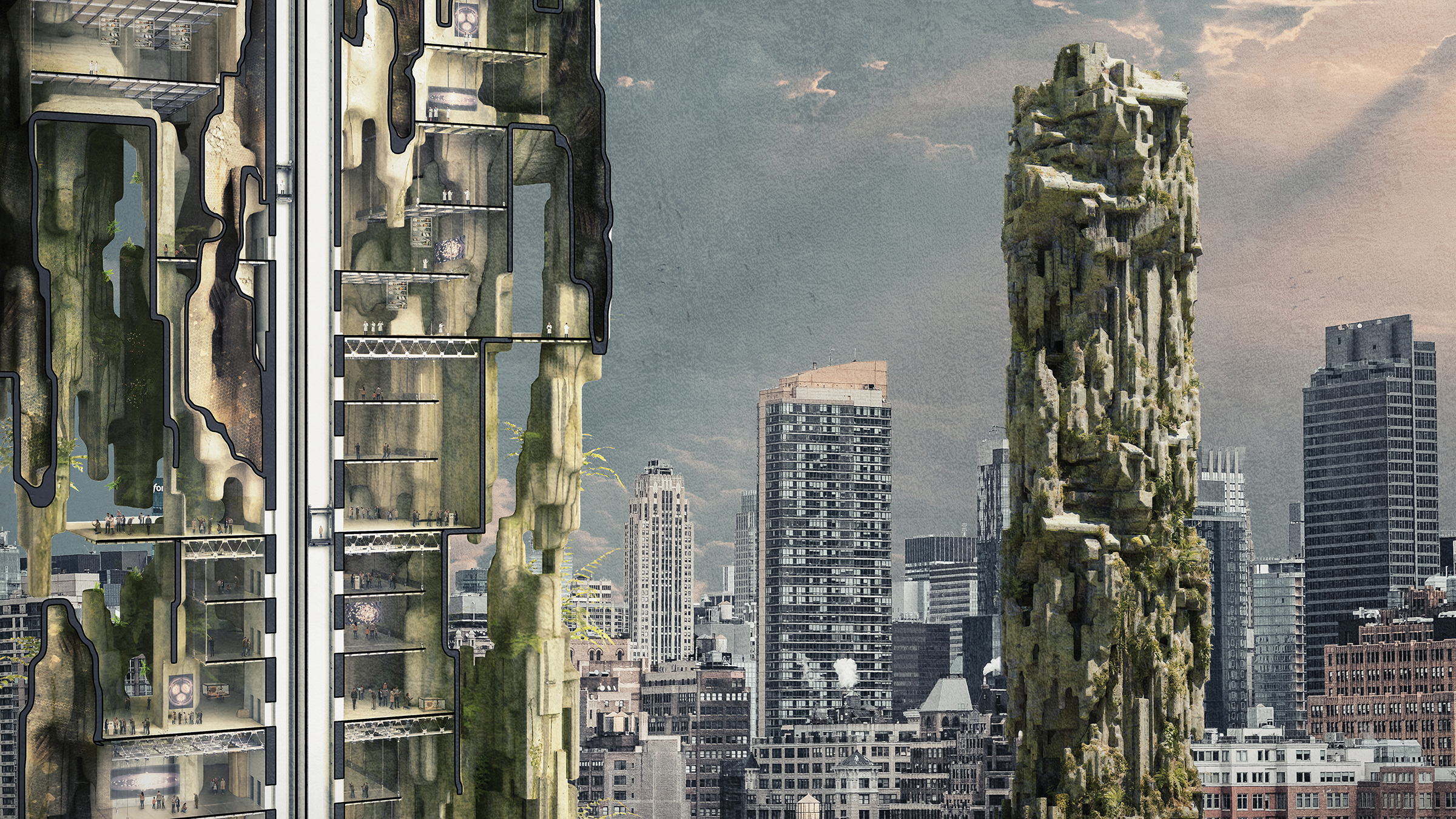
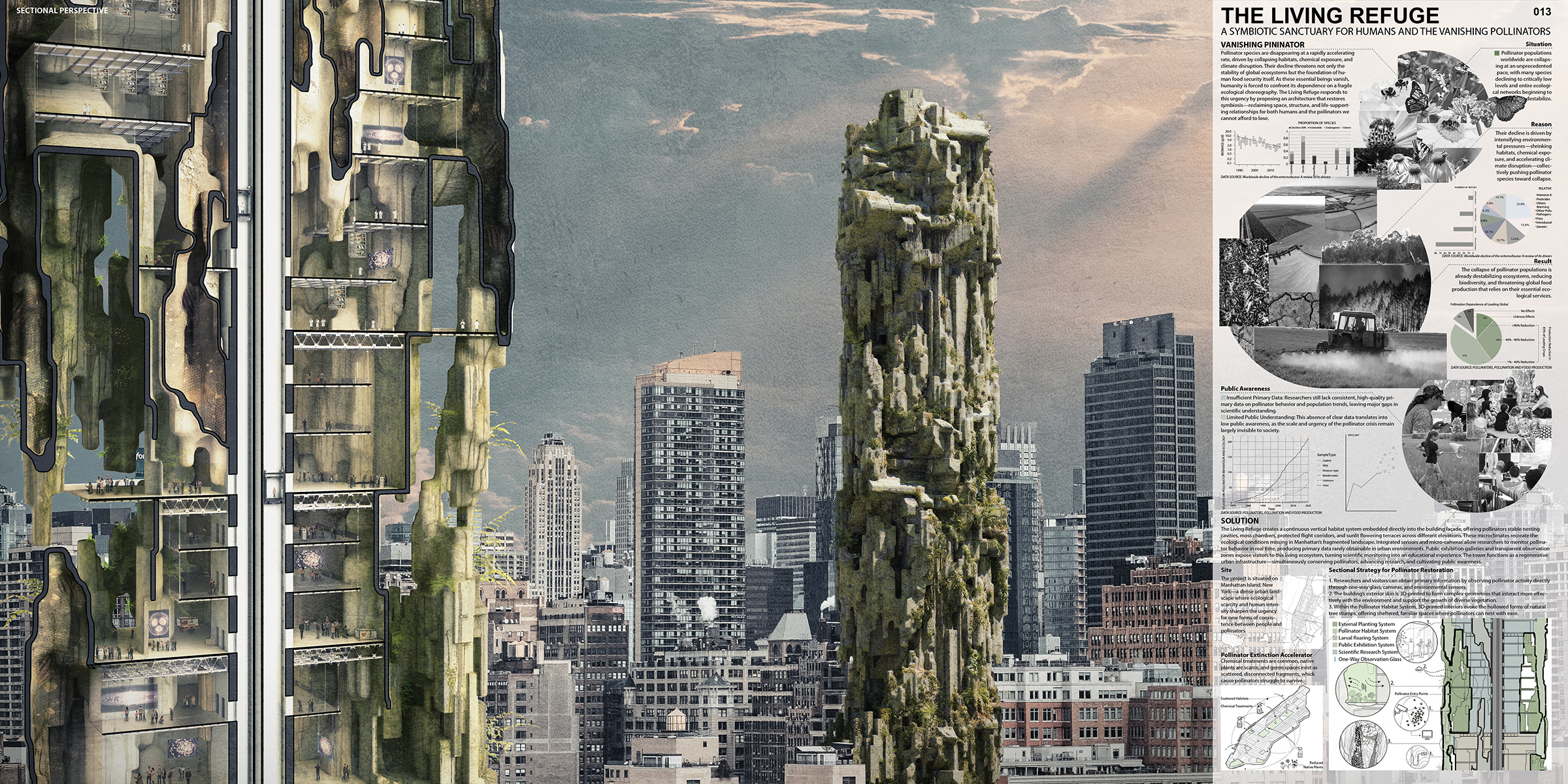
The FIRST PLACE was awarded to Changsi Wang from the United States for the project THE LIVING REFUGE– a skyscraper in Manhattan designed as a habitat for humans and endangered pollinators.

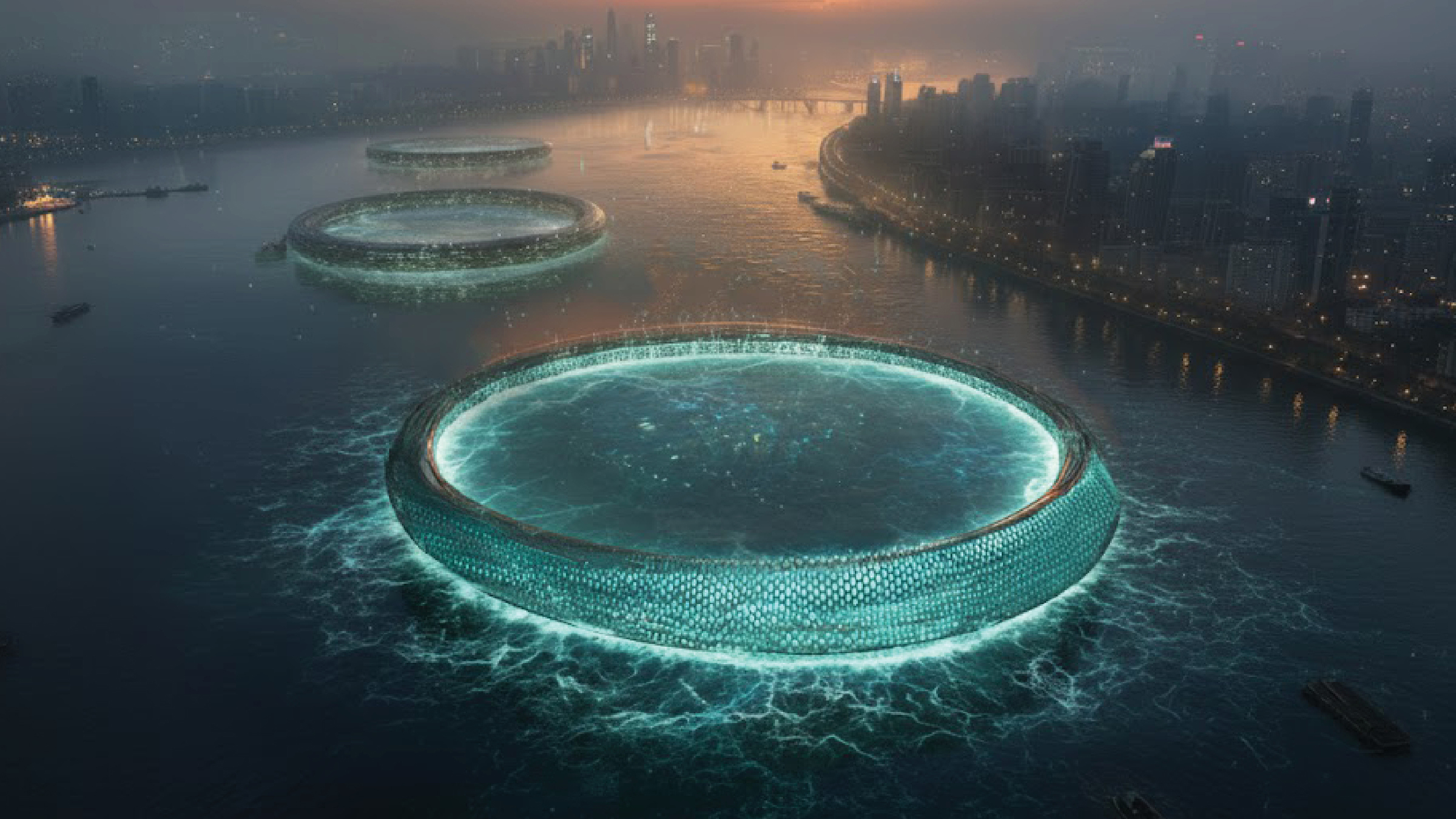
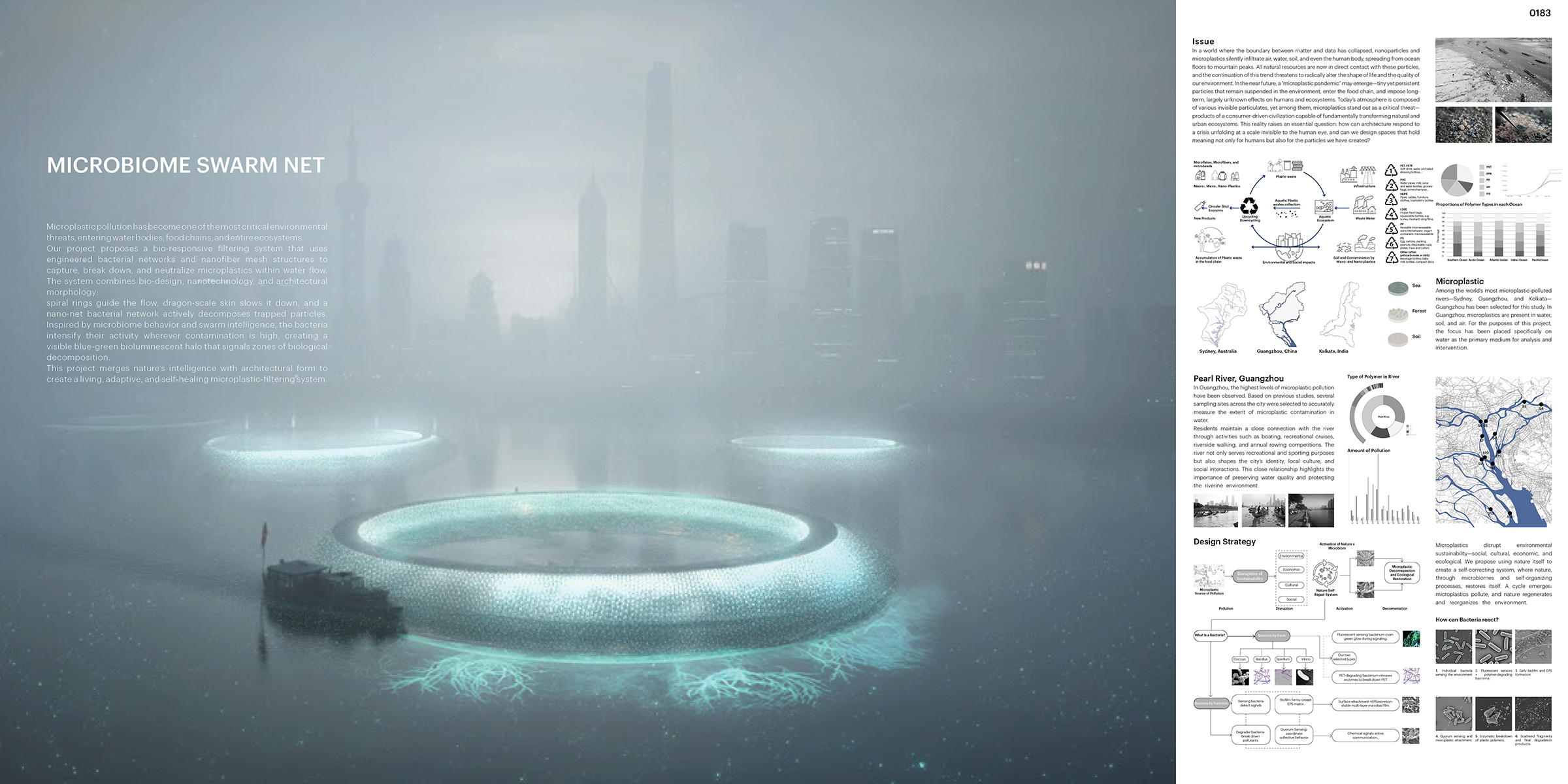
The recipients of the SECOND PLACE are Nasim Bakhshinejad, Sheida Ghelichkhany, Alireza Agah, Negar Hashemol Hosseini, Fatemeh Peysepar, and Fatemeh Malemir from Canada, Italy, and UAE for their project MICROBIOME SWARM NET, which imagines an aquatic skyscraper designed to clean microplastics from oceans.

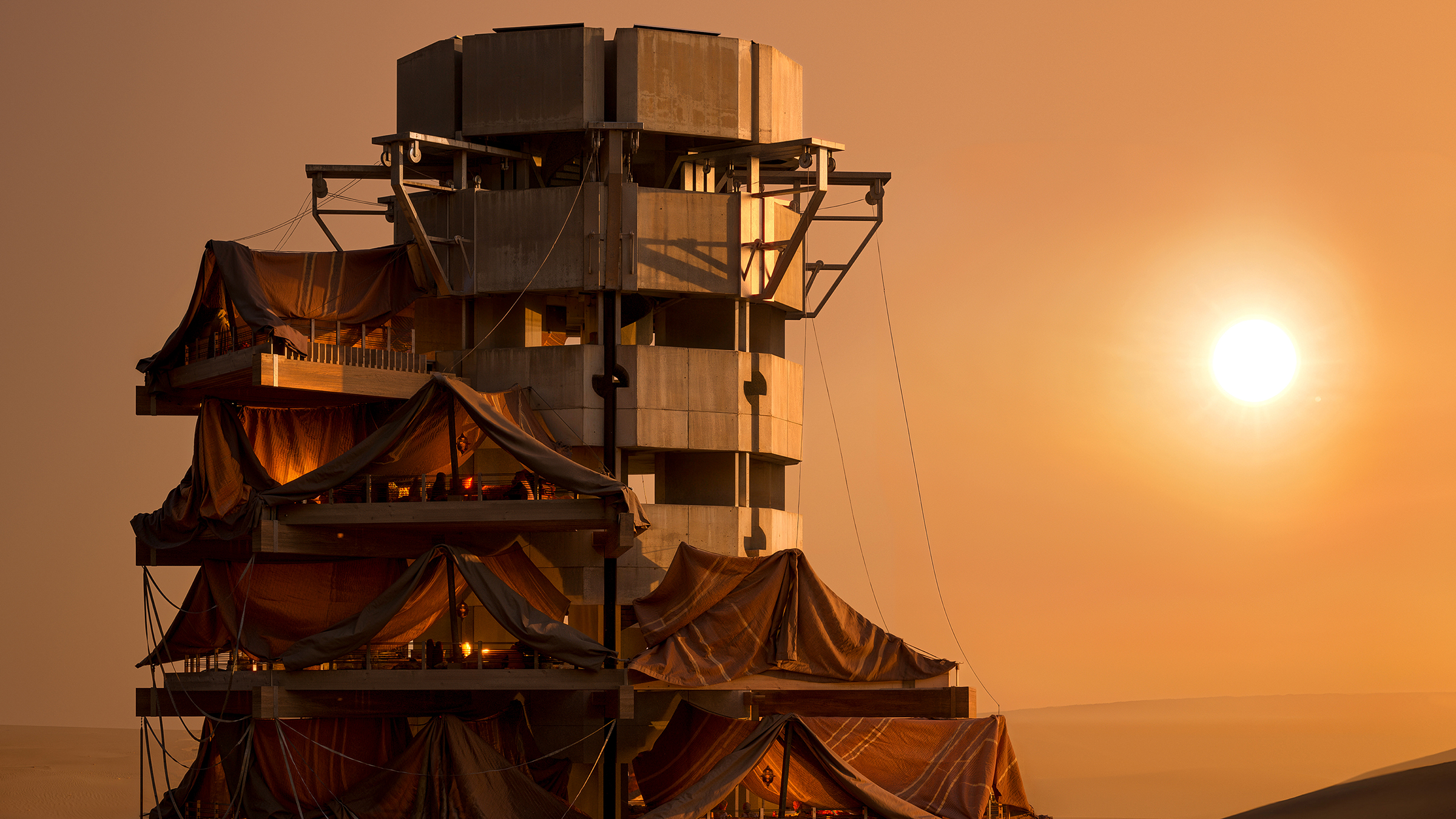
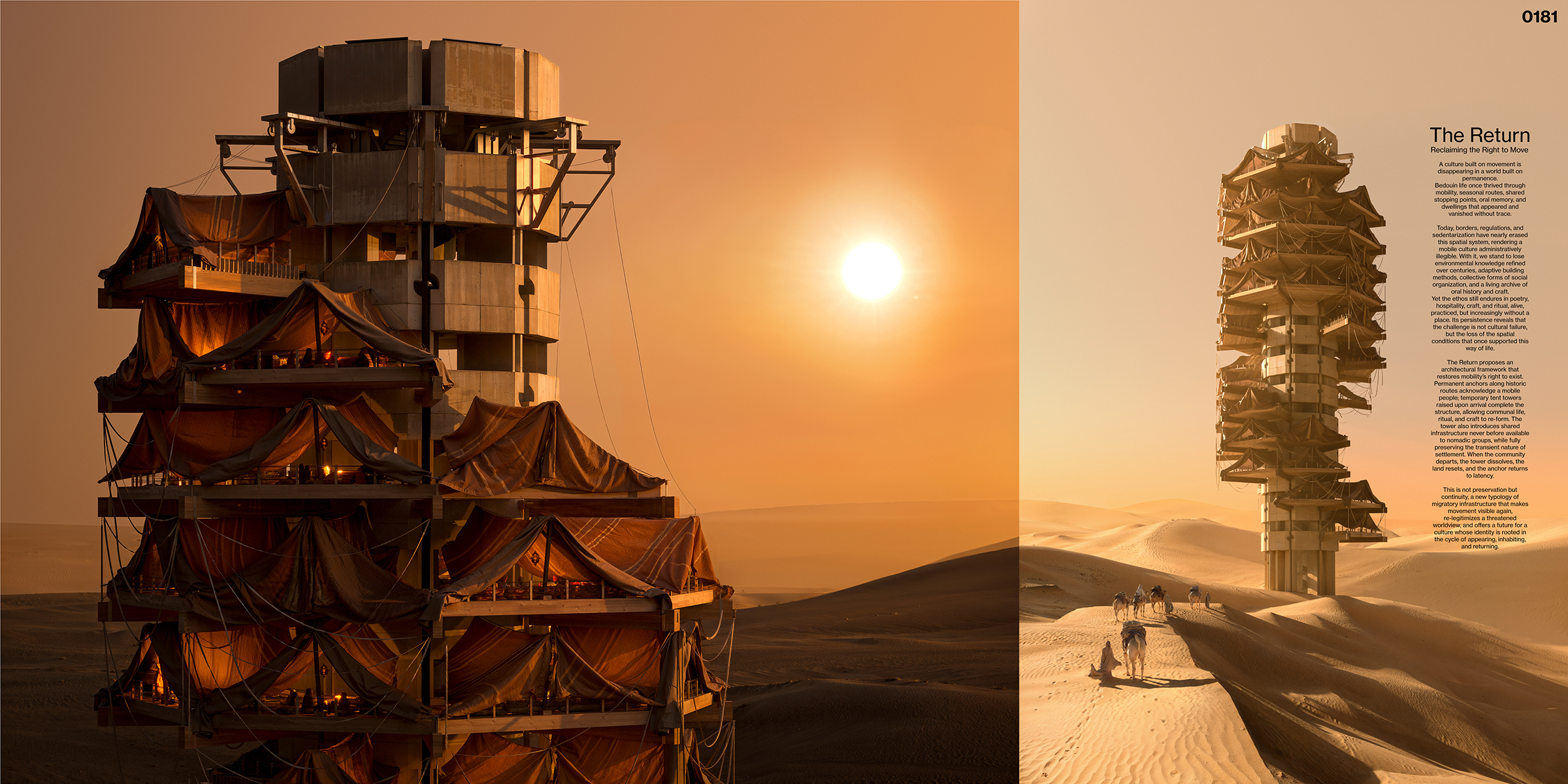
The THIRD PLACE was awarded to Danny Elachi Elsaadi and Dima Elachi Elsaadi from Saudi Arabia for their project THE RETURN– a skyscraper conceived as an open structure with amenities for nomad Bedouin communities.

The Jury was formed by Nici Long [Co-Founder, Cave Urban], Davide Macullo [Director, Davide Macullo Architects], Juan Pablo Pinto [Co-Founder, Cave Urban], Wenyuan Peng [Director, Yuan Architects], and Leonid Slonimskiy [Director, Kosmos Architects].

First Place
2025 Skyscraper Competition

Changsi Wang
United States
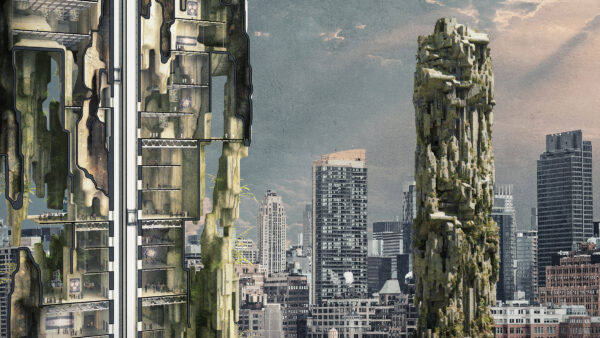
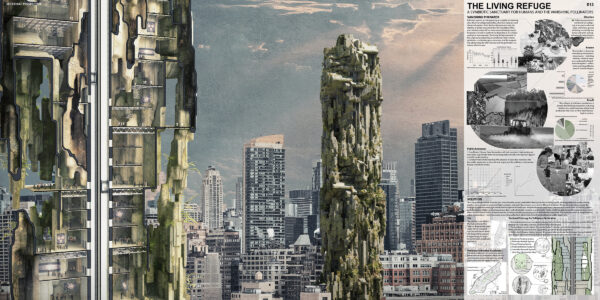
The Living Refuge addresses one of the most urgent ecological crises in dense urban environments: the accelerating endangerment of pollinator species. In Manhattan—where habitat fragmentation, chemical exposure, and extreme urbanization sharply amplify this decline—the project reframes the skyscraper as a vertical ecological, scientific, and educational infrastructure. The proposal operates through three integrated strategies: restoring habitat, advancing scientific knowledge, and raising public awareness.

REGENERATIVE POLLINATOR HABITAT SYSTEM
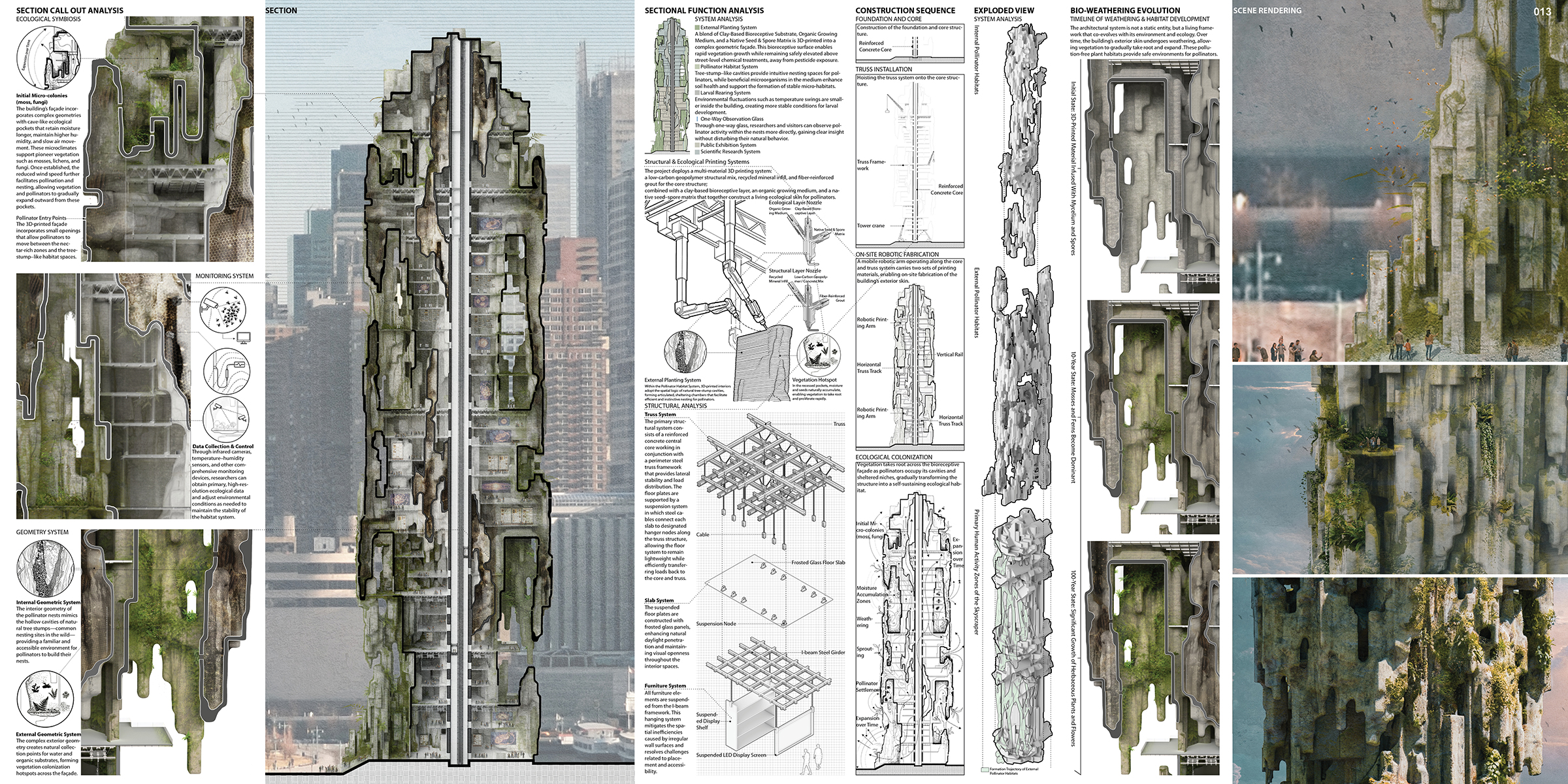
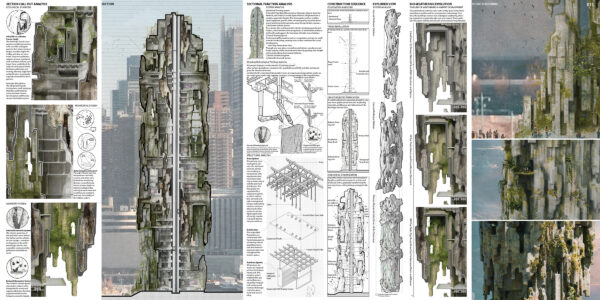
The first goal of The Living Refuge is to reconstruct stable, continuous habitats for pollinators high above the chemical-treated and fragmented ground plane of Manhattan. The 3D-printed façade becomes a vertical ecological landscape. A dual-material system—composed of a structural mix and an ecological mix—is deposited by a mobile robotic printing arm operating along vertical rails and horizontal truss tracks.

The complex façade geometry forms ecological pockets that retain moisture, accumulate organic matter, and slow air movement. These microclimates become vegetation colonization hotspots, allowing pioneer species such as mosses, lichens, and fungi to establish. As vegetation grows, reduced wind speeds support pollinator landing, foraging, and nesting. Small façade openings allow pollinators to move freely between nectar-rich exterior vegetation zones and the tree-stump–like interior cavities of the pollinator habitat system, whose 3D-printed geometries replicate natural hollow stump nests ideal for larval development.
Separated from chemical pollutants and supported by stable microclimates, the skyscraper transforms into a protected vertical sanctuary where plants, microorganisms, and pollinators can gradually colonize and co-evolve.

SCIENTIFIC OBSERVATION & DATA COLLECTION SYSTEM
A second core objective is to address the global shortage of primary scientific data on pollinators. Compared to mammals or birds, pollinator species remain understudied largely because reliable, real-time field observations are extremely difficult to obtain.

To counter this, the tower integrates an internal scientific observation and data collection system. Infrared cameras, temperature–humidity sensors, and other monitoring devices allow researchers to study pollinators directly within the ecological façade. One-way observation glass enables non-intrusive viewing of nesting behavior, foraging cycles, and larval development. Environmental conditions can be adjusted based on collected data, allowing scientists to actively maintain ecological stability while generating unprecedented, high-resolution records of urban pollinator life.

The building thus operates as a research institution embedded within a living ecosystem, turning the skyscraper into a continuous generator of primary ecological knowledge.

PUBLIC EXHIBITION & AWARENESS SYSTEM
A third critical issue is the lack of public awareness surrounding the pollinator crisis. Most urban residents have limited understanding of pollinators, their ecological roles, and the severity of their decline. This knowledge gap contributes directly to the worsening crisis.

To confront this, the tower incorporates a public exhibition system, functioning as a vertical natural history museum. Visitors experience live pollinator activity through observation chambers, transparent ecological corridors, and curated displays explaining how extinction risks threaten global food systems and biodiversity. By providing real-time, visceral encounters with pollinators, the building fosters public empathy, awareness, and long-term engagement in conservation efforts.
Through education, transparency, and immersive ecological storytelling, the skyscraper becomes a civic platform for environmental literacy.

ECOLOGICAL COLONIZATION & SYMBIOSIS
In its mature state, The Living Refuge becomes a site of ecological colonization and symbiosis. Vegetation takes root across the façade, microorganisms enrich the substrate, and pollinators occupy the interior cavities—forming a dynamic, evolving network of habitats. Positioned far above pesticide exposure and insulated from ground-level habitat fragmentation, the skyscraper operates as a regenerative ecological engine for Manhattan.

By merging construction technology, habitat formation, scientific research, and public education, The Living Refuge imagines a future where architecture actively repairs, supports, and regenerates the ecological systems.
Microbiome Swarm Net

By:  | February - 27 - 2026

Second Place
2025 Skyscraper Competition

Nasim Bakhshinejad, Sheida Ghelichkhany, Alireza Agah, Negar Hashemol Hosseini, Fatemeh Peysepar, Fatemeh Malemir
Canada, Italy, United Arab Emirates

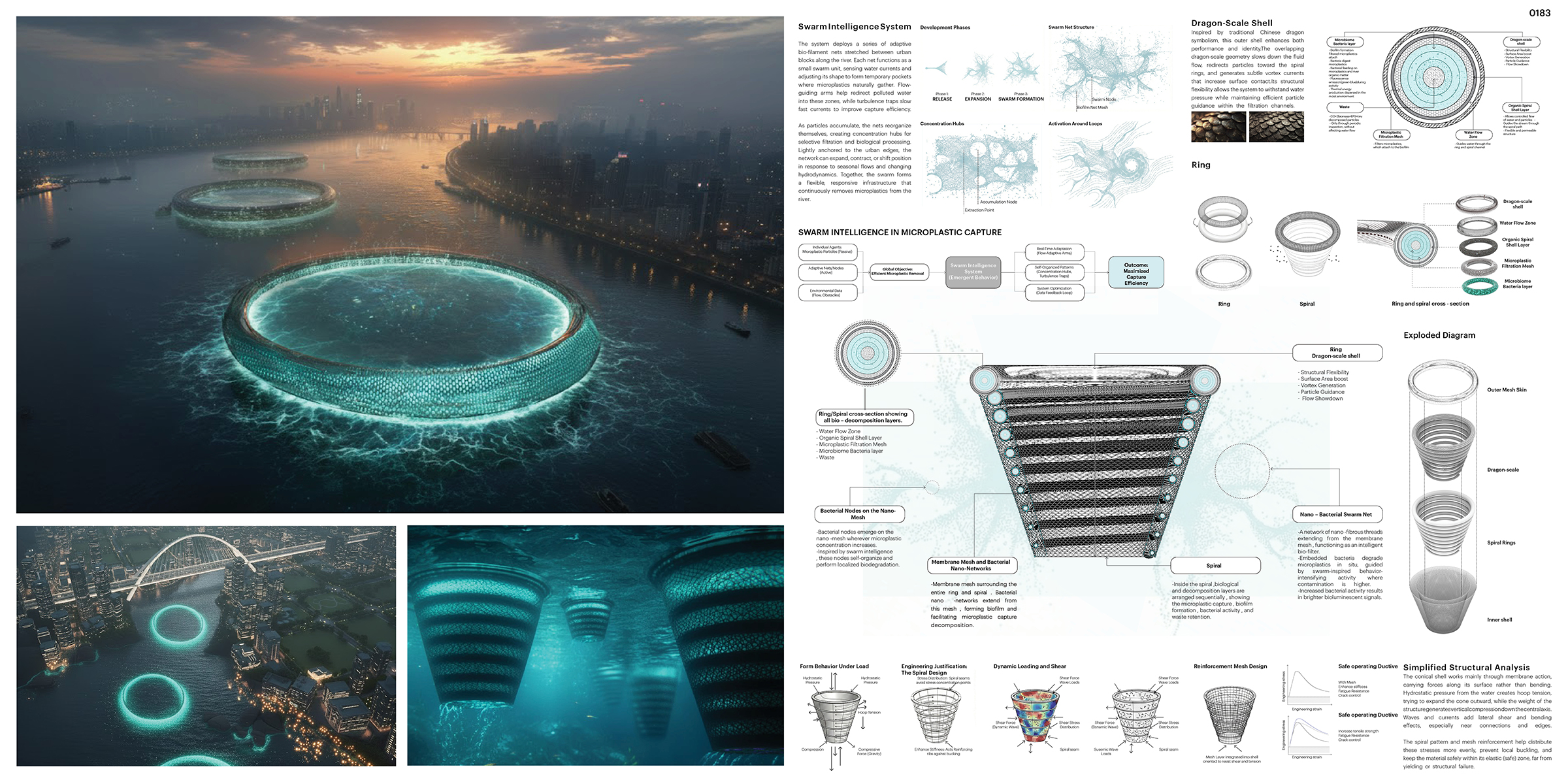
In an era when the boundary between matter and data has blurred, particles smaller than our imagination can conceive are quietly shaping and eroding the future. Nanoparticles, resulting from the coexistence of humans and machines, now permeate every layer of life: in the air, water, soil, and even within the human body.  This crisis does not arise from scarcity but rather from an excess of artificial presence. Urban rivers are currently facing a growing environmental crisis. Microplastic pollution, once too small to see and easy to overlook, has infiltrated every part of aquatic life, damaging ecosystems in ways that modern cities are unprepared to address. Guangzhou, home to one of the most polluted rivers in Asia, now stands at a critical intersection of urban expansion, industrial history, and ecological decline. Here, microscopic plastic fragments travel freely through the water, evading conventional filtering systems. These particles do not decompose, and with every rainfall wave and river flow, they infiltrate deeper into the ecosystems that sustain both human and non-human life.
The project begins with a fundamental question: Can architecture function like a living organism, capable of sensing, responding to, and actively combating microplastic pollution? To explore this idea, we studied microbiomes, biofilms, and the collective behavior of Bacteria. In nature, bacteria have remarkable swarm-like intelligence. They move toward polluted areas, gather together, multiply rapidly, and enhance their metabolic degradation of these pollutants. This adaptive intelligence became the conceptual foundation for our proposal: an architecture that acts not as a mechanical machine, but as a living filter.

The system consists of three main architectural and biological concepts. The first is an external layer resembling dragon scales, inspired by Chinese symbolism and natural protective surfaces. This textured layer slows the river’s flow, creating soft whirlpools, directing particles toward the interior, and increasing contact between the water and the filtration layers. It functions like a sensitive outer membrane that feels alive.

Inside its protective shells, spiral rings create a complex pathway for water. This unique geometry increases the time the water spends in contact with microplastic particles and the system’s active layers. The spiral motion emulates natural filtration processes seen in shells, ocean currents, and vortex patterns, transforming the chaotic movement of the river into a more organized and efficient cleaning cycle.

At the center of the system lies an intelligent bacterial nano-net: a fine, adaptable mesh woven between the spiral rings. Acting like a living fabric, it traps microplastics that pass through it while hosting colonies of degradative bacteria that form biofilms over time. These colonies amplify their activity in areas with the highest pollution concentration, following the logic of swarm behavior. As they metabolize plastic particles, their biochemical processes produce a soft green-blue bioluminescence, an organic signal indicating the zones where the architecture is actively purifying the water.

Overall, the project does not represent a skyscraper in the traditional sense; it is an underwater organ of purification, a structure that breathes in rhythm with the river. Drawing from microbiome science, biomimicry, Chinese cultural motifs, and material innovation, it addresses one of the most urgent yet overlooked environmental threats of our time. More than a singular intervention, it provides a replicable model for global cities facing similar crises, an architecture that adapts, senses, and collaborates with nature in the ongoing battle against microplastic pollution.

Third Place
2025 Skyscraper Competition

Danny Elachi Elsaadi, Dima Elachi Elsaadi
Saudi Arabia

For centuries, Bedouin communities shaped their lives through a deliberate rhythm of movement. Seasonal routes, shared stopping points, and portable dwellings formed a refined spatial system grounded in environmental knowledge and reinforced through oral tradition and craft. Mobility organized social life around cooperation, hospitality, and mutual responsibility, an intentional and adaptive way of inhabiting the land, never a product of limitation.

Today, the spatial conditions that once sustained this worldview have been largely erased. Fixed borders, land ownership, and permanent settlement have rendered nomadic routes almost invisible and stripped historic stopping points of recognition. Yet the Bedouin ethos persists in poetry, hospitality, craftsmanship, and tents still raised during gatherings and seasonal rituals. What threatens is not cultural irrelevance, but the spatial framework that once allowed it to be lived.

What stands to be lost is not only a dwelling tradition, but a knowledge system, ecological intelligence, resource-light construction, oral memory, and a social ethic rooted in dignity and hospitality. These rely on cycles of gathering and returning; without spatial conditions that support them, a living culture risks becoming static heritage.

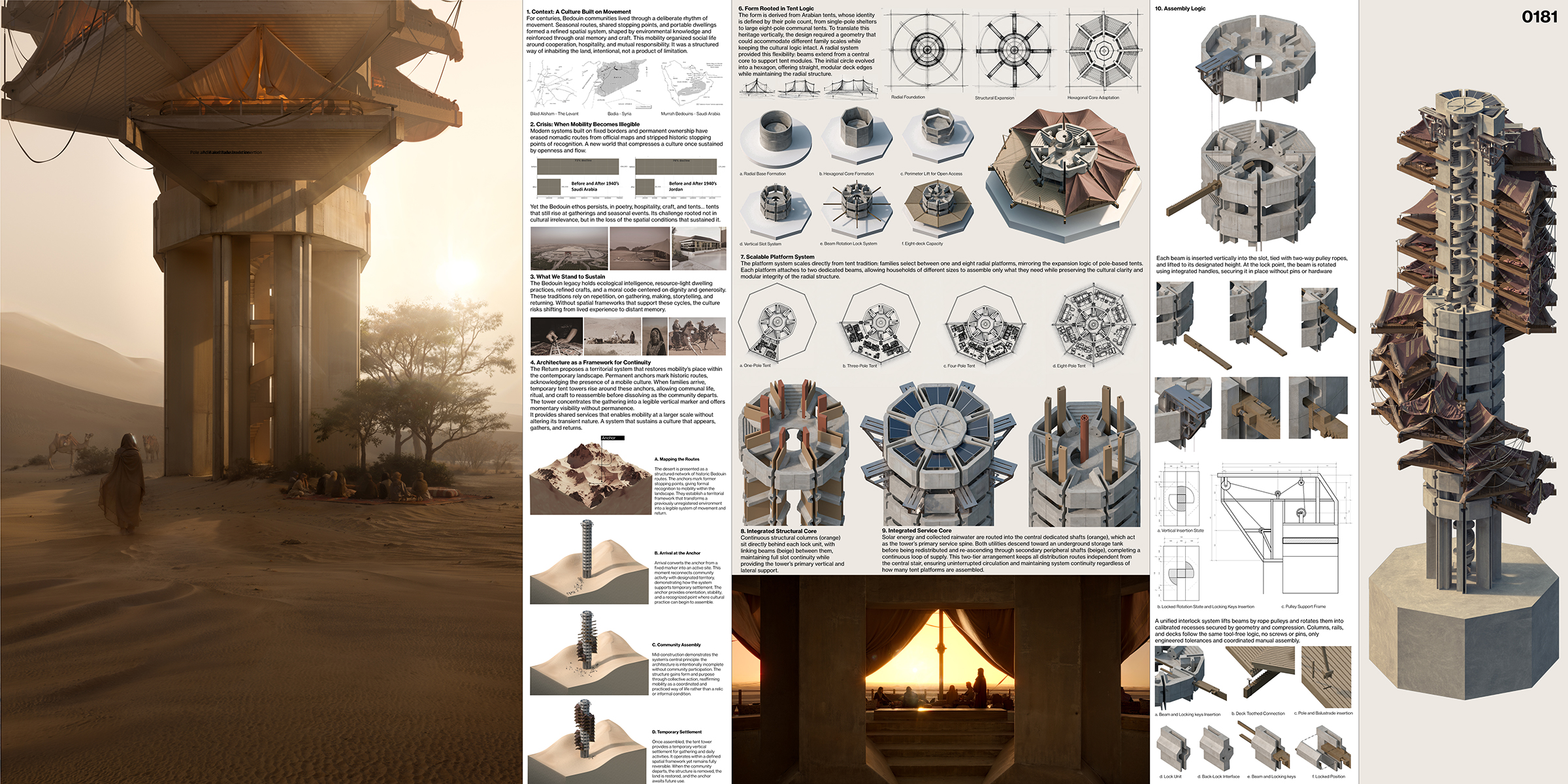
The Return proposes a territorial system that restores mobility’s place within the contemporary landscape. Permanent anchors placed along historic routes acknowledge a mobile people, reinstating a network long absent from contemporary mapping. When families arrive, temporary tent towers rise around these anchors, enabling communal life, ritual, and craft to reassemble before dissolving as the community departs. The tower consolidates shared services, energy, water routing, and essential support, introducing a level of mobile infrastructure never before available to nomadic communities while preserving the transient character of settlement. It sustains a culture that appears, gathers, and returns.

The spatial logic unfolds through four states of activation.
First, “Mapping the Routes” presents the desert as a network defined by historic movement, with anchors re-establishing former stopping points as recognized elements of the landscape.
Second, “Arrival at the Anchor” activates each site for temporary use, providing orientation and initiating community assembly.
Third, “Community Assembly” expresses the proposal’s core principle: the architecture is intentionally incomplete without the people who activate it. Through coordinated construction, the tower gains form and meaning.
Finally, “Temporary Settlement” describes the tower in its inhabited state, a reversible vertical camp for gathering, activity, and ritual. When the community departs, the structures are removed, the land resets, and the anchor returns to latency.

The architectural form draws directly from Arabian Bedouin tent typologies defined by pole count, from single-pole shelters to eight-pole communal structures. Translating this heritage vertically required a geometry capable of accommodating different family scales while preserving cultural clarity. A radial system provided this adaptability: beams extend from a central core to support tent modules. The initial circular geometry evolved into a hexagon to align with straight modular platforms while retaining the radial logic. Families select between one and eight platforms, mirroring the expansion logic of pole-based tents; each platform attaches to two dedicated beams, allowing households to assemble only what they need while maintaining modular integrity.

The tower is built entirely by hand through a passive mechanical system: carefully engineered slots receive the beams, pulleys lift them, and each beam rotates into a specially designed geometric lock that secures it without hardware. Platforms and rails follow the same tool-free logic, allowing the tower to be erected, inhabited, and dismantled without machinery.
The Return offers an architectural framework through which Bedouin culture can remain legible and enduring, an infrastructure that restores mobility to visibility and supports a people whose identity is rooted in the cycle of appearing, inhabiting, and returning.


2025 Skyscraper Competition
Honorable Mention

Daeun Kang, Dongwook Han, Sign Jeong
South Korea

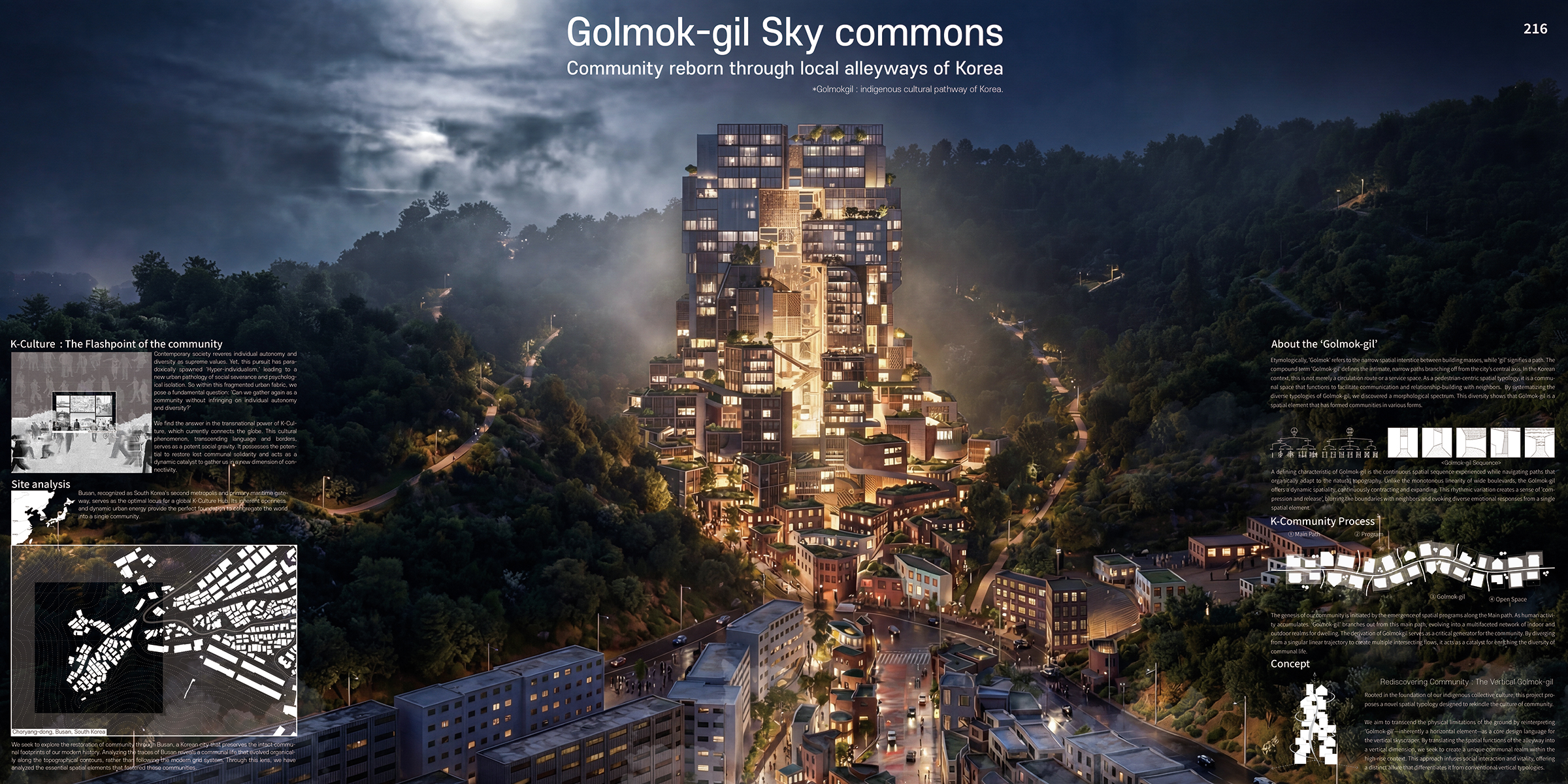
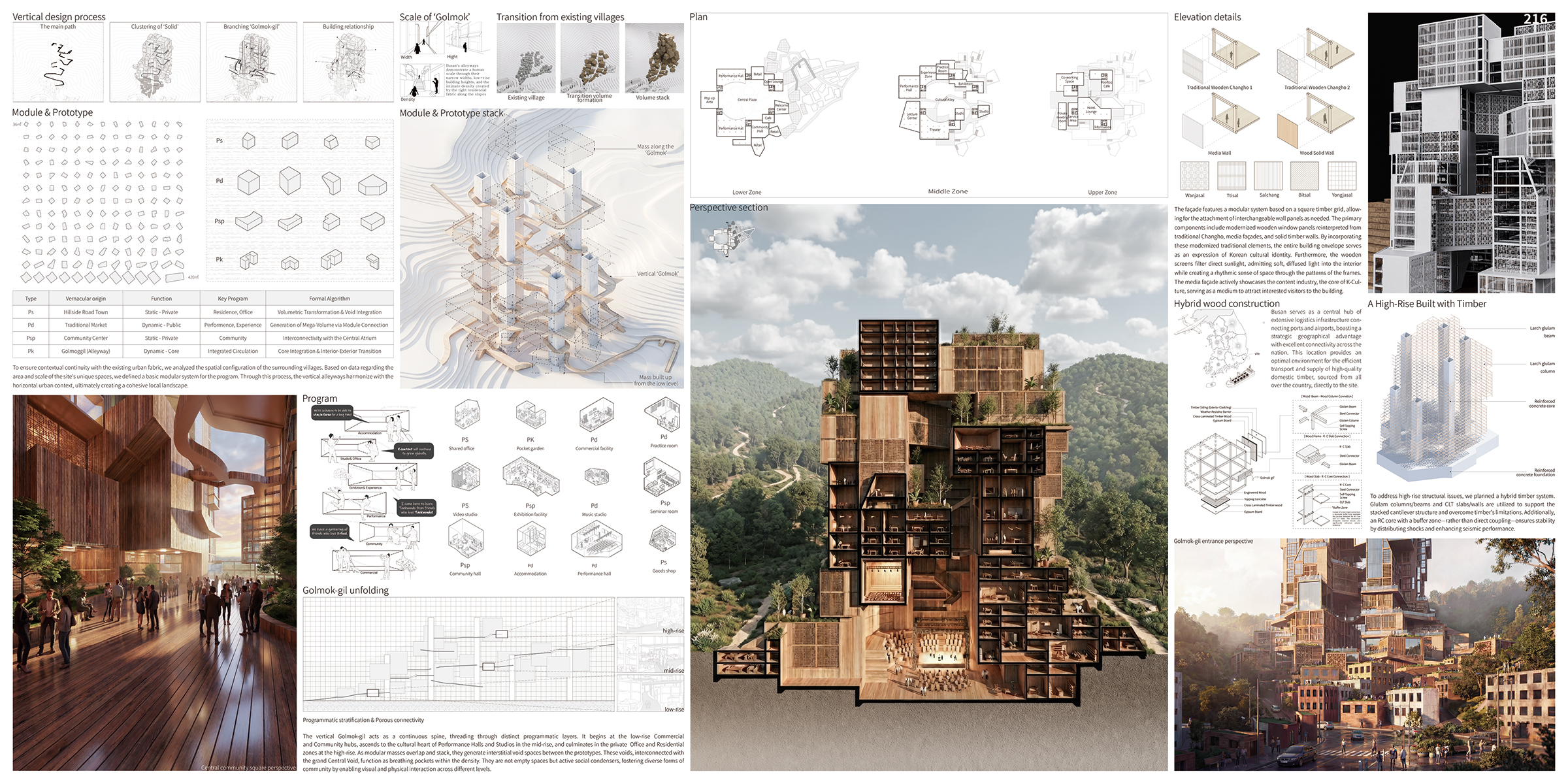
In contemporary society, individual autonomy and diversity are revered as supreme values. However, this prioritization has paradoxically given rise to the phenomenon of “Hyperindividualism,” creating a stark reality where severance from others and psychological isolation have become prevalent social pathologies. Confronted with this fragmented social landscape, we faced a critical question: “Is it possible for us to return to a sense of community without infringing upon individual autonomy and diversity?”

We found the clue to this answer in “K-Culture,” a powerful cultural force that is currently connecting the world into a single cohesive network. Just as K-Culture transcends borders to create a global consensus, our project aims to physically manifest this spirit of connection. We propose to infuse this communal culture into the typology of the skyscraper, reimagining the high-rise not as a monument to isolation, but as a vessel for social restoration.

Our architectural investigation centers on Busan, a city that serves as a living archive of Korea’s modern and contemporary history. By analyzing the urban traces of Busan, we discovered a unique form of community life. Unlike the rigid, imposed grid systems of modern urban planning, Busan’s historic settlements formed naturally, following the organic contours of the topography. In this context, the community was not forced but evolved symbiotically with the steep terrain.
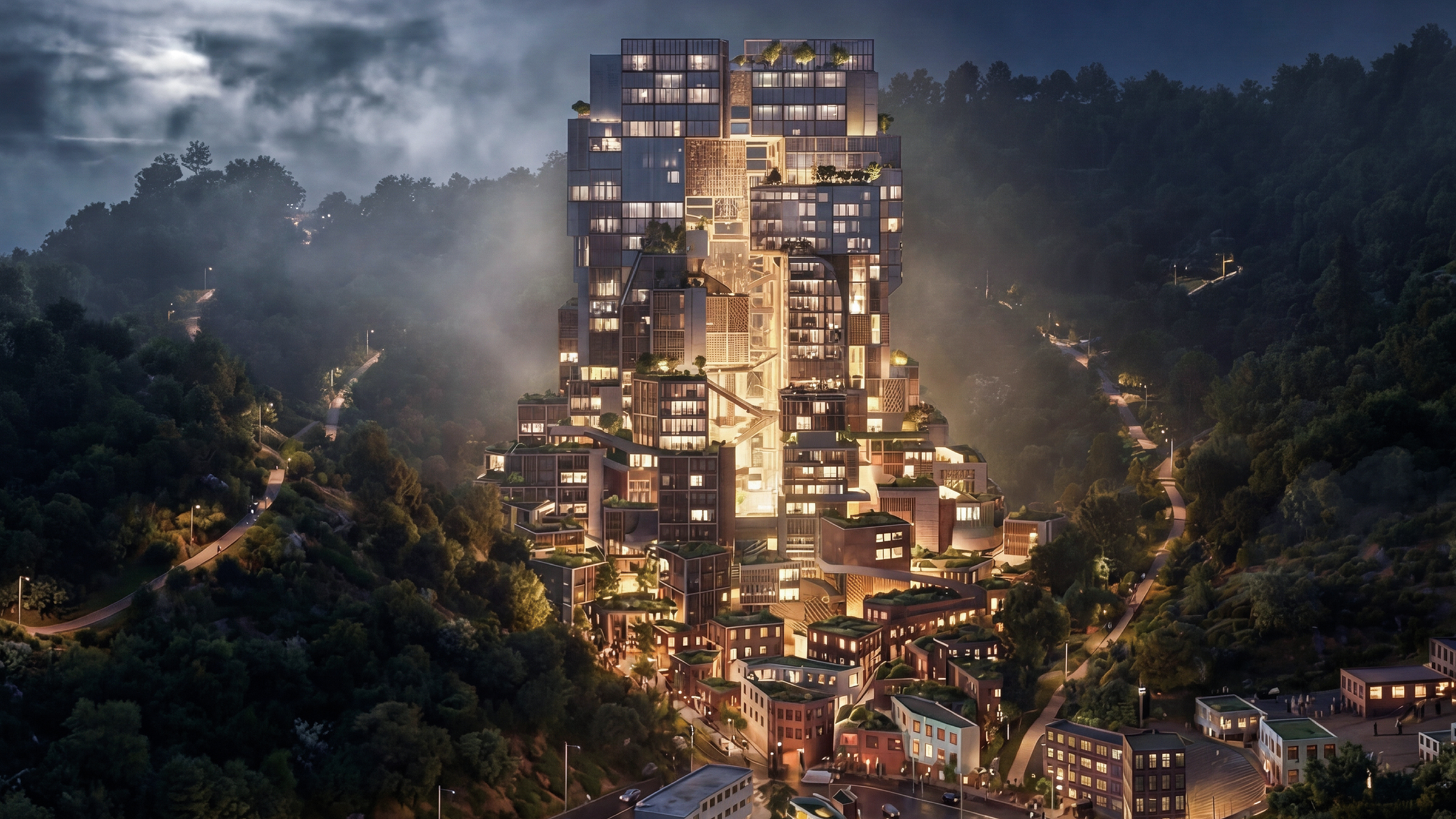
Through a deep analysis of the spatial processes that fostered community life in this specific site, we identified the “Golmok-gil” (traditional alleyway) as the essential spatial archetype. The Golmok-gil was not merely a thoroughfare for passage; it was the living room of the city, the capillary of social interaction where the community was woven together. Based on this finding, we propose a radical reinterpretation: translating the spatial typology of the horizontal Golmok-gil into a vertical dimension. This project challenges the limitations of the ground plane, offering a skyscraper that generates a new form of community culture through vertical expansion.

The core of our design is the construction of a continuous “Vertical Golmok-gil.” This pathway serves as the spine of the project, seamlessly connecting a diverse range of programs. The journey begins at the lower levels, designed as a commercial and community hub that invites public inflow. It ascends through the mid-levels, which house cultural facilities such as performance halls and studios, and culminates in the upper levels dedicated to offices and residential units. This zoning strategy ensures that the vitality of the street is maintained throughout the vertical ascent.

Furthermore, to materialize these programmatic spaces, we derived “modular masses” based on an analysis of Busan’s vernacular housing types. These modules are not stacked monotonously; instead, they are overlapped, shifted, and piled to create natural voids between them. These interstitial spaces are designed as three-dimensional “Madangs” (courtyards). These voids are not empty; they are connected to a massive central void, facilitating visual and physical exchanges between floors. This design strategy transforms the skyscraper from a sealed tower into a porous, breathable entity where interaction is inevitable.

Ultimately, the “Golmok-gil Sky Commons” is more than a building. It is a manifesto for the future of urban living. By reinterpreting the horizontal heritage of the past into a future-oriented vertical architecture, this project provides a spatial solution to the problem of hyperindividualism. It demonstrates that even in a high-density vertical environment, we can restore the intimate community relationships that once defined our collective existence.

Nebkha Skyscraper

By:  | February - 27 - 2026

Honorable Mention
2025 Skyscraper Competition

Amirsadra Seddighigildeh, Aria Kakavand, Iman Haji Abolghasemi, Isun Ranjpourazarian, Navid Kakavand, Sahar Safardoost
Italy

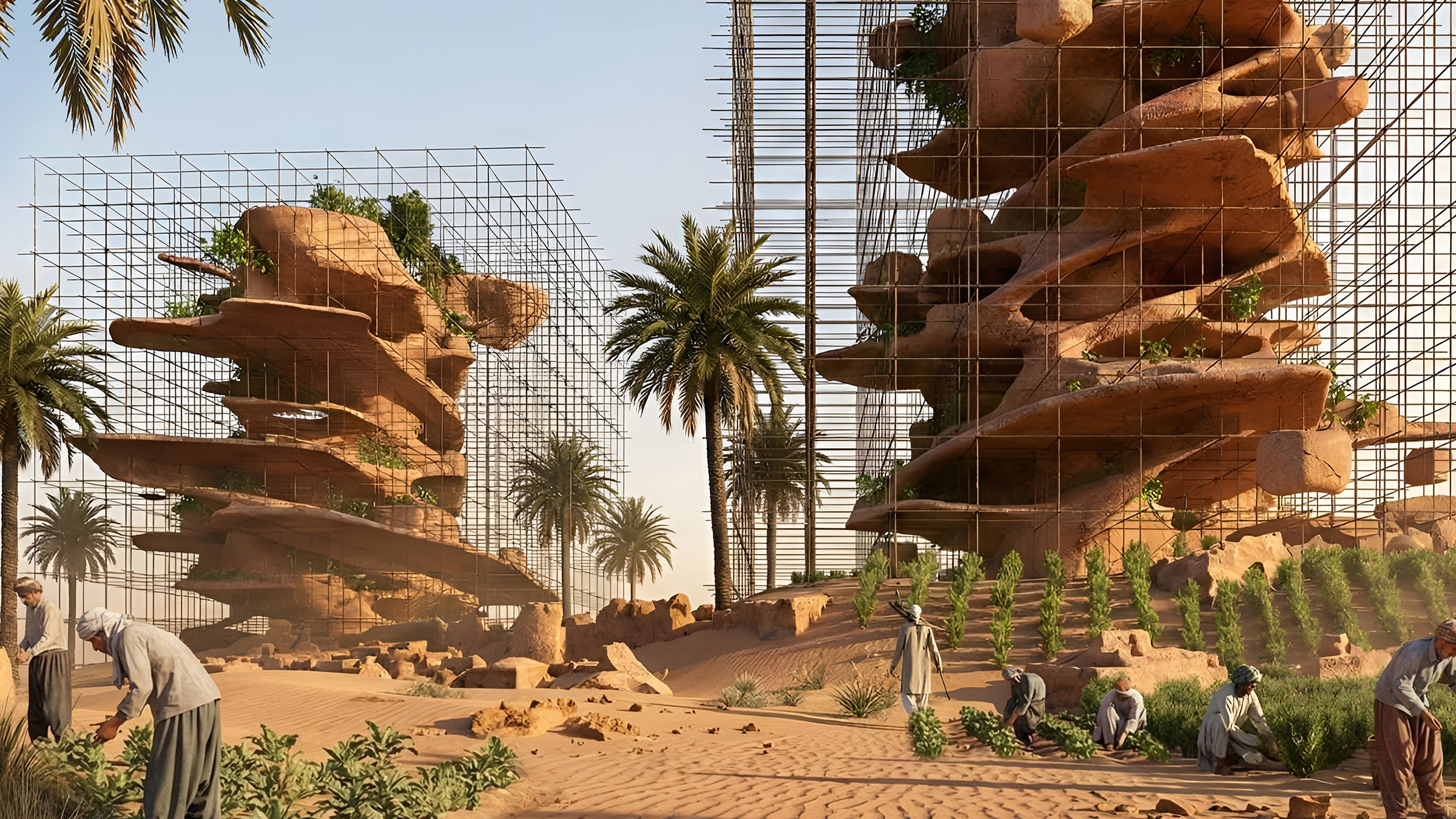
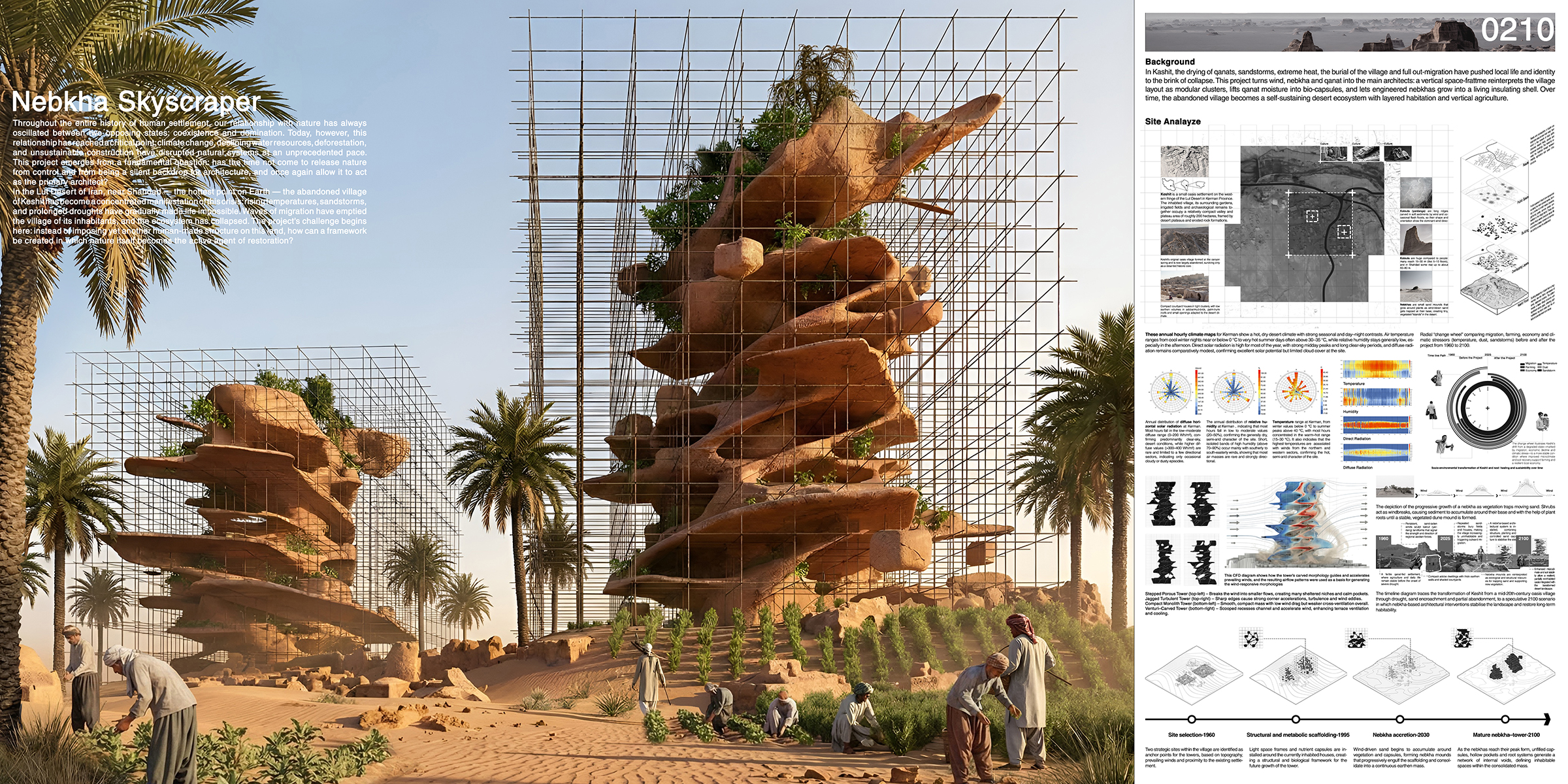
Throughout the entire history of human settlement, our relationship with nature has always oscillated between two opposing states: coexistence and domination. Today, however, this relationship has reached a critical point; climate change, declining water resources, deforestation, and unsustainable construction have disrupted natural systems at an unprecedented pace. This project emerges from a fundamental question: has the time not come to release nature from control and from being a silent backdrop for architecture, and once again allow it to act as the primary architect?

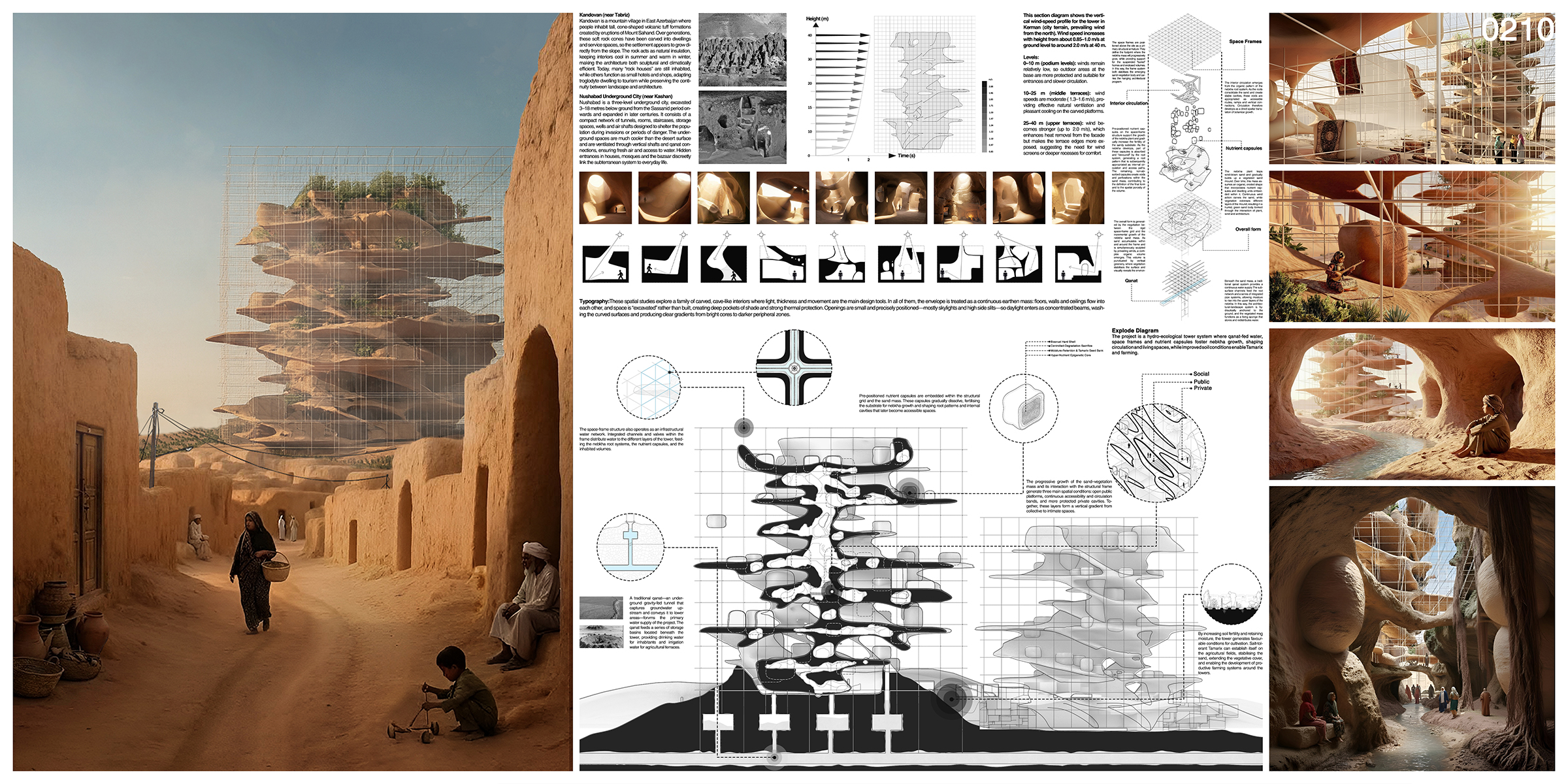
In the Lut Desert of Iran, near Shahdad — the hottest point on Earth — the abandoned village of Keshit has become a concentrated manifestation of this crisis: rising temperatures, sandstorms, and prolonged droughts have gradually made life impossible. Waves of migration have emptied the village of its inhabitants, and the ecosystem has collapsed. The project’s challenge begins here: instead of imposing yet another human-made structure on this land, how can a framework be created in which nature itself becomes the active agent of restoration? Here, the wind, the sand, and the tamarisk trees are the principal architects. The project reinterprets the desert phenomenon of nebkha — a vegetated sand mound formed by the accumulation of wind-borne sand around a plant —as a living architectural material, aided by qanat systems. What was once erosion becomes construction; the aim is not to build against the desert, but to build from within its own mechanisms.

The form of the project is entirely dependent on the wind; just as the kaluts (yardangs) of the Lut have been shaped over time by wind erosion, in this project too the wind and the sand gradually build the living masses, then carve them into habitable space. Human intervention is consciously limited to the first ten years, defined as a minimal booster system composed of three elements: the frame, mutated capsules, and pathways, which are organized according to the historical zoning of the village.

The frame is a lightweight, modular megastructure based on a simple space-frame grid, functioning as a dual holder:the inner holder suspends the primary living masses at various heights, and the outer holder provides the bed for the growth of the nabkha. Integrated channels transfer water and moisture from the restored qanats to higher elevations, enabling vertical life in the heart of the desert. The mutated capsules are temporary spatial cores arranged according to the public zones and the existing alley structure of Keshit; in this way, the horizontal plan of Keshit is vertically reconstructed.

Over 75 years, nebkha gradually grows over and into these capsules. Through a designed process of material absorption and erosion, the capsules are slowly consumed, emptied, and transformed into breathable, shaded, and habitable cavities.


Meanwhile, nebkha undergoes accelerated adaptive mutation, organically spreading across the structure and gradually engulfing the village. Architecture and ecology merge into a single evolving organism.

The project unfolds across several temporal phases: from the initial phase of site zoning and limited qanat revival, to the short-term phase of planting and the installation of capsules, to the mid-term phase in which the nabkha, guided by the wind, spreads across the grid and blankets the village layer by layer, and finally reaching a long-term phase where fertile cavities emerge for habitation, agriculture, and self-sufficiency.Over time, this system extends toward Shahdad, forming a continuous ecological network at the scale of the desert. Ultimately, the project reverses decay— abandonment becomes life, and a harsh climate becomes a generative force.Keshit is no longer a dead village; it becomes a resilient, self-sustaining, vertical desert ecosystem.

2025 Skyscraper Competition
Honorable Mention

Golnoosh Darziramandi, Alireza Agah, Ali Jamali, Hosein Amery, Hosein Mosavi, Mohsen Bokaei
Canada, Germany, United Arab Emirates, United States

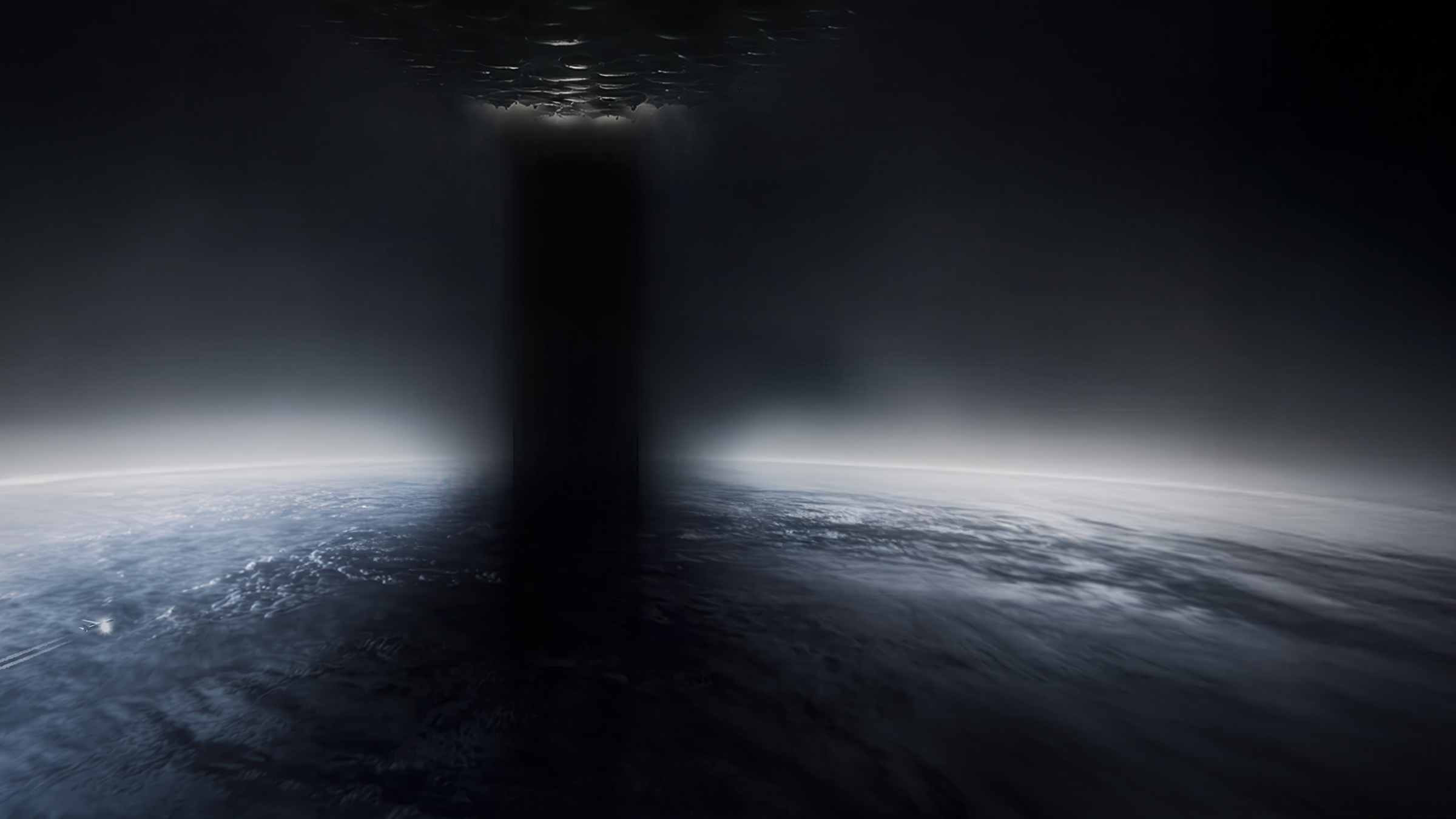
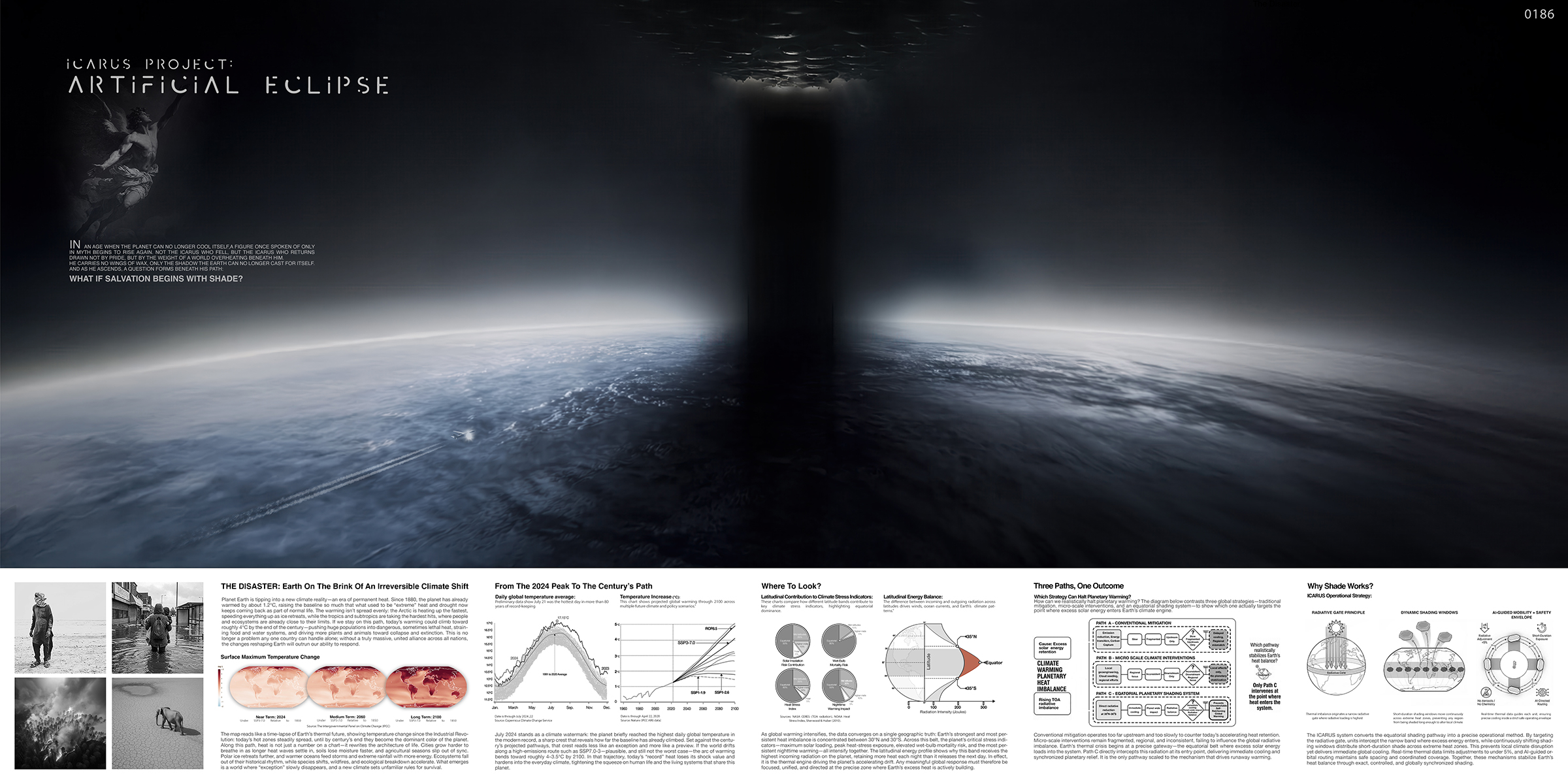
As rising temperatures, prolonged heat waves, and overstressed urban energy systems push cities beyond their limits, Icarus proposes a new kind of vertical intervention. It reimagines the skyscraper not as a fixed object but as a functional atmospheric column made of hundreds of lightweight autonomous units that operate 18 to 20 kilometers above the ground. Together they create a drifting, cloud like shading field moving across the sky.

This project introduces a new architectural typology: Skyscraper as Atmospheric Infrastructure. Icarus does not occupy land in the traditional sense. Instead, it inhabits the thermal layer between the Earth and the upper atmosphere where solar influence is strongest and climate impact is most effective.

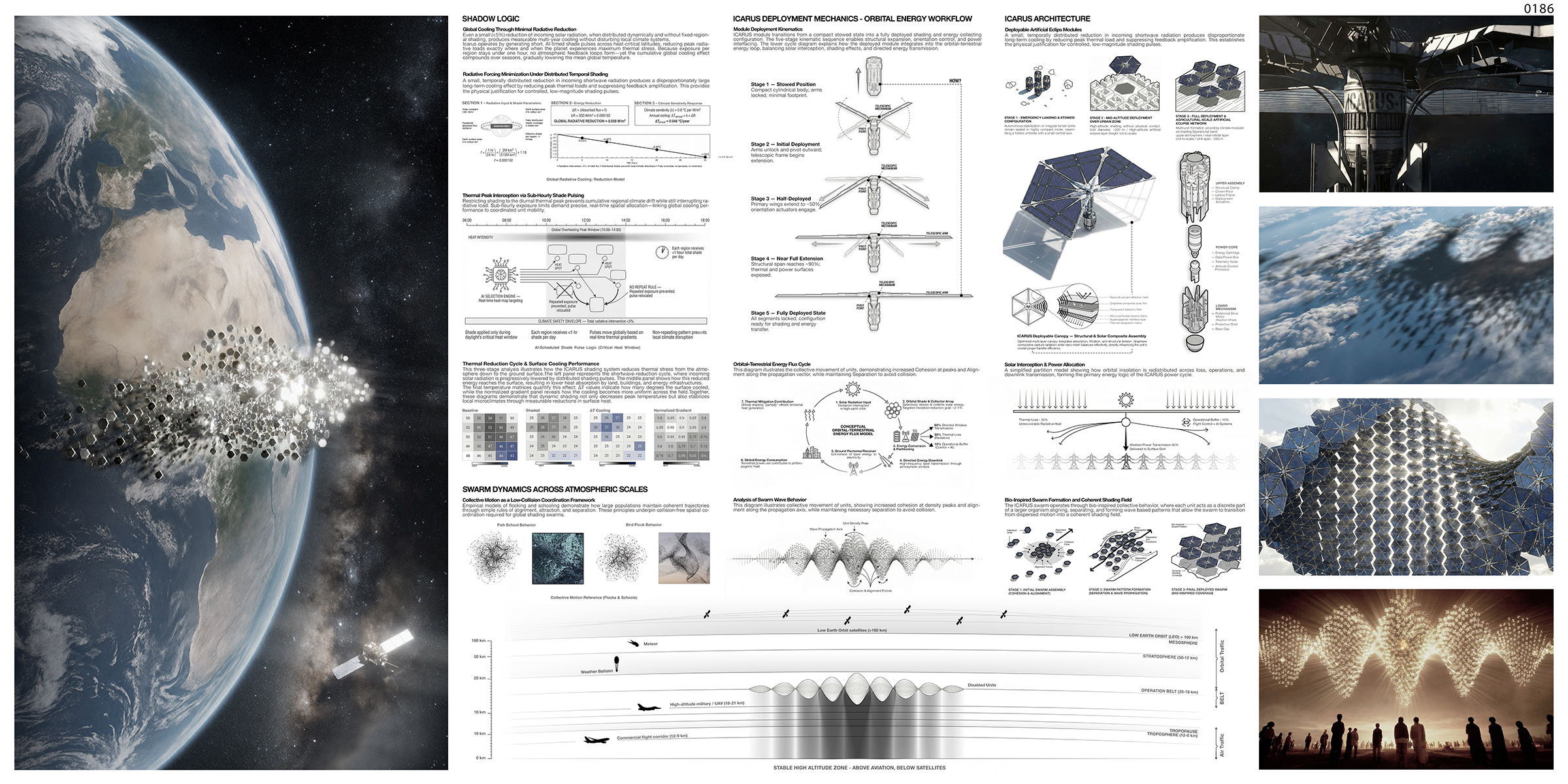
Each Icarus unit is an intelligent module guided by AI assisted coordination. Simple behavioral rules like alignment, cohesion, and separation combine with distributed learning, allowing the units to behave as one adaptive organism. They generate a vertical shading system that constantly reconfigures itself in response to solar intensity, energy demand, and atmospheric conditions. These are actions beyond the ability of any ground based structure.

Icarus performs two primary functions:

1. Solar flux reduction through dynamic high altitude shading.

2. Wireless transmission of captured solar energy, turning atmospheric presence into a distributed power network.

In this model the vertical column, usually an energy consumer, becomes both a producer and a moderator of climate. Reflective membranes and ultra light mesh structures create a field condition architecture whose identity comes from movement rather than mass. Icarus is not a static tower. It is a pattern of coordinated behavior shaped by drift, accumulation, and collective response.

Thermal simulations indicate that rhythmic shading at 18 to 20 kilometers can lower surface temperature, soften thermal gradients, and create pockets of microclimatic stability in dense cities. This intervention acts above the skyline, outside the limits of conventional architecture, yet capable of influencing the climate where it matters most.

The skyscraper of the future is not a shape. It is a climate instrument. It moderates heat, directs energy, and interacts with planetary dynamics.
Icarus lifts architecture off the ground and places it in the atmospheric thermal column where it can engage directly with radiation, temperature, and global warming. It becomes a floating adaptive vertical field responding to the overheating of cities and the limits of terrestrial infrastructure.

Icarus transforms the skyscraper from an object into a function.

Architecture of shade. Architecture of energy. Architecture of swarm.

The Landfill-Scraper

By:  | February - 27 - 2026

Honorable Mention
2025 Skyscraper Competition

Kim Kyungmin, Hong Yewon, Lee Byeonghyeon
South Korea

1. The Landfill as a Forgotten Ground
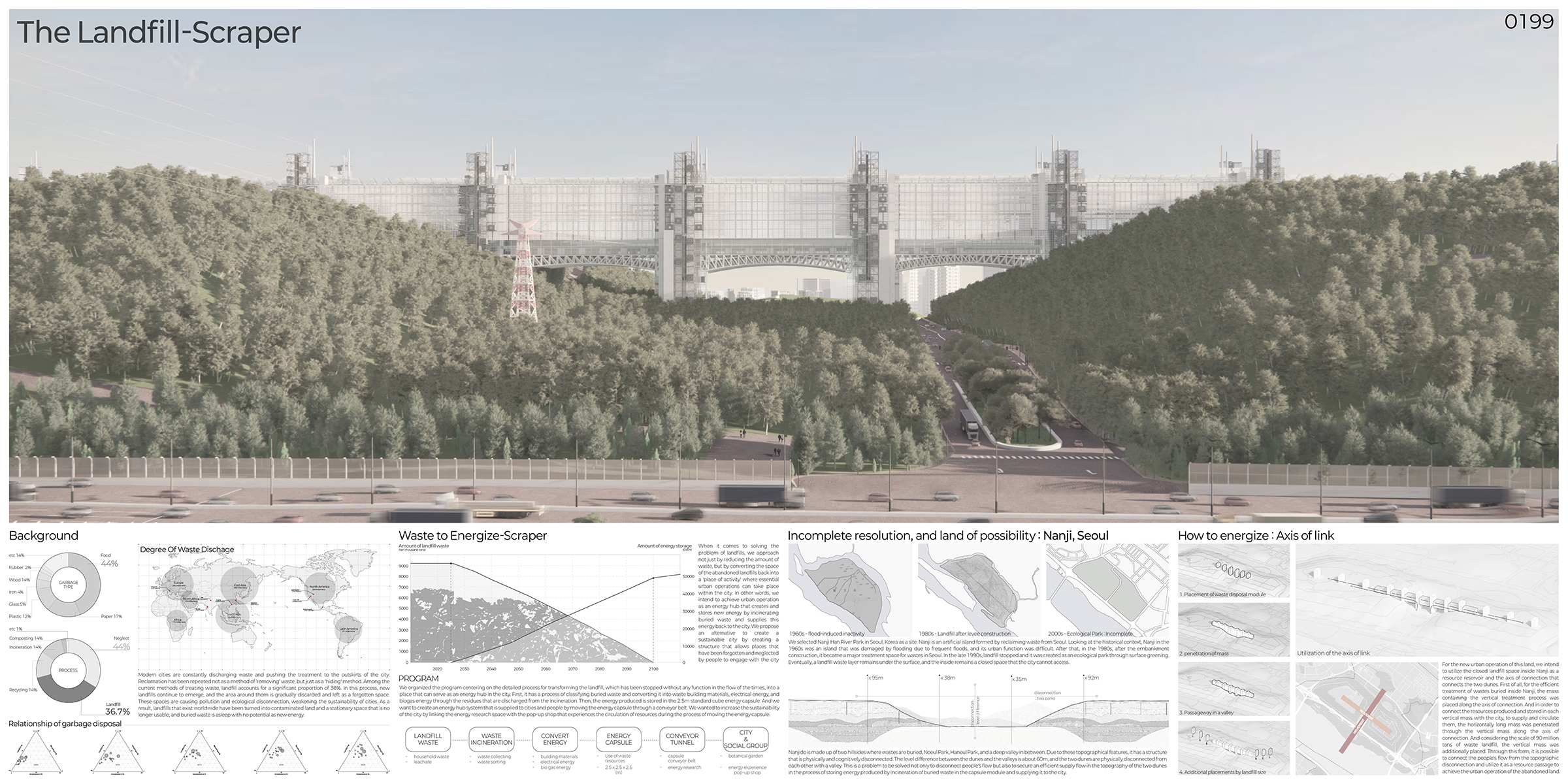
Cities continue to landfill nearly 36% of their waste, generating territories that remain polluted, ecologically severed, and functionally suspended. Although these sites hold latent energy potential, they exist as “frozen ground” detached from the urban system. The issue is not only the volume of waste but the inability of landfill land to return as active urban ground. This project reframes the landfill as an energy infrastructure: buried waste is incinerated, purified, converted, stored, and ultimately supplied back to the city. Through this transformation, the landfill shifts from a concealed burden to a productive urban engine.

2. Nanji: An Incomplete Resolution
Nanji in Seoul embodies unresolved layers—historic flooding, two decades of landfilling in the 1980–90s, and a later superficial ecological makeover. Despite its green surface, nearly 90 million tons of waste remain sealed beneath, preventing real ecological or urban recovery.
Two landfill mounds, Noeul park and Haneul park, are separated by a 60-meter height difference, producing a strong physical and perceptual rupture. This split disrupts pedestrian movement and blocks the formation of a continuous energy-processing and distribution system. The site demands a framework capable of binding fractured ground into a functional ecosystem.

3. The Axis of Link: A Framework for Reactivation
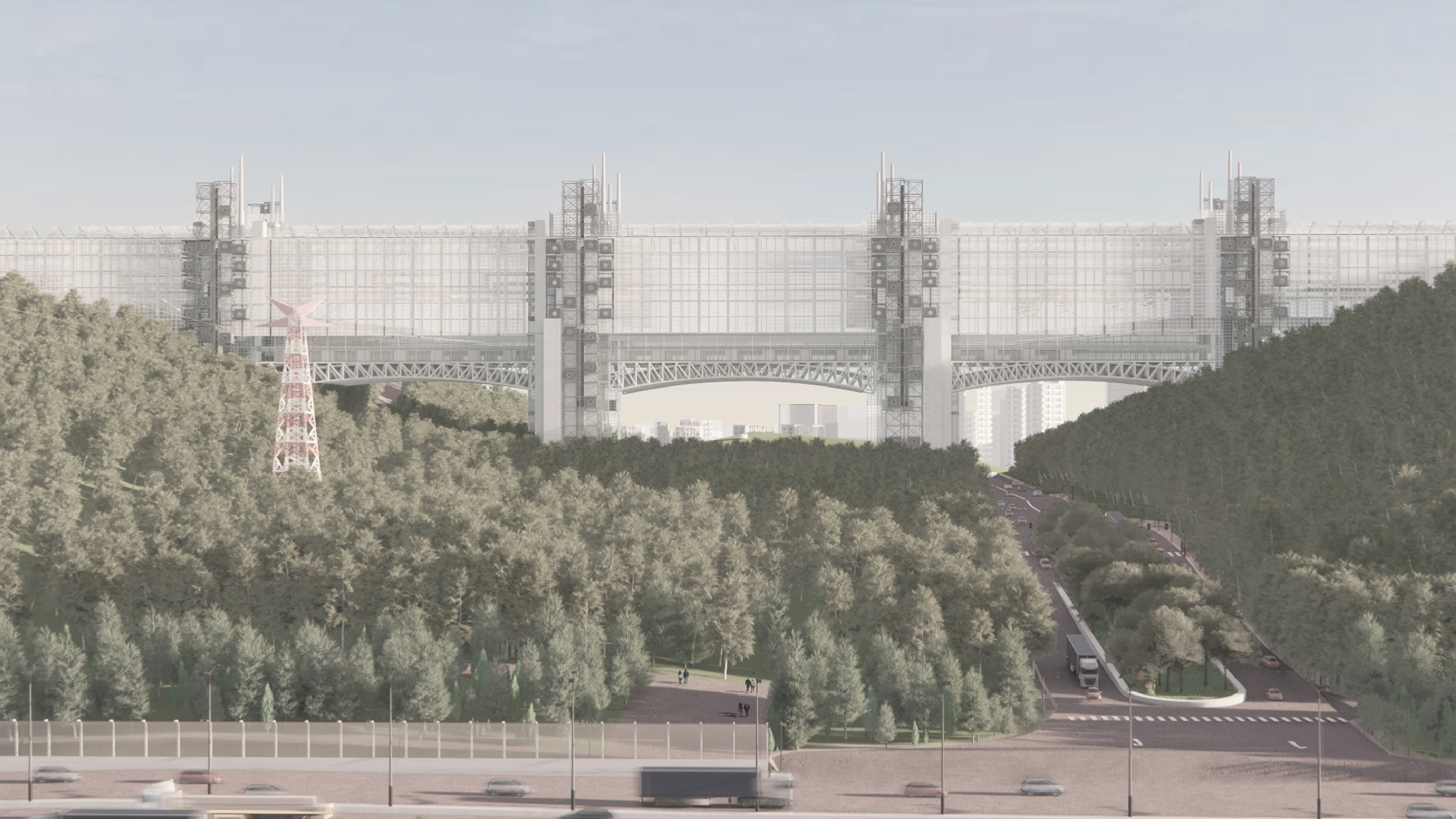
A linear Axis of Link is established along the crest lines of the two mounds. This axis reframes the sealed landfill interior as a reservoir of resources and organizes waste-to-energy operations into a continuous infrastructural spine.
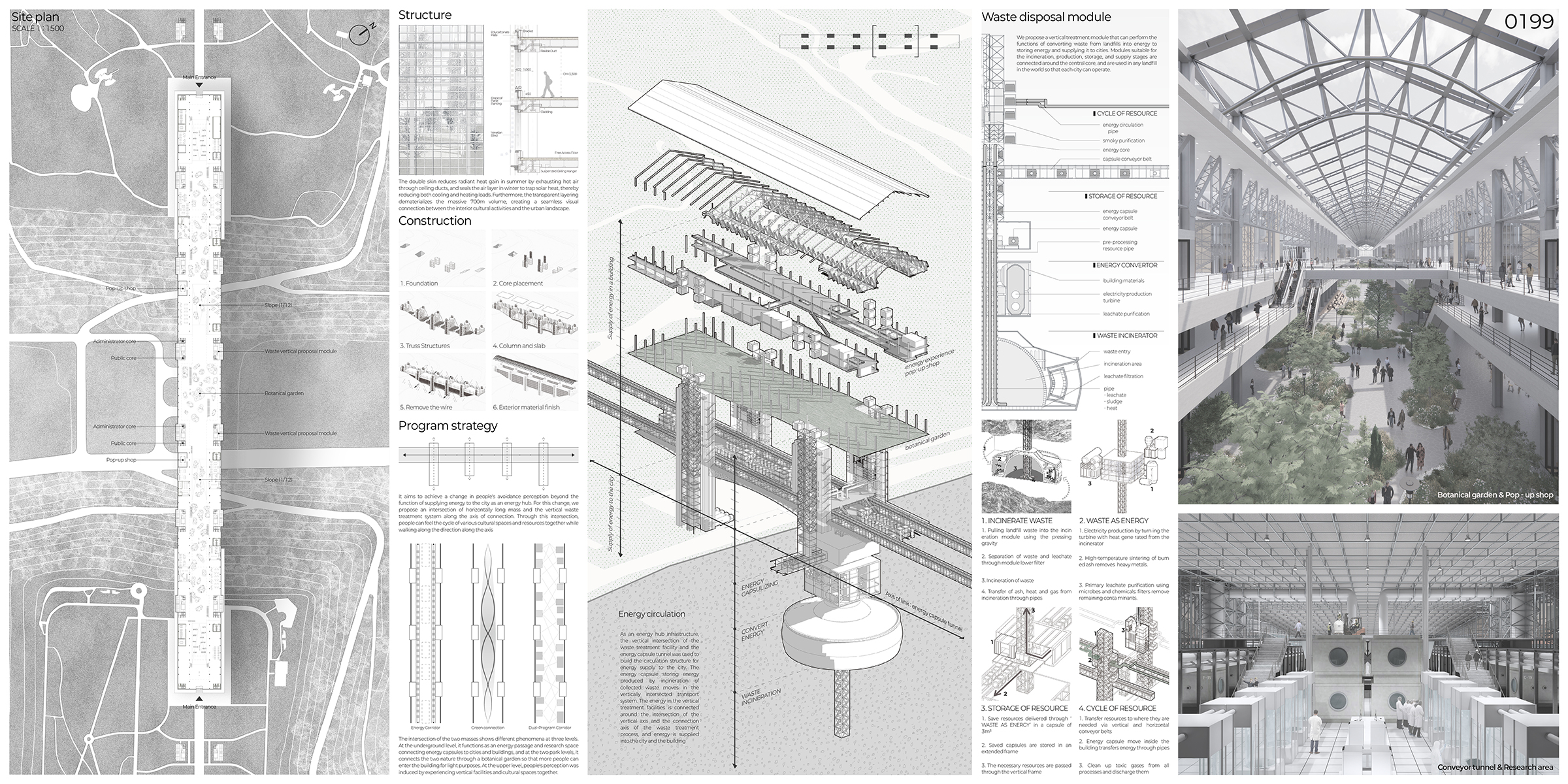
Along this axis, a sequence of Vertical Waste Processing Modules is deployed. A long Horizontal Mass penetrates these modules, bridging the mounds and merging resource circulation with human movement into a single integrated system.

4. Vertical Waste Processing Modules
4.1 Incineration Module
Lower levels extract buried waste and leachate, then sort, crush, and feed them into high-temperature incineration chambers, exposing the first stage of the hidden cycle.
4.2 Energy Conversion Module
Middle zones contain boilers, heat-recovery devices, and purification systems that convert thermal energy into electricity, heat, and gas.
4.3 Energy Capsule Module
Upper levels store generated energy in standardized 2.5-meter cubic capsules. Automated carriers transfer these capsules toward the horizontal distribution spine.
4.4 Purification & Recirculation Module
Residual byproducts, gases, and leachate undergo additional filtration, with portions recirculated as secondary resources. The modules serve not only as processing devices but as exposed infrastructural towers that can be replicated at other landfill sites.

5. The Horizontal Mass: Three Layers of Integration
5.1 Underground Layer — Resource Convergence
This layer receives energy capsules from the vertical modules and distributes them through automated conveyors. It forms the infrastructural node where vertical production merges with horizontal urban supply.
5.2 Park Layer — Ecological Bridging
A linear botanical landscape reconnects the severed ecologies of the two mounds. Visitors enter with light, everyday purposes while moving along the same axis that carries energy, merging public experience with infrastructural performance.
5.3 Upper Layer — Cultural Perception Shift
Cultural and educational programs intersect with exposed capsules, structural systems, and parts of the machinery. Visitors repeatedly cross the flows of energy and infrastructure, encouraging a shift from fear and avoidance toward an informed understanding of resource cycles.

6. Conclusion: A Reactivated Urban Ground
By intersecting human programs with resource flows through vertical modules and a horizontal linking mass, the project transforms a forgotten landfill into an active energy-producing infrastructure. Physical fracture and social distance are repaired simultaneously, and Nanji emerges not as buried residue but as a functional landscape that strengthens urban sustainability and provides a model for future infrastructural architecture.

The Celestial Forge

By:  | February - 27 - 2026

2025 Skyscraper Competition
Honorable Mention

Maria Murokh, Daria Bondarchuk
Russia

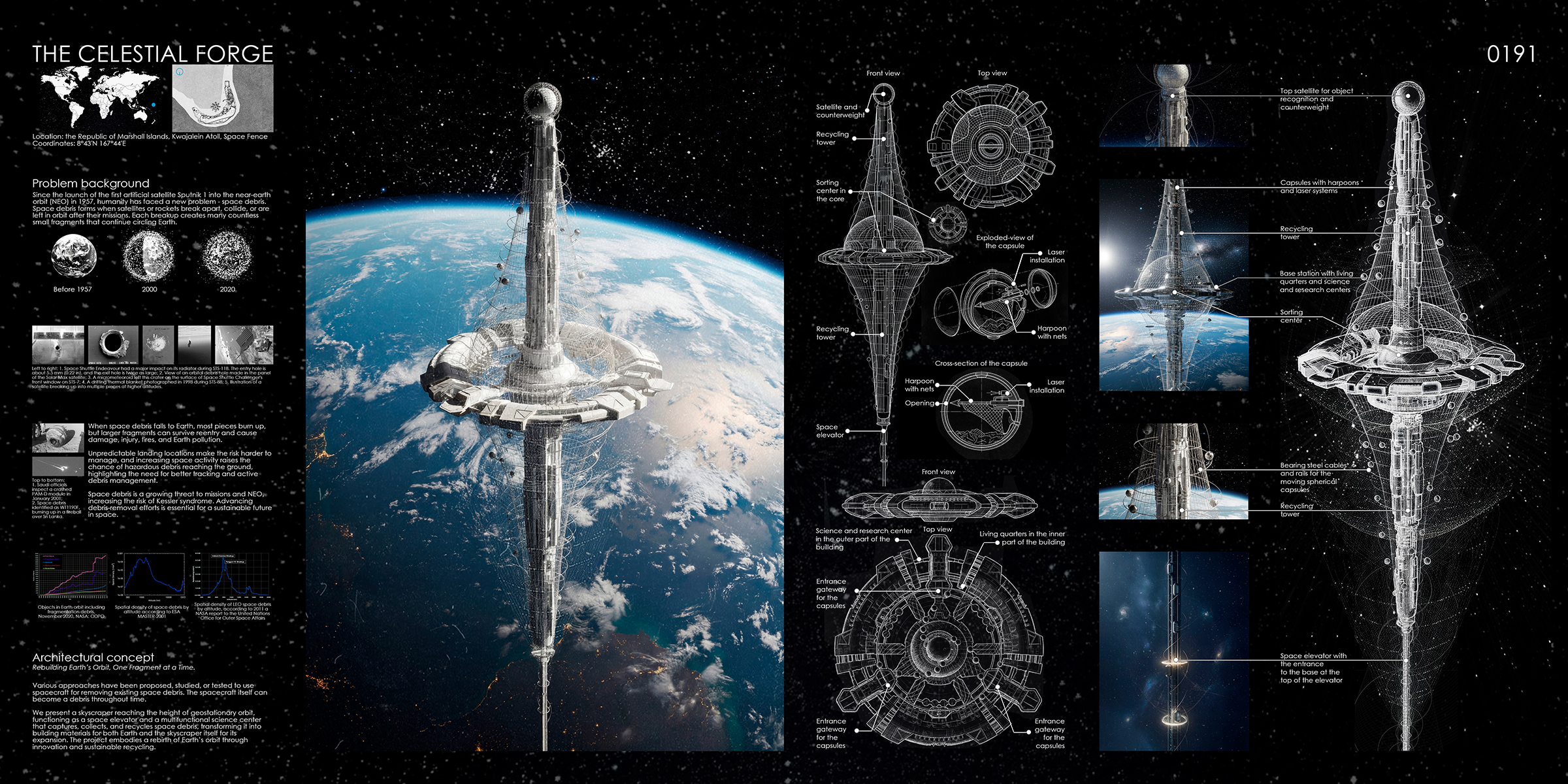
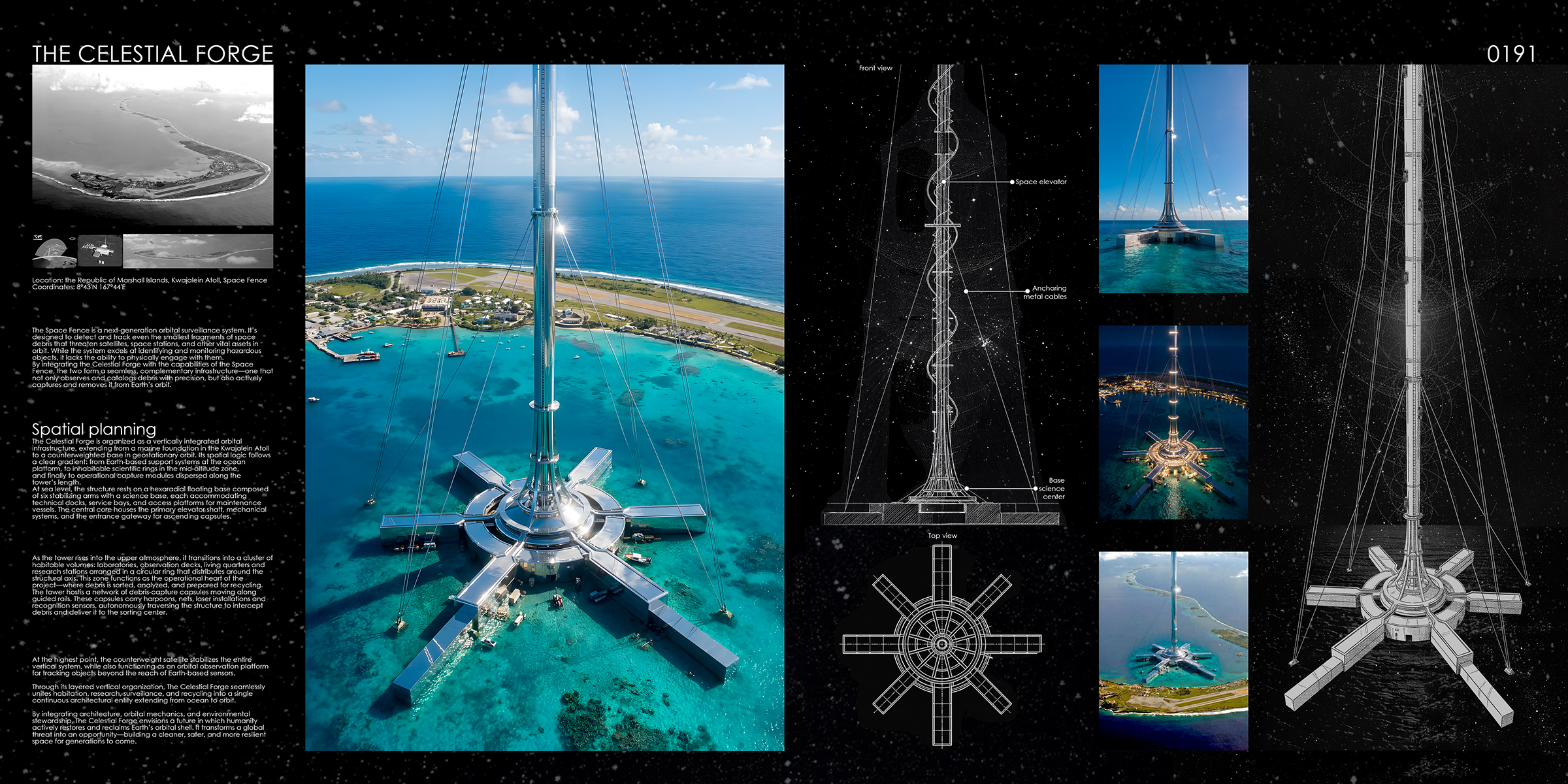
Humanity has entered an era in which its presence extends far beyond the boundaries of the atmosphere — yet our expansion into orbit has created an unintended and rapidly escalating crisis. Millions of fragments of old satellites and collision-generated debris now encircle the planet, forming a hazardous shell that threatens spacecraft, space stations, and future missions. The Celestial Forge proposes a radical architectural response to this planetary challenge: a vertical orbital infrastructure-skyscraper that captures, sorts, and recycles space debris while establishing a new typology of inhabitable architecture stretching from ocean to orbit. The project imagines a new architectural typology: a hybrid between a skyscraper, a space elevator, a scientific outpost, and a planetary-scale recycling facility.

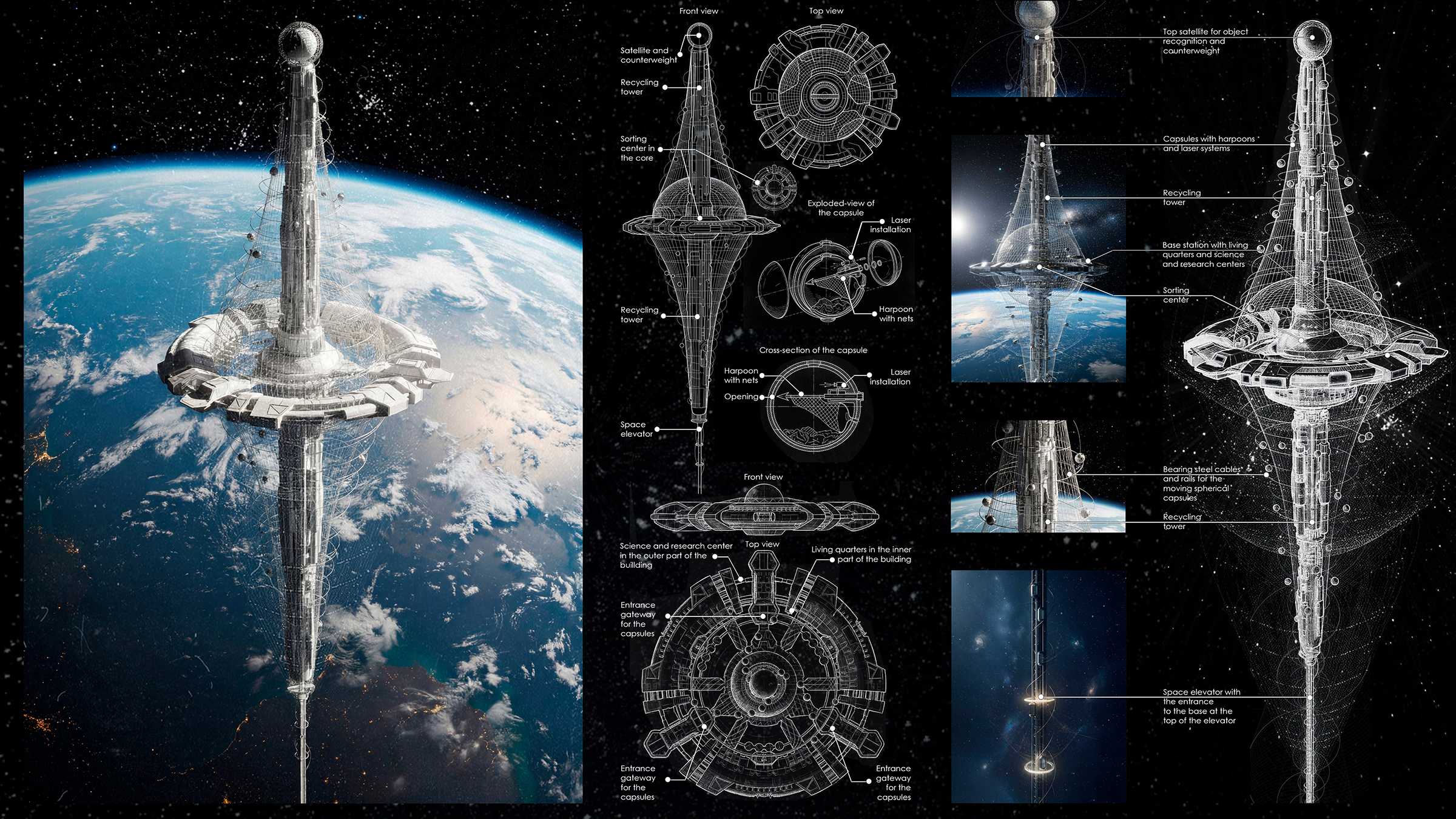
Anchored within the lagoon of Kwajalein Atoll in the Marshall Islands, the structure rises from a radial ocean platform engineered to stabilize the vertical load of the tower and serve as the terrestrial gateway to the system. The base building has maintenance docks, energy systems, a science center, and the entrance to the space elevator. From this point, the tower ascends continuously through the atmosphere, reaching geostationary altitude, where a counterweight satellite and base station maintain tension and structural equilibrium.

The Celestial Forge is conceived as a hybrid of space infrastructure, environmental remediation system, and research habitat. Its core function is debris management: intercepting hazardous fragments before they can collide and produce further scattering. Autonomous capsules equipped with harpoons, nets, laser-based recognition systems, and real-time navigation algorithms travel along the tower’s exterior by metal cables. Captured debris is transported to a sorting center housed in the center of the ring of laboratories and living quarters. Here, objects are analyzed, categorized by material, and either recycled on-site or transferred to Earth-based facilities for further re-use. Metals, composites, and rare elements — once considered waste — become valuable resources for future orbital manufacturing.

The project integrates closely with the Space Fence, a next-generation surveillance system capable of detecting even the smallest pieces of orbital debris. While the Space Fence excels in identifying and tracking hazardous objects, it cannot physically interact with them. The Celestial Forge transforms these digital observations into tangible action. Together, the systems form an interconnected, planetary-scale skyscraper infrastructure.

Beyond its industrial function, the tower incorporates zones for habitation, research, and long-term orbital living. At high altitudes, where gravity begins to decrease and the curvature of Earth becomes fully visible, a ring of scientific and residential modules forms a new liminal environment—neither Earth nor outer space, but an architectural threshold between the two. These modules house scientists, engineers, and researchers who oversee the system’s operation and study atmospheric and orbital phenomena in real time.

The Celestial Forge imagines architecture not as a static object but as an evolving instrument embedded within planetary processes. It transforms Earth’s orbit from a hazardous wasteland into a cyclical material ecosystem, where waste becomes raw material and surveillance becomes stewardship. As humanity moves deeper into the space age, the project argues that our responsibility extends beyond the ground we build on.

In addressing the growing threat of the Kessler Syndrome, The Celestial Forge positions architecture as a mediator between human ambition and environmental necessity. It proposes a future in which technological advancement and ecological responsibility coexist, and where architectural innovation becomes a foundation for planetary repair.

The Celestial Forge envisions a future in which humanity actively restores and reclaims Earth’s orbital shell. It transforms a global threat into an opportunity—building a cleaner, safer, and more resilient space for generations to come.

Ascending Archive

By:  | February - 27 - 2026

2025 Skyscraper Competition
Honorable Mention

Yuyi Shen, Ingrid Liu
United States

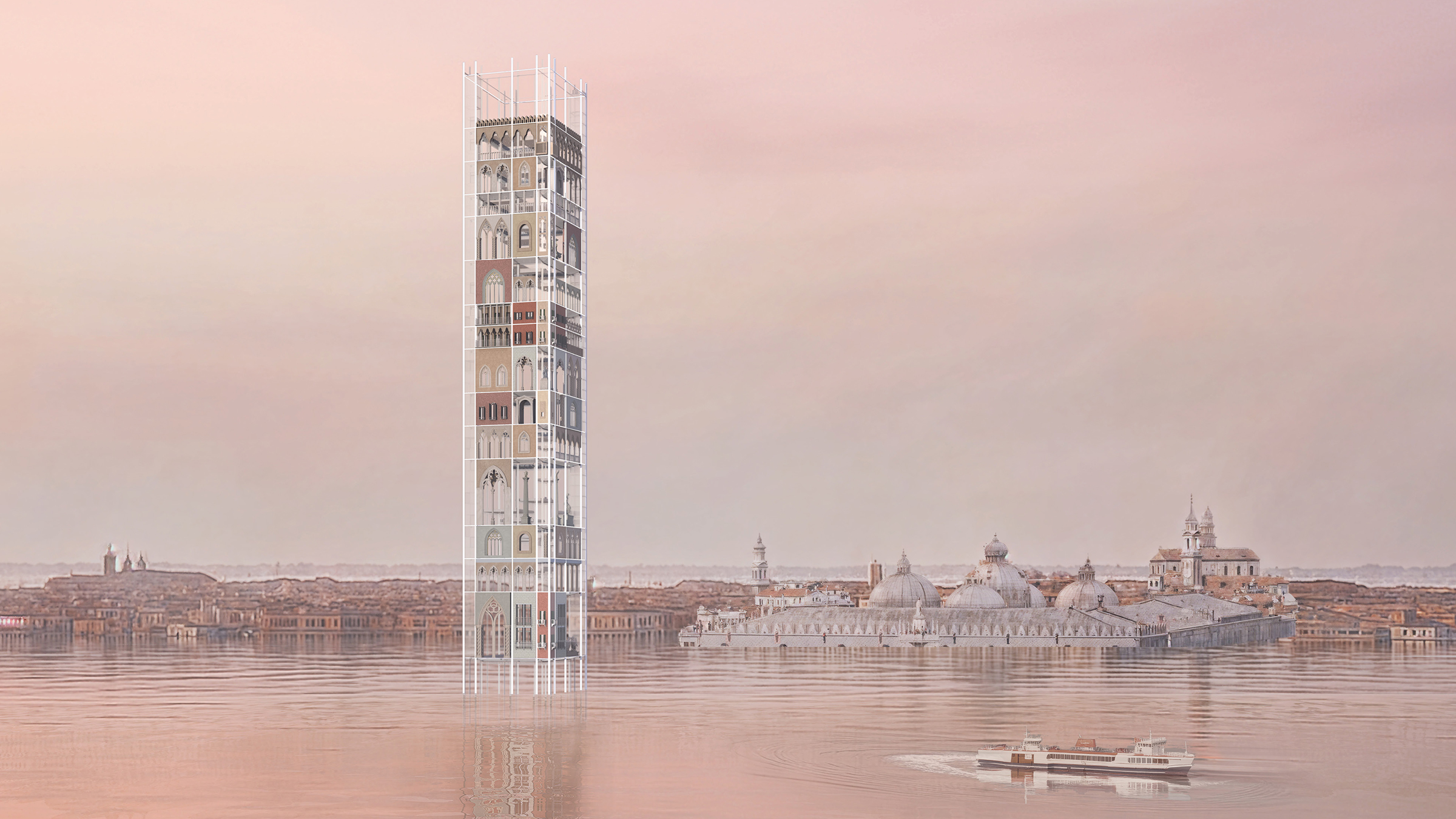
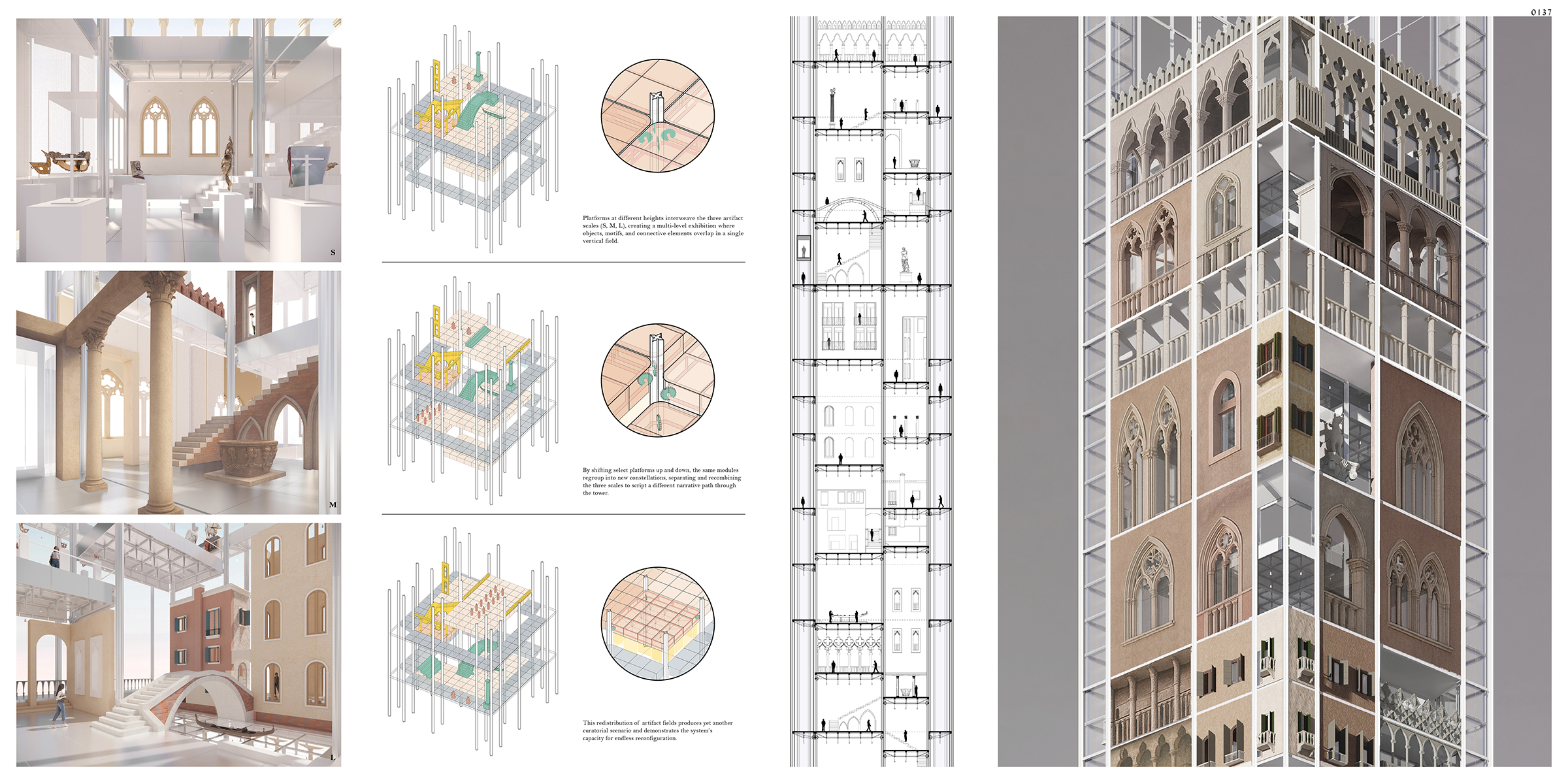
In October 2025, the world passed its first catastrophic climate tipping point—an irreversible threshold that will send sea levels rising with unprecedented acceleration. Many coastal cities, cultural capitals that have flourished for millennia, now face an inevitable future of submersion. Venice—long defined by its relationship to water—stands at the forefront of this crisis. Persistent flooding has already contributed to a population decline over the last fifty years. With one meter of sea-level rise projected within the next century and six meters within the next millennium, the first two floors of the typical Venetian building—along with their frescoes, sculptures, gondolas, timber beams, and stone carvings—will be lost to the tide unless relocated. Venice’s cultural heritage, delicate and irreplaceable, requires a home that can evolve as quickly as the waters that threaten it.

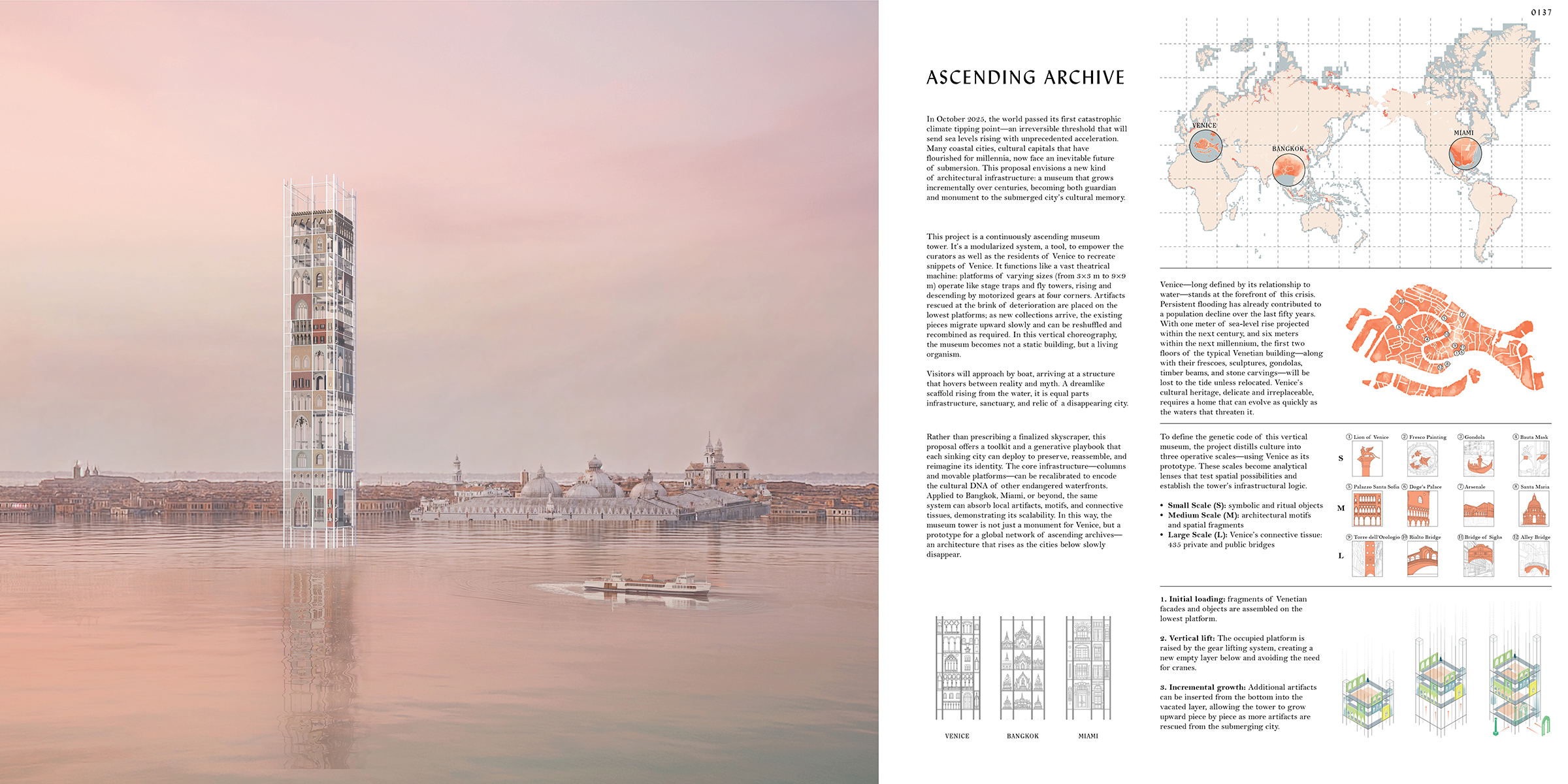
This proposal envisions a new kind of architectural infrastructure: a continuously ascending museum tower that grows incrementally over centuries, becoming both guardian and monument to the submerged city’s cultural memory. The project is a modularized system—a tool—to empower the curators as well as the residents of Venice to recreate snippets of the city. It functions like a vast theatrical machine: platforms of varying sizes (from 3×3 m to 9×9 m) operate like stage traps and fly towers, rising and descending by motorized gears at the four corners. Artifacts rescued at the brink of deterioration are placed on the lowest platforms; as new collections arrive, the existing pieces migrate upward slowly and can be reshuffled and recombined as required. Through this vertical choreography, the museum becomes not a static building, but a living organism.
To define the genetic code of this vertical museum, the project distills culture into three operative scales—using Venice as its prototype. These scales become analytical lenses that test spatial possibilities and establish the tower’s infrastructural logic:

Small Scale (S): symbolic and ritual objects

Medium Scale (M): architectural motifs and spatial fragments

Large Scale (L): Venice’s connective tissue, including its 435 private and public bridges

The three scales of cultural artifacts guide the tower’s infrastructural logic and shape countless possible curatorial scenarios. Platforms can recombine vertically and horizontally, creating unexpected spatial adjacencies that reinterpret cultural elements in new contexts. A gondola fragment might hover beside a reconstructed arcade; a bridge segment might frame a cluster of devotional objects. Over time, the tower becomes an ever-changing archive, continuously editing and re-staging the city’s memory as it sinks below the waterline.

Visitors will approach by boat, arriving at a structure that hovers between reality and myth. A dreamlike scaffold rising from the water, it is equal parts infrastructure, sanctuary, and relic of a disappearing city. Columns and movable platforms define a precise yet open framework: an architecture of mechanisms rather than fixed rooms, where the city’s remnants can be lifted, reassembled, and seen anew.

Rather than prescribing a finalized skyscraper, this proposal offers a toolkit and a generative playbook that each sinking city can deploy to preserve, reassemble, and reimagine its identity. The core infrastructure—columns and movable platforms—can be recalibrated to encode the cultural DNA of other endangered waterfronts. Applied to Bangkok, Miami, or beyond, the same system can absorb local artifacts, motifs, and connective tissues, demonstrating its scalability. In this way, the museum tower is not just a monument for Venice, but a prototype for a global network of ascending archives—an architecture that rises as the cities below slowly disappear.