designed by Felix Lupatsch, Ferdinand Sauerbruch
Germany
neva-hybrid-0

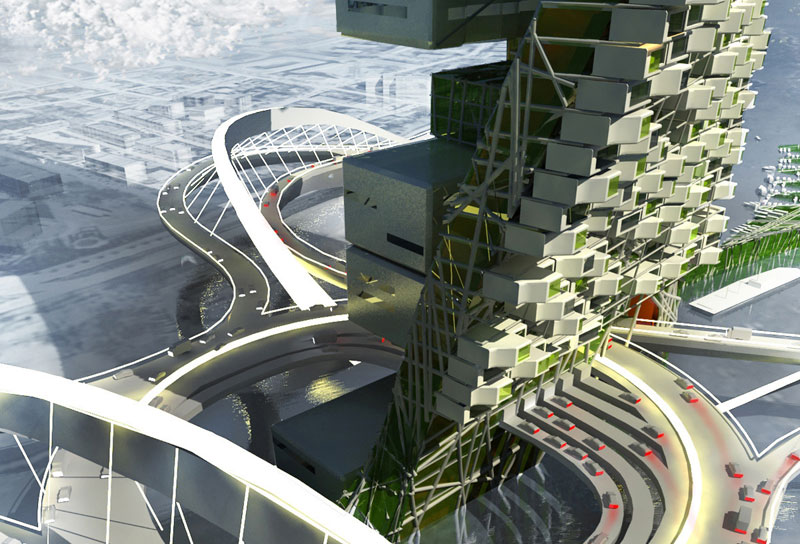
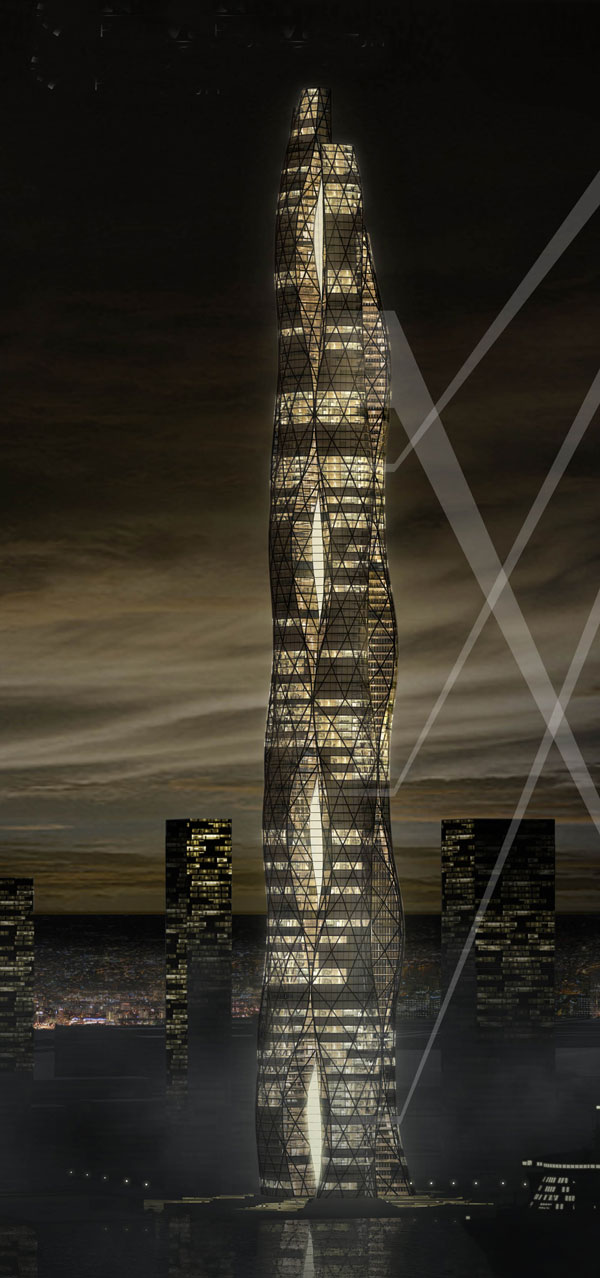
Neva Hybrid is a mixed-use skyscraper to be located in the new Western District of St. Petersburg as part of the land reclamation project that will gain 450 square hectares from the Gulf of Finland. Its design maximizes natural light and ventilation in the offices, residences and hotel. Sky lobbies every 20 floors are used as social joints with restaurants, shops, theatres, bars, and clubs. Read the rest of this entry »

designed by Carlos Morales Hendry, Julian Restrepo, Pablo Forero, Andrea Montes, Luis Hernan Saenz
Colombia

vertical-junkyard-0

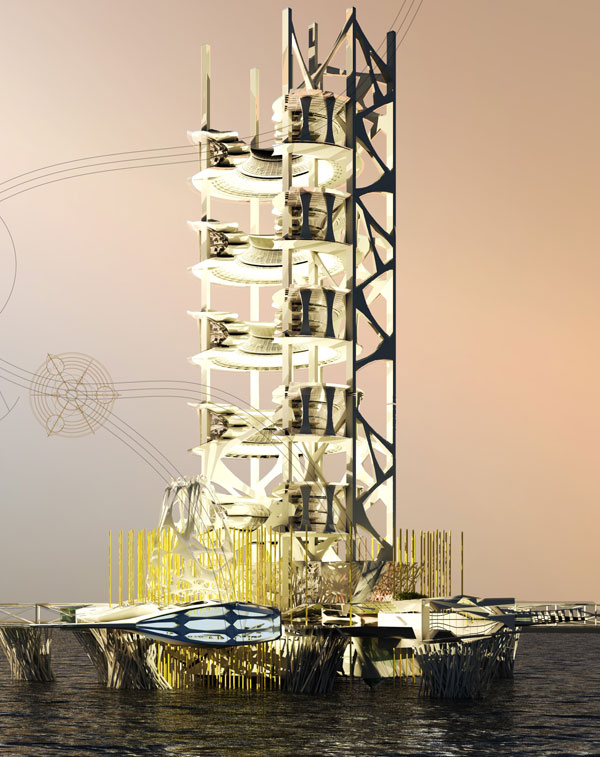
This proposal utilizes garbage and industrial waste as its main building material – a symbol and a statement against irresponsible consumerism. It is located in Bogota, Colombia, close to a large urban park, in a densely populated area with good transportation services. Its program includes sport facilities, hotel, offices, museum, and restaurants. Read the rest of this entry »
ZARA1

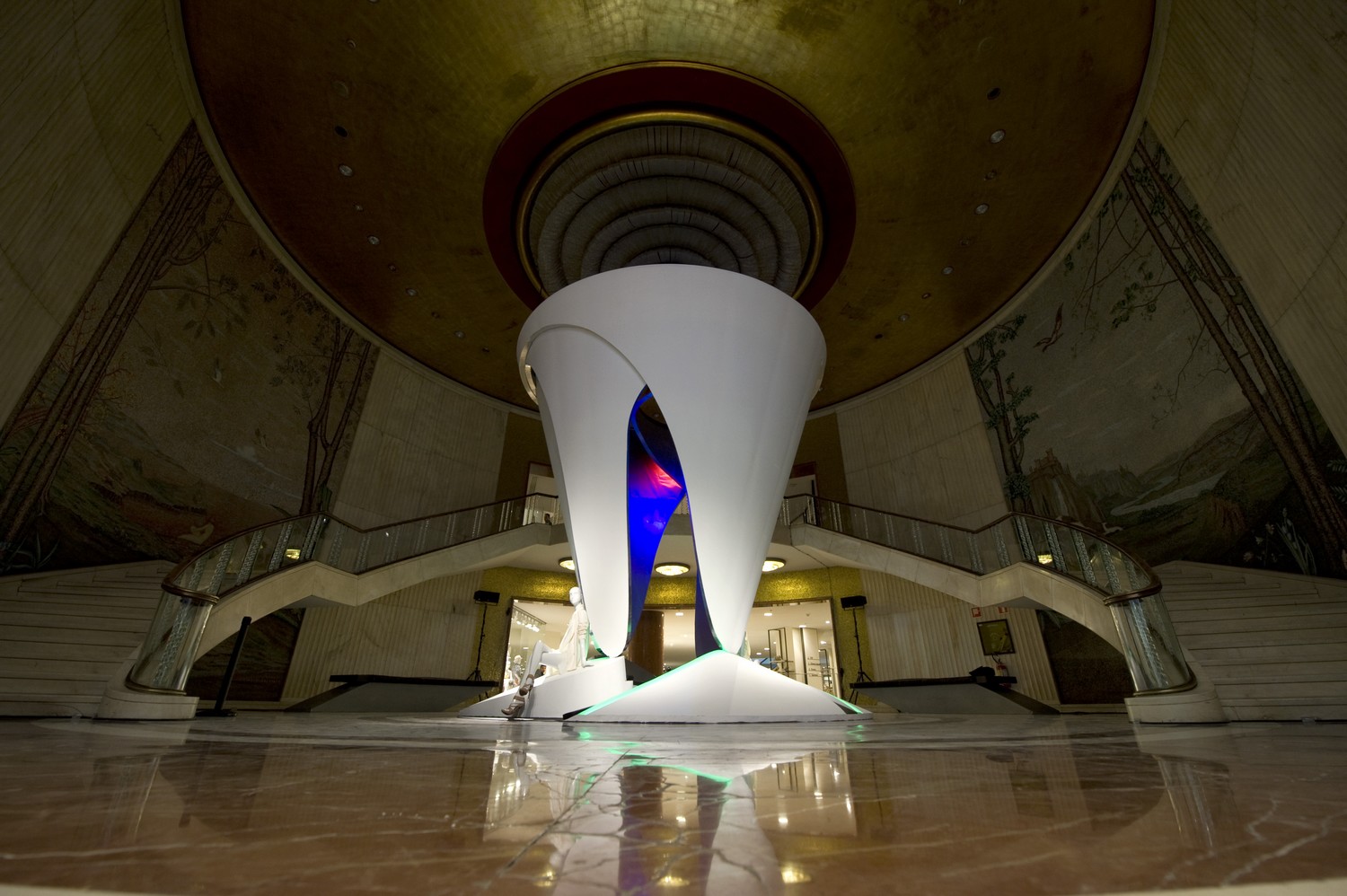
The main entrance of Zara’s flagship store on Corso Vittorio Emanuele II in Milan plays host to an eye-catching installation created by the Netherlands-based design firm UNStudio. The piece represents the Inditex Group retailer’s nod to events planned in Milan to coincide with the city’s International Furniture Fair. The installation stands a spectacular five metres tall and has a diameter of 4.85 metres, with a total surface area of 130m2. The coated aluminium structure is lit from within using LEDs, and is echoed in two smaller pieces displayed in the shop’s windows. Read the rest of this entry »
designed by Matthew Graham, Mike Lamprides  
United States

cricket-skyscraper-0

As India approaches the 63rd anniversary of its independence, it is emerging as a cricket powerhouse. The sport that was left behind by the British, over a hundred years ago, has ultimately been adopted, creating a recreational gift to the nation. The sport has political and cultural implications reaching far beyond the imperialist colonization which initially engendered it. In the ICCT tower we will challenge the very nature of the skyscraper by aggressively reinterpreting programmatic, scalar, and contextual norms. Read the rest of this entry »

designed by Anastasia Gritskova, Tatiana Leshihina, Ekaterina Zavyalova
Russia

grand-canyon-skyscraper-0

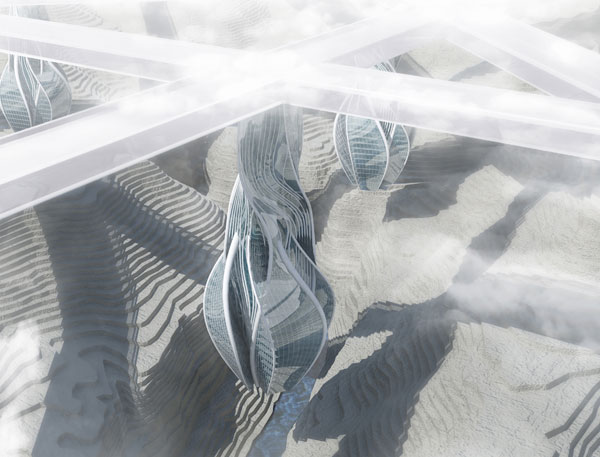
The project of Suspended Tower in Grand Canyon is a new way of looking at the architectural material, an attempt to employ advanced material process by means of computation and robotic production in order to change architectural possibilities and to better shape the environment.

The structural system of the Tower we designed as high performance device capable of adopting the extreme environment of Grand Canyon. The self stabilizing cable system includes tubes (bones) and cables which connect bones to each other and go inside them to the top of the Tower where the machines pull them according to the specific data from sensors that measure wind direction and pressure. Those machines choose the cables from particular side of the bones and rotate the building against the wind to compensate rotational moments. Read the rest of this entry »

designed by Ryan Browne, Nathanael Dunn, Daniel Nelson, Benjamin Scholten
United States

urban-transluder-0

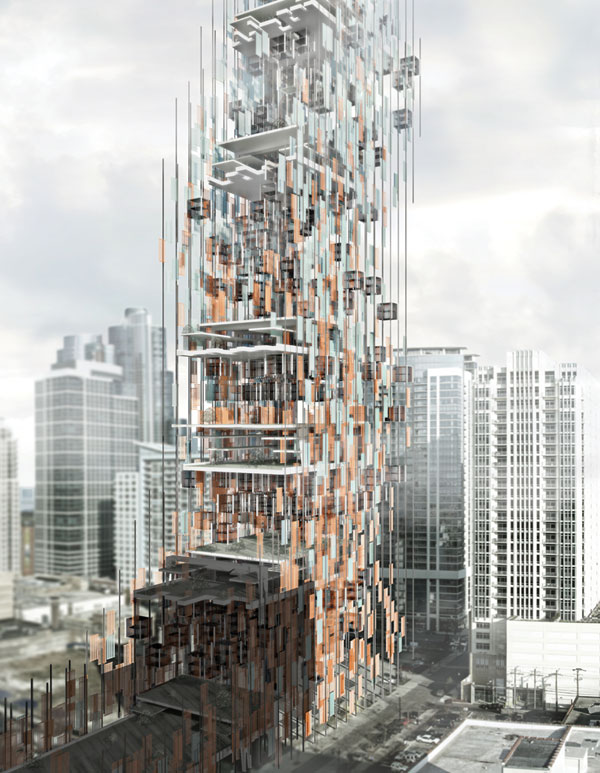
One of the most prevalent forms of pollution in cities comes from noise, a pollutant often overlooked and rarely considered harmful. Sound in its simplest sense is energy, which is not lost to nothingness upon absorption, but is transformed into new energy. This resultant energy is usually heat, which is potentially contributing to the rising issue of global warming. As population and noise productions continue to increase, so will the amount of resultant heat, which will increase the Earth’s average temperature. Read the rest of this entry »
designed by Philipp von Bock
Germany

spiral-tower-1

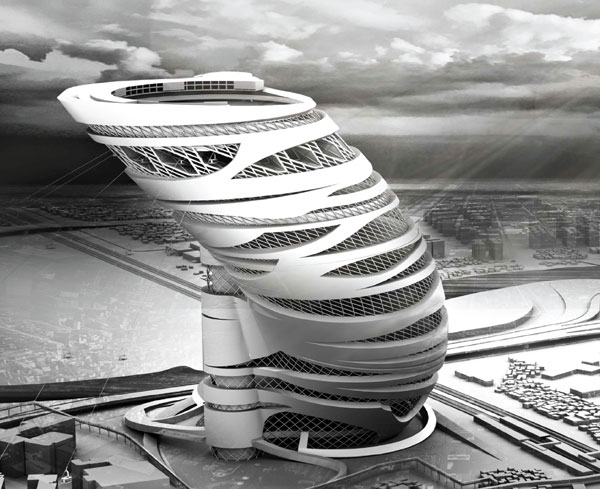
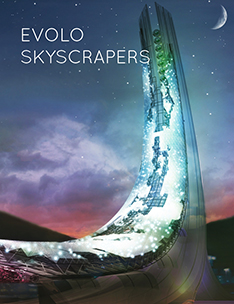
The Spiral Tower is a family friendly skyscraper inspired by the advantages of living in the suburbs. Its main objective is to provide a green community in the middle of Berlin for families who desire the best of both worlds. The building is equipped with solar panels, wind turbines, and water recollection and purification systems. The housing units are stacked in opposite directions to create terraces and open spaces for every apartment. Outdoor and recreational areas are distributed throughout the entire complex. Read the rest of this entry »
Mixer Skyscraper in Warsaw

By:  | April - 8 - 2010

Tomasz Olszewski
Poland

warsaw-skyscraper-0

Located along the Vistula River in Warsaw, Poland, the Mixer Skyscraper is a mixed-use structure connected to the city’s maritime and road networks. The building consists of a steel exoskeleton where small prefabricated structures could be plugged-in during different construction phases – according to new requirements. A vertical spine contains public programs such as theaters, restaurants, museums, or shopping malls while a swiping structure that resembles a wave is used for housing and offices. Read the rest of this entry »

Vertical Farms

By:  | April - 7 - 2010

Ruwan Fernando
Australia

vertical-farm-0

This design by Australian architect Ruwan Fernando is an open skyscraper with five clusters of u-shaped structures for vertical farming. This project is designed for low-depth water bodies – it uses specialized mechanical filaments for tidal energy production.

The shape of the clusters allows maximum sunlight and ventilation. It utilizes wind turbines and solar panels to produce the remaining energy requirements. The idea is to create a network of vertical farms and connect them with monorails, roads, and pedestrian bridges. Read the rest of this entry »

Hive Skyscraper

By:  | April - 6 - 2010

Sang-Yun Han, Cheol Yong Kim, Sung Hoon Park
United States

hexagon-skyscraper-0

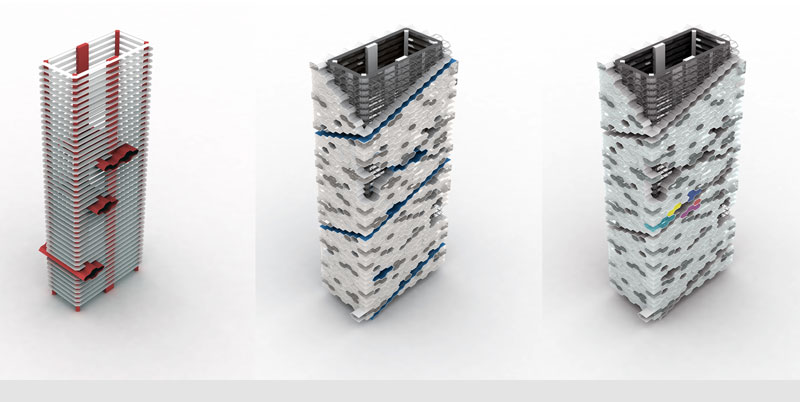
This proposal is an attempt to redefine skyscrapers as a connecting agent between architecture and the city through the re-composition of the surrounding urban context. Programs decoded from analyzing urban contexts are recomposed and disseminated along the inclined interlinking circulation system in order to enhance human interaction and extend streets throughout the entire building. Read the rest of this entry »