Schweger Associated Architects
Peter P. Schweger
Germany

dubai-skyscraper-0

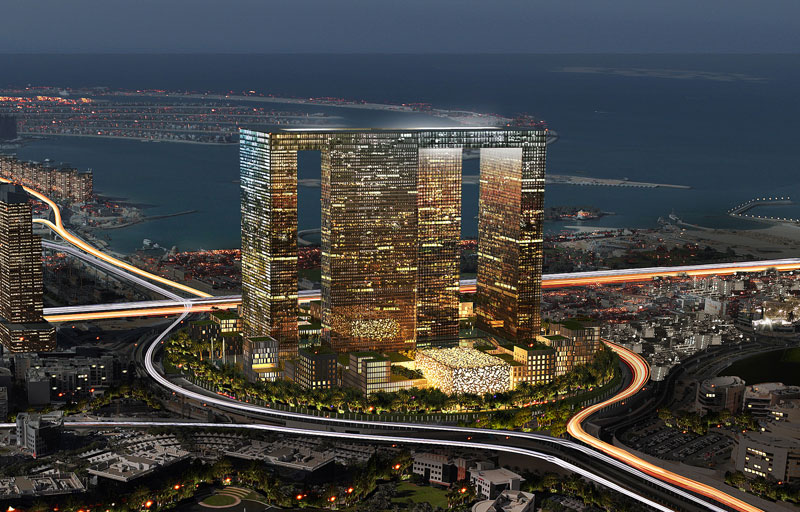
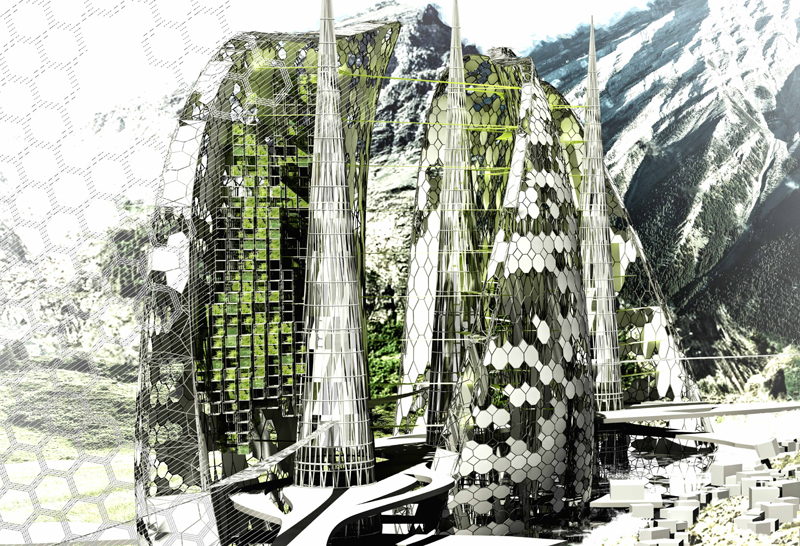
Dubai Pearl is a new residential and commercial development in Dubai situated in the newest part of the city with magnificent views to the Gulf, the Palm Island, and the Burj Al Arab. The complex has been designed to receive Gold LEED certification and to become a new landmark for the city. Read the rest of this entry »

Rae Won Noh, In Ki Kim, Jeong Tae Kim, Hyo Bin Jung, Jang Ook Lee
South Korea

horizontal-skyscraper-0

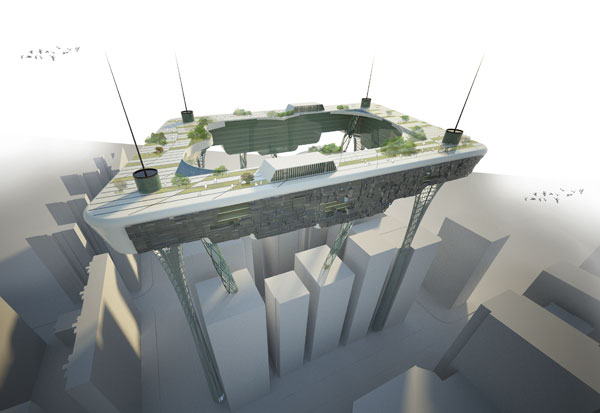
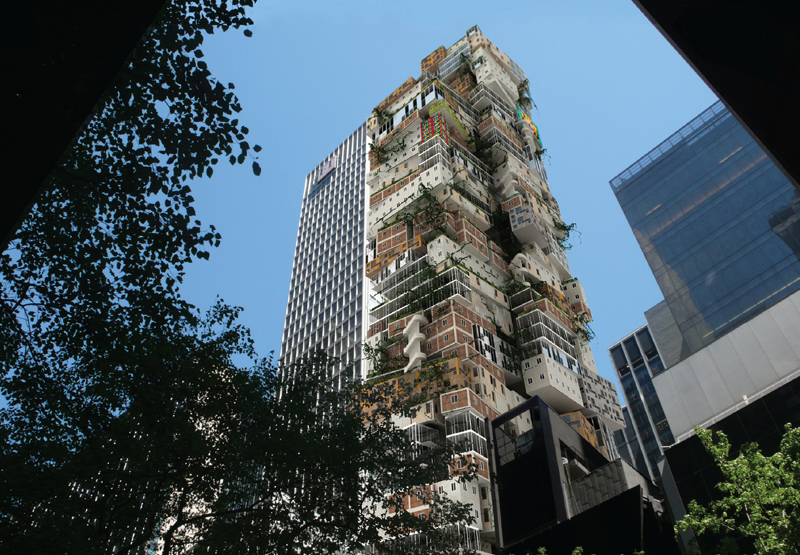
The Horizontal Scarper main concept is to build a new city-like structure above existing blocks. The main structural elements, also used for vertical circulation, are located on free areas at street level. The rest of the building is a fifteen floors ribbon floating on top of the existing buildings without blocking the natural light. Apart from residential and office spaces it provides a new recreational space for the city; its rooftop is a green garden with sports facilities. Read the rest of this entry »

Kazuyo Sejima and Ryue Nishizawa, partners in the architectural firm, SANAA, have been chosen as the 2010 Laureates of the Pritzker Architecture Prize. The formal ceremony for what has come to be known throughout the world as architecture’s highest honor will be held on May 17 on historic Ellis Island in New York. At that time, a $100,000 grant and bronze medallions will be bestowed on the two architects.

In announcing the jury’s choice, Thomas J. Pritzker, chairman of The Hyatt Foundation, elaborated, “This marks the third time in the history of the prize that two architects have been named in the same year. The first was in 1988 when Oscar Niemeyer of Brazil and the late Gordon Bunshaft were so honored, and the second was in 2001, when Jacques Herzog and Pierre de Meuron, partners in a Swiss firm, were selected.”

kanzawa-small

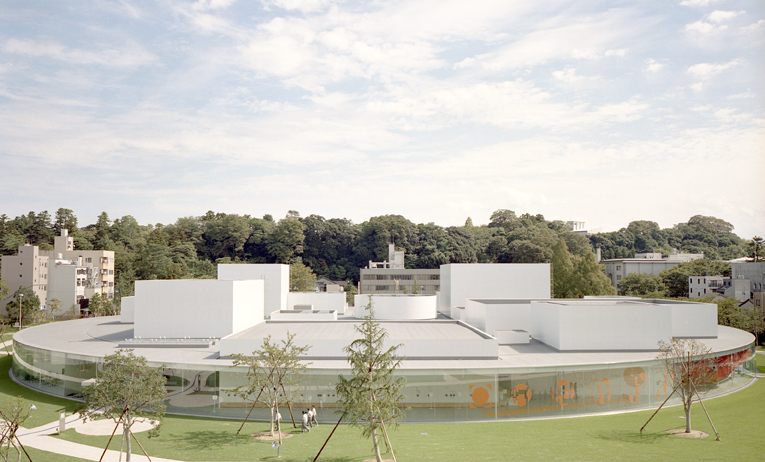
21st Century Museum of Contemporary Art, Kanazawa, Japan.  1999-2004.  Courtesy of SANAA.  Photo credit: Yukio Futagawa.

He continued, “Japanese architects have been chosen three times in the thirty year history of the Pritzker Architecture Prize — the first was the late Kenzo Tange in 1987, then in 1993, Fumihiko Maki was selected, and in 1995, Tadao Ando was the honoree.”

The purpose of the Pritzker Architecture Prize is to honor annually a living architect whose built work demonstrates a combination of those qualities of talent, vision and commitment, which has produced consistent and significant contributions to humanityand the built environment through the art of architecture. Read the rest of this entry »

Contingency Ark

By:  | March - 24 - 2010

Finalist  – 2010 Skyscraper Competition

Andrew Brorson
United States

contingency-ark-0

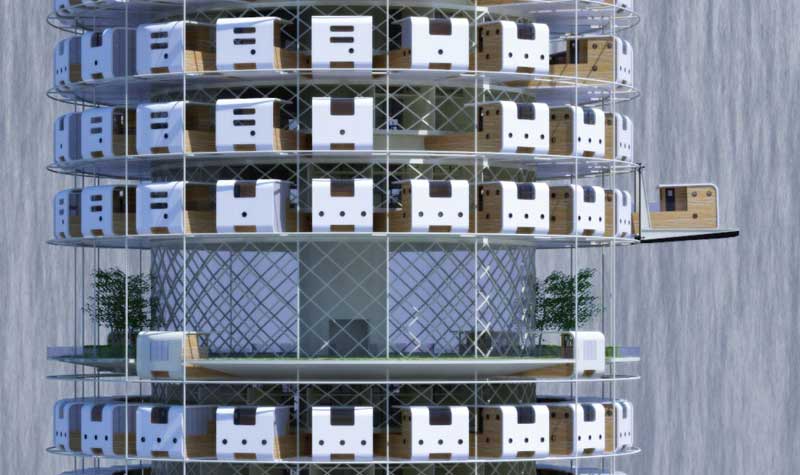
The Contingency Ark was designed under the assumption that the West Antarctic ice shelf will melt and a great number of cities, including Miami, will be underwater. Its structure was inspired from buildings that have withstood the rising of the sea like the Maunsell Sea Forts in the Thames and Mersey estuaries located off the coast of the United Kingdom.

It is formed by a steel lattice where mobile floating homes will plug-in. The idea is to build a series of these structures in major cities and habitants will be able to move their homes between locations. The basic infrastructure including water, energy, and waste management will be provided by the permanent structure. Read the rest of this entry »

Ecopolis

By:  | March - 15 - 2010

Project submitted to the 2010 Skyscraper Competition
Designed by: Santiago Marenco

ecopolis-0

Ecopolis is a global city for the future based on the idea of designing a set of highly differentiated sustainable and habitable cells. These primary units are organized into clusters according to program, habitants, and its relationship with the natural world.

Ecopolis façade is equipped with sustainable systems such as solar panels, wind turbines, and rainwater collectors. It is a modular design that grows according to different requirements in a given period of time. Read the rest of this entry »

Alternative Tower for MoMA

By:  | March - 13 - 2010

Axis Mundi
John Beckmann, CarloMaria Ciampoli, James Coleman, Nick Messerlian, Pauline Marie d’Avigneau, Taina Pichon

United States

Project submitted to the 2010 Skyscraper Competition

alternative-moma-tower-0

As the city takes stock in a post-boom era, architect John Beckmann sees this as the time to rethink the tall buildings that have become synonymous with New York City’s identity.  

“Instead of disguising the rich potential of towers that have a mix of uses, we looked for a way to express that diversity,” Beckmann explained. The firm used parametric computer-modeling software to test a wide range of possibilities. Out of this iterative process, Beckmann and his firm, Axis Mundi, propose a new way to organize and express tall buildings: the Vertical Neighborhood. “A more diverse, complex, heterogeneous, and environmentally minded city need no longer be represented on its skyline by one-note architecture that makes a singular visual image and little else,” explained John Beckmann, the founder of Axis Mundi, a Manhattan-based architecture firm. 

Rethinking Hines Tower Site
Beckmann proposes a conceptual alternative to business-as-usual, choosing the site of the proposed 53W53rd, among the city’s largest skyscraper proposals in one of the most overbuilt parts of Midtown. Hines, the developer, engaged Paris architect Jean Nouvel, who designed an 82-story hotel and residential tower higher than the Chrysler Building. Read the rest of this entry »

Skyscraper Fragments

By:  | March - 12 - 2010

Doonam Back, Yann Caclin
Korea / France

Project submitted to the 2010 Skyscraper Competition

crystal-skyscrapers-1

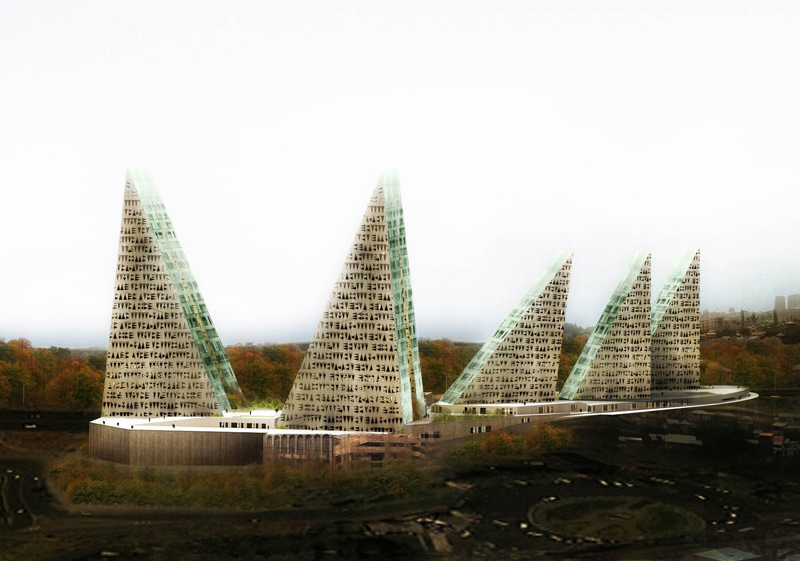
While the majority of skyscrapers focus on height, the concept behind this proposal is its fragmentation in a series of buildings around a central courtyard for recreational activities. The different fragments are configured according to program and orientation. The result is a cluster of crystals linked by promenades, gardens, and plazas. Read the rest of this entry »

Anti-Smog Tower in Paris

By:  | March - 11 - 2010

anti-smog-skyscraper-3

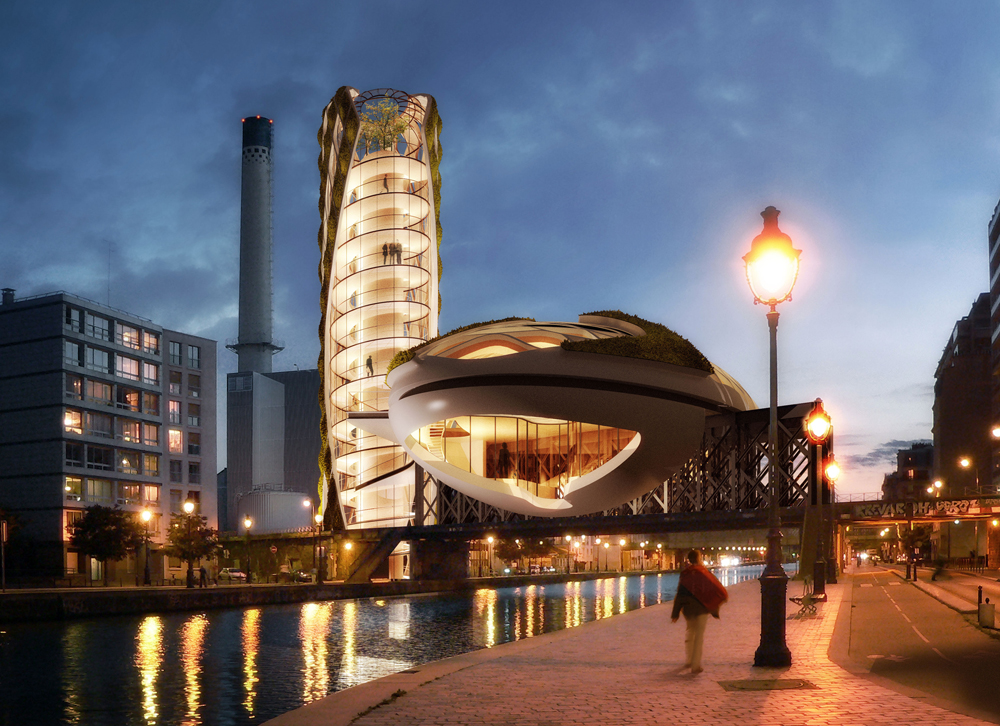
Architect Vincent Callebaut designed a sustainable tower in Paris to filter air particles and harvest wind and solar power. The project would be located in the 19th Parisian district which characterizes for being an extremely polluted area surrounded by old factories.

The project is divided in two; a “Solar Drop” located on top of abandoned railway tracks and a “Wind tower”. The Solar Drop is designed to transform polluted into clean air through a system of filters covered with titanium dioxide which break the pollutant particles. Along with the green technologies, the building is equipped with recreational areas for the city such as gardens, pools, galleries, and commerce. The Wind Tower equipped with turbines in its entire façade produces enough energy for the neighborhood and houses a museum and learning center on renewable energies. Read the rest of this entry »

CHROMAesthesiae: An installation of modular color

CHROMAesthesiae_06

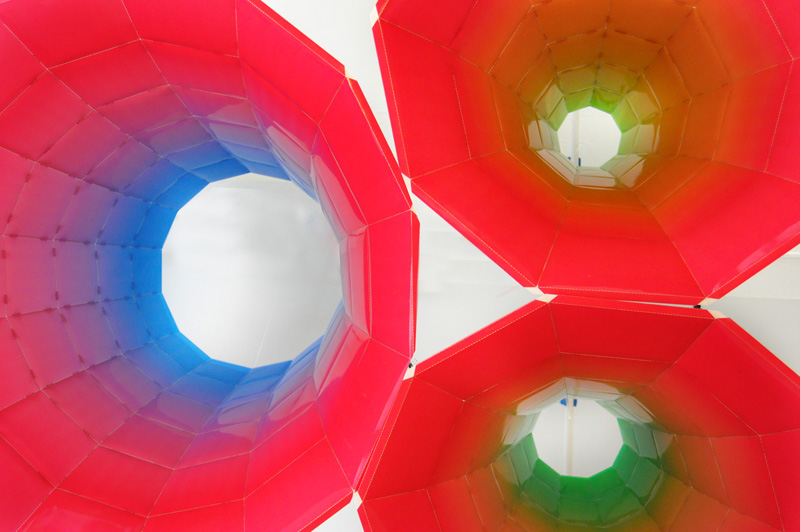
SOFTlab’s latest installation, CHROMAesthesiae, arrives at Devotion just in time for spring. CHROMAesthesiae is a flourishing landscape of color, blooming across the ceiling in high contrast-gradated clusters. This installation is an investigation on the spatial and chromatic perception of space. SOFTlab uses modularity as a core modality in order to generate complexity from repetitive form, allowing for rapid expansion or contraction of every piece created. With the motto, “everything changes,” the ability to adapt and grow conceptually underpins their entire body of work. This customizable installation is made of discrete, laser cut paper structures held together with binder clips: everyday objects are repurposed and precisely recombined. Forms evolve and shift color throughout the exhibition. Read the rest of this entry »

winners-2010-skyscraper

eVolo Magazine is pleased to announce the winners of the 2010 Skyscraper Competition. Established in 2006, the annual Skyscraper Competition recognizes outstanding ideas that redefine skyscraper design through the use of new technologies, materials, programs, aesthetics, and spatial organization. The award seeks to discover young talents whose ideas will change the way we understand architecture and its relationship with the natural and built environments.

The Jury of the 2010 edition was formed by leaders of the architecture and design fields including: Mario Cipresso, Kyu Ho Chun, Kenta Fukunishi, Elie Gamburg, Mitchell Joachim, JaeYoung Lee, Adelaïde Marchi, Nicola Marchi and Eric Vergne. The Jury selected 3 winners and 27 special mentions among 430 entries from 42 countries.

Globalization, sustainability, flexibility, adaptability, and the digital revolution, were some of the multi-layered elements taken into consideration.  The first place was awarded to a project for a vertical prison designed by architecture students Chow Khoon Toong, Ong Tien Yee, and Beh Ssi Cze, from Malaysia. Their project examines the possibility of creating a prison-city in the sky, where the inmates would live in a “free” and productive community with agricultural fields and factories that would support the host city below.

The recipients of the second place are Rezza Rahdian, Erwin Setiawan, Ayu Diah Shanti, and Leonardus Chrisnantyo, from Indonesia, whose project ‘Ciliwung Recovery Program’ aims to purify and repair the Ciliwung River habitat. The building is designed as an ingenious habitable machine that would collect garbage, purify water, and provide housing to thousands of people that live in the slums along the river.

The third place was awarded to Ryohei Koike and Jarod Poenisch, from the United States, for their project ‘Nested Skyscraper’ that explores robotic construction techniques for a novel structure of carbon sleeves and fiber-laced concrete. The building is a system of multiple layers of composite louvers which thicken and rotate according to solar exposure, ventilation, and materials performance.

Among the special mentions there are skyscrapers used as bridges that link different territories, cities in the sky powered by renewable energies, instant deployable buildings for disaster zones, skyscrapers that purify and desalinate sea water, or high-rises that commemorate historic dates. Other proposals create new pedestrian layers for existing cities. Some use the latest building technologies and parametric design to configure environmentally conscious self-sufficient buildings, while others create city-like buildings where different programs are mixed in one structure.

eVolo Magazine would like to acknowledge all the competitors for their effort, vision, and passion for architectural innovation.


2 0 1 0   S K Y S C R A P E R   C O M P E T I T I O N   W I N N E R S